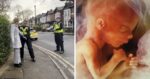




A woman arrested twice for silently praying outside an abortion clinic, who received a £13,000 payout in acknowledgement of her unjust treatment, has pleaded not guilty to new charges brought against her earlier this month for allegedly breaching abortion buffer zone legislation.
Abortion buffer zones came into force in October 2024 outside abortion clinics in England and Wales, criminalising the offering of vital support to women, amid confusion about precisely what activities are prohibited outside abortion clinics.
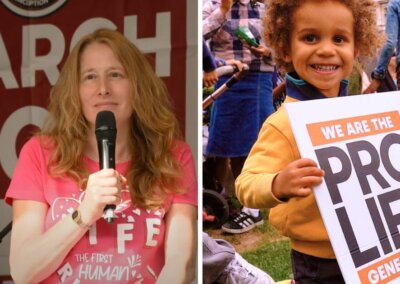
Director of March For Life UK, Isabel Vaughan-Spruce, had previously been arrested twice for silently praying outside an abortion clinic in Birmingham, but West Midlands Police subsequently apologised and gave her a £13,000 payout. Following a third investigation by West Midlands Police, Vaughan-Spruce was charged in December 2025
However, on Wednesday 7 October, prosecutors were permitted to replace the original charge with five separate charges relating to alleged incidents in 2025. Vaughan-Spruce, who is accused of intending to interfere with any person’s decision to access, provide or facilitate the provision of abortion services at an abortion clinic, pleaded not guilty to all the charges at Birmingham Magistrates’ Court.
While Vaughan-Spruce has been arrested on previous occasions, she has never been convicted of a crime. Individuals are arrested if they are suspected of committing a crime, allowing police to question them and gather evidence. After being arrested, individuals can be either released or charged with committing a crime.
Vaughan-Spruce’s legal team has argued that prosecuting her for silently praying is incompatible with her fundamental human rights, particularly freedom of thought and religion as stated in Articles 9 and 14 of the European Convention on Human Rights.
The European Court of Human Rights’ official guidance specifically recognises opposition to abortion as a belief protected by Article 9 of the European Convention on Human Rights.
Her legal team has also argued that silent prayer falls outside the scope of the buffer zone legislation, which, they argue, was not intended to criminalise conduct of the kind exhibited by Vaughan-Spruce.
Judge Tan Ikram said during the hearing that simply standing within a buffer zone “is not a crime”, adding that it “doesn’t matter how many times you do it, mere presence is not enough” to constitute an offence.
Charge for silently praying “Orwellian”, Vaughan-Spruce says
Vaughan-Spruce said that arrests and charges of this kind were “Orwellian”, and argued that such cases are “fostering a sense of intolerance in our communities”.
“I don’t believe that those who are pro-life or Christian should be treated as some kind of social pariah”, she said.
Vaughan-Spruce added that many other people are “worried about what might happen to them as well”, due to a lack of clarity about what constitutes an offence.
“I’ve heard that from a lot of people, you know, just concerned simply about something as simple as praying when they’re in a public space”, she revealed.
Vaughan-Spruce previously received a large payout for mistreatment following arrest during buffer zone breach investigation
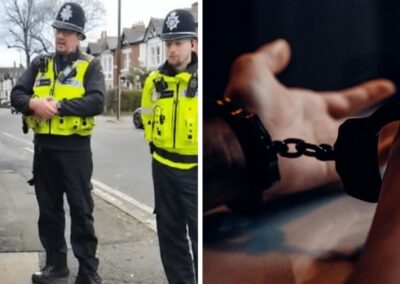
Vaughan-Spruce was first arrested in December 2022 after she told police she “might” be silently praying whilst she was standing on a public street near an abortion clinic in Birmingham. She had no signs or outward expression of political views of any kind. She was in complete silence. Police officers, who had received a complaint from an onlooker, approached her and began to ask her what she was doing.
She was searched, arrested, and then interrogated. Police showed her pictures of herself standing near the clinic and asked her if she was praying. Vaughan-Spruce said she “might” have been praying but could not recall if she was praying at these specific moments, or whether she was thinking about something else, such as her lunch.
Even though she was acquitted of all charges in February 2023, she was arrested again, just weeks later, for allegedly breaching a Public Space Protection Order (PSPO), which bans protests outside abortion clinics within a designated area.
In September 2023, West Midlands Police issued an apology to Vaughan-Spruce and confirmed that they would not be bringing charges against her. The same police force gave her a £13,000 payout in acknowledgement of her unjust treatment in August 2024.
Speaking in August 2025, while under investigation for a third time, Vaughan-Spruce said, “Despite being fully vindicated multiple times after being wrongfully arrested for my thoughts, it’s unbelievable that two and a half years later, I am still being harassed by police for silently praying in that area, and yet again find myself under investigation for the same prayers I have said for twenty years”.
“Silent prayer cannot possibly be a crime – everyone has the right to freedom of thought”.
Spokesperson for Right To Life UK, Catherine Robinson, said “The charges brought against Isabel, who has at no point intimidated or harassed anyone, are unacceptable and highlight the confusion surrounding the buffer zone legislation. The police are using this dangerous law to target innocent people for simply holding private pro-life thoughts in their minds”.
“We hope that the judge sees sense in this instance and that Isabel is not found guilty”.