



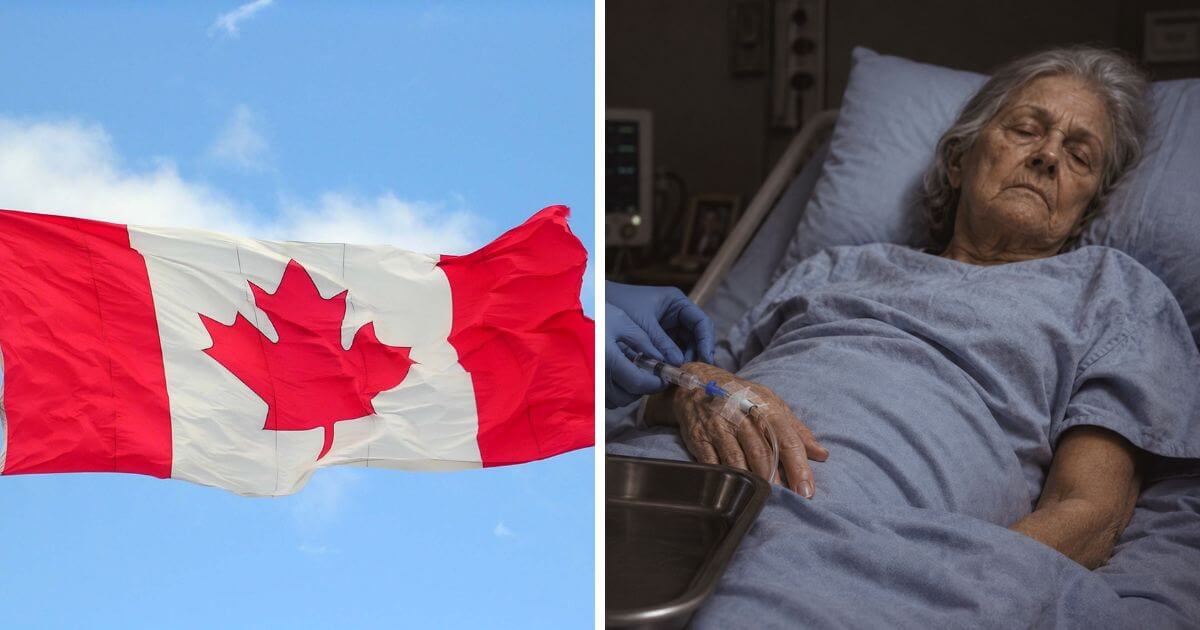
A Canadian woman was approved to have her life ended by euthanasia after becoming unable to cook for her family, feeling that she had lost her value to them, according to new revelations from Canadian doctors.
The case came to light after two doctors from the University of Toronto, Gary Rodin and Madeline Li, wrote for the New York Times about their fears that assisted suicide and euthanasia have become too commonplace in Canada.
The eligibility criteria for Canada’s assisted suicide and euthanasia programme have rapidly expanded since the original legislation was passed in 2016. In 2021, the Canadian Parliament repealed the requirement that the natural death of those applying for assisted suicide be “reasonably foreseeable”, introducing a new pathway for people whose deaths were not “reasonably foreseeable”, known as Track 2.
The psychiatry professors, Rodin and Li, argued that, while assisted suicide and euthanasia were originally intended to provide a “dignified” end to an individual’s life, “too many people are receiving the procedure without the opportunity for careful reflection about it with a health provider”.
“In some cases, patients are being approved who should not be”, the doctors said.
One example they provided was of a woman in her seventies who loved cooking for her family. She lost the ability to cook for her family and subsequently was approved to have her life ended by euthanasia, revealing that she felt like she had lost her value.
Before her life was ended, however, she received counselling and “came to understand that her family valued who she was, not what she did for them”, Rodin and Li explained.
As a result, the woman decided not to go through with ending her life, and spent Christmas with her family, who were happy to do the cooking for her.
The doctors stated that, in many cases, individuals may feel like they have no choice but to end their lives by assisted suicide or euthanasia. According to them, the regime in Canada is “one of the most permissive in the world, allowing assisted dying for almost any form of subjectively intolerable suffering that had a medical basis, or even for medically unexplained physical symptoms”.
Rodin and Li conveyed that the law in Canada does not actually require doctors to discuss the nature of an individual’s request to end their life with them in detail to figure out why exactly they are making such a request.
There is no requirement “that patients attempt treatment to relieve their suffering. Nor does the law specify adequate safeguards to protect vulnerable individuals whose decision may be affected by social disadvantage”, the doctors said.
“More focus on whether patients can get an assisted death and not enough on whether they should”
The doctors argued that the rapid expansion in the euthanasia and assisted suicide law in Canada has been driven by activists, and that subsequently many doctors may have reevaluated their priorities.
“Many doctors have come to see their primary role to be making sure their patients meet the legal eligibility requirements to qualify for assisted dying”, Rodin and Li said.
“The problem is that there has become far more focus on whether patients can get an assisted death and not enough on whether they should”, they added.
The psychiatry professors are not opposed to assisted suicide or euthanasia, but rather believe that the way the law has expanded in Canada means people are dying who could improve with the right treatment.
“A society that permits assisted dying should also ask whether it has done enough to help people sustain their sense of dignity and meaning in life”, Rodin and Li explained.
“Death must not become the only kind of relief people can imagine”, the doctors added.
Spokesperson for Right To Life UK, Catherine Robinson, said “Assisted suicide and euthanasia have seen rapid expansion since they were first introduced, but it appears that even their supporters are beginning to recognise how bad it is”.
“While there have been some small steps made towards reversing the expansion of this law, more must be done to ensure no more lives are needlessly lost”.
“Individuals who are suffering deserve help, treatment, and support, not death”.