



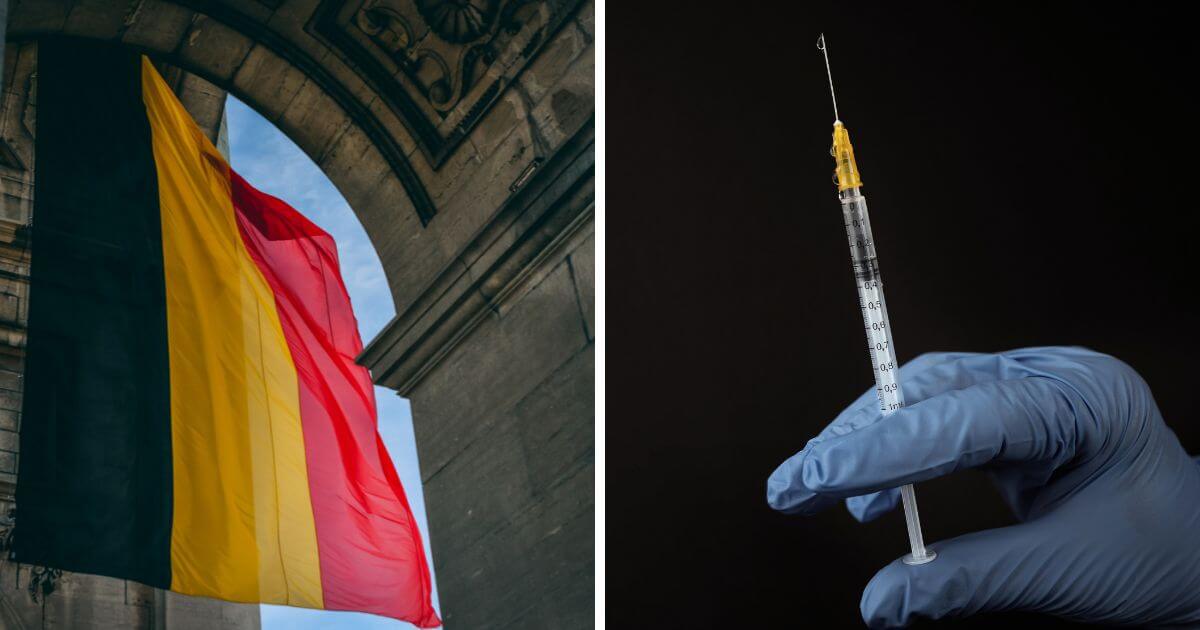
The proportion of deaths in Belgium caused by euthanasia has more than doubled over a five-year period, reaching 4% of all deaths in 2025, according to a report from the Federal Commission for the Control and Evaluation of Euthanasia released earlier this month.
According to a report released every two years as required under Belgian euthanasia law, there were 2,445 euthanasia deaths in 2020, accounting for 1.9% of all deaths in the region. However, the proportion of deaths in Belgium caused by euthanasia more than doubled by 2025, resulting in 4,487 deaths by euthanasia, accounting for 4% of all deaths in Belgium.
The report, which covers the two years of 2024 and 2025, also revealed there was a 12.43% increase in deaths by euthanasia from 2024, when 3,991 people ended their lives by euthanasia. Since 2003, the first full year in which euthanasia was legal in Belgium, when 235 people ended their lives by euthanasia, there has been a 1,809.36% increase in the number of people ending their lives this way.
Since euthanasia was made legal in Belgium in 2002, over 42,000 people have ended their lives this way.
Huge increase in people ending their lives who are not terminally ill
The number of people for whom a natural death was not expected in the short term, understood as meaning it was not expected in the coming months, who ended their lives by euthanasia in 2025 was 1,117.
This represents a 259.16% increase from just five years earlier in 2020, when there were 311 euthanasia deaths where natural death was not expected in the short term. Those whose natural deaths were not expected in the short term could also be described as not terminally ill.
In the past, people who have ended their lives when death was not expected in the coming months have included people with depression, PTSD, and blindness.
The report also reveals that two individuals who were under the age of 18 ended their lives by euthanasia, one in 2025 and one in 2024.
Additionally, the Federal Commission for the Control and Evaluation of Euthanasia, which publishes these reports, accepted some euthanasia cases despite the relevant procedural requirements not being followed to the letter.
250% increase in the number of euthanasia deaths of people with various dementia disorders
In 2025, in 77 cases, dementia was recorded as the basis for euthanasia. This was an increase of 37.5% from 2024, which saw 56 deaths where dementia was recorded as the basis for their euthanasia. This was an increase of 250% from 2018.
In 2025, in 74 cases, a psychiatric disorder was recorded as the basis for euthanasia, an increase of 34.55% from 2024, which saw 55 deaths where a psychiatric disorder was recorded as the basis for euthanasia. This was an increase of 117.65% from 2018.
Across 2024 and 2025, there were a total of 532 people who were described as experiencing “weariness of living” on their euthanasia registration documents.
There were also 15 people who ended their lives by euthanasia across the two years via an advance directive, meaning they were not able to consent to having their lives ended at the time of death, but who gave their consent at an earlier date.
Across the two years, there were 13 couples who were both euthanised at the same time, the first time any such data had been recorded.
Alisdair Hungerford-Morgan, Chief Executive of Right To Life UK, said “It is deeply alarming that in just five years, euthanasia deaths as a proportion of total deaths in Belgium have more than doubled. Sadly, Belgium is following a pattern observed in so many jurisdictions where the numbers increase year-on-year”.
“It is worrying that such large increases in the number of people ending their lives in this manner have happened, especially for individuals with certain conditions; a 250% increase in the number of people with dementia ending their lives by euthanasia in only seven years is deeply disturbing”.
“People suffering from mental or physical health conditions deserve protection and the best possible care, not a pathway to suicide”.