



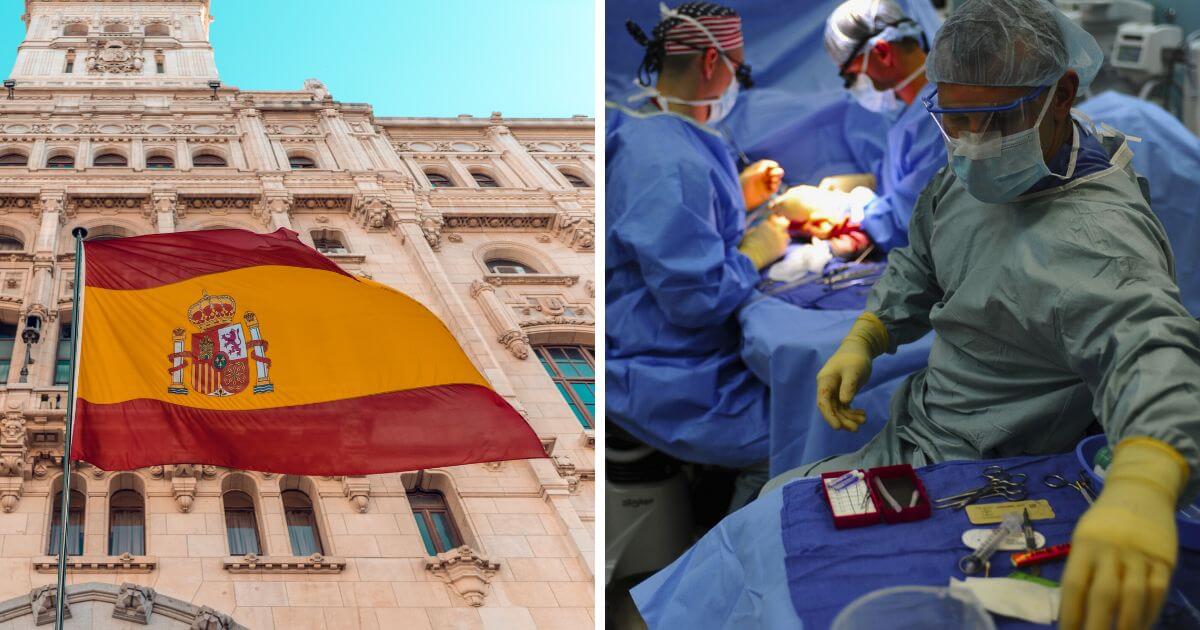
The face of a woman whose life was ended by assisted suicide in Spain has been successfully harvested and transplanted onto a woman who suffered from a flesh-eating infection, amid concerns that organ donation creates pressure to end one’s life.
It is reported that the woman, who had difficulty eating, speaking, and breathing as a result of a flesh-eating infection from an insect bite, received the transplanted face of a woman who ended her life by assisted suicide.
The donor, who had a “life-limiting medical condition”, had chosen that upon her death by assisted suicide, she would donate her organs and tissues, including her face. According to reports, in the case of individuals whose lives are ended by euthanasia or assisted suicide, organs are harvested immediately after death.
Due to the donor’s death being a planned assisted suicide, surgeons were able to match the donor’s blood type with the recipient’s and plan out the procedure in advance, allowing doctors to optimise the reconstruction of facial bone structures.
The recipient, identified only by her first name, Carme, said that the transplanted face has given her a quality of life that she didn’t think she would have again.
“I can talk, I’m starting to eat, I have sensitivity in the transplanted area, I can drink, have a coffee. I don’t mind going out into the street and I can live a normal life. In a year, I think I’ll be completely fine, fantastic”, she said.
Hospital officials said that only 54 face transplants have been performed worldwide, and that this was the first time the donor had ended her life by assisted suicide.
Organ harvesting following euthanasia or assisted suicide sets a dangerous precedent
However, some have argued that vulnerable people may be coerced or incentivised to end their lives through assisted suicide or euthanasia if they believe that other people might be waiting on their organs.
According to a 2023 review by Canadian medical authors of the legal and ethical concerns of organ harvesting following euthanasia, organ donation organisations in some Canadian provinces like Ontario and British Columbia “recommend that all patients who request [euthanasia or assisted suicide] are approached and informed about the possibility of organ donation”.
The authors of the review “expressed concerns that the conversation about the possibility of organ donation may pressure vulnerable patients to proceed with [euthanasia or assisted suicide]”, stating that this can “cause a breach of trust with the health care professionals”.
They stated that “informing them of this possibility may cause undue societal pressure for donation, and the desire to become a donor may be a driver for the [euthanasia or assisted suicide] request”.
Spokesperson for Right To Life UK, Catherine Robinson, said “Organ donation following assisted suicide and euthanasia is a worrying concept”.
“Offering organ donation after assisted suicide and euthanasia creates a perverse incentive for people who want to end their lives, in the sense that they could be led to believe that their death will do some good for someone else. It may not be the only concern, but it is undeniable that this will likely become a factor influencing the decision to opt for euthanasia”.