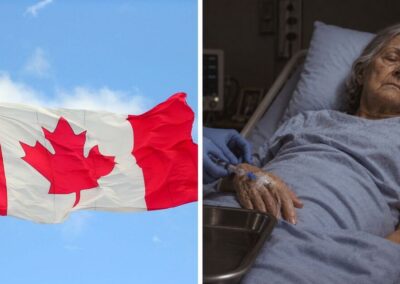





A Canadian woman has died by euthanasia despite informing doctors just hours beforehand of her wish to stay alive and receive palliative care, sparking concerns about the dangers of coercion or undue influence under assisted suicide and euthanasia laws.
An official report by the Chief Coroner of Ontario’s Medical Assistance in Dying Death Review Committee (MDRC) highlighted significant concerns that resulted in the death of Mrs B, a woman in her 80s who suffered from complications following coronary artery bypass graft surgery and who chose to receive palliative care support at home.
After sharing her desire with her family to end her life through Canada’s euthanasia and assisted suicide programme, her spouse requested an assessment. However, Mrs B informed the euthanasia and assisted suicide assessor she “wanted to withdraw her request, citing personal and religious values and beliefs”, preferring instead to pursue “in-patient palliative care/hospice care”.
After being denied hospice palliative care, Mrs B’s spouse subsequently requested another euthanasia and assisted suicide assessment, which deemed Mrs B eligible for the euthanasia and assisted suicide programme. This approval was granted despite reservations from the first practitioner, who held “concerns regarding the necessity for ‘urgency’ and… the seemingly drastic change in perspective of end-of-life goals, and the possibility of coercion or undue influence (i.e. due to caregiver burnout)”.
A request from the euthanasia and assisted suicide assessor, who expressed concerns about the newfound urgency, to meet with Mrs B to reassess her claim was rejected because “the clinical circumstances necessitated an urgent provision”. A third assessor then arrived, who backed up the second assessor’s view, and Mrs B died by euthanasia that same day.
“This woman’s life was taken against her will”, Canadian MP says
Responding to the account, Kelsi Sheren, a critic of Canada’s euthanasia laws, said Mrs B’s death “was the outcome of a series of decisions made inside a system that could not – or would not – provide care when it mattered most”.
Rachael Thomas, a Canadian Member of Parliament, said “This woman’s life was taken against her will. That’s called murder”.
Dr Ramona Coelho, a member of the MDRC, criticised the actions of those involved in Mrs B’s death, saying “The focus should have been on ensuring adequate palliative care and support for Mrs B and her spouse. Hospice and palliative care teams should have been urgently re-engaged, given the severity of the situation”.
“Additionally, the MAiD provider expedited the process despite the first assessor’s and Mrs B’s concerns without fully considering the impact of her spouse’s burnout”.
Fears shared of assisted suicide becoming an alternative to high-quality care in the UK
As Peers continue to scrutinise the England and Wales assisted suicide Bill in the House of Lords, the case of Mrs B adds weight to the concerns of the Bill’s opponents. Critics warn that, if legalised, assisted suicide would become an alternative to high-quality palliative and end-of-life care. Palliative care services in the UK are already in crisis, with Marie Curie reporting that 100,000 people are dying each year in England needing palliative care but not receiving it.
Speaking during the second session of the Terminally Ill Adults (End of Life) Bill select committee in the House of Lords, Professor Mumtaz Patel, President of the Royal College of Physicians (RCP), one of the largest medical royal colleges, shared her fears that people could choose assisted suicide because of a lack of palliative care provision and inequity of services.
“What I really fear is that people are making, sometimes, these choices because of the lack of provision around good palliative care. Going back to the inequity of services, it feels really wrong and a lot of our members and fellows talk about that. Just where the disadvantaged populations are, there is service underprovision, and then that inequity and gap is just going to get wider and wider”, she said.
Spokesperson for Right To Life UK, Catherine Robinson, said “The tragic case of Mrs B is a stark warning that a legal assisted suicide service can never be perfect, and that, inevitably, tragedies like this will occur. It is shameful that, when Mrs B needed and requested high-quality palliative care and support, she instead received an early death”.
“As Peers continue their scrutiny of the flawed assisted suicide Bill in Westminster, they should heed this warning from Canada. This dangerous Bill, with its inadequate safeguards, must never be allowed to become law”.