



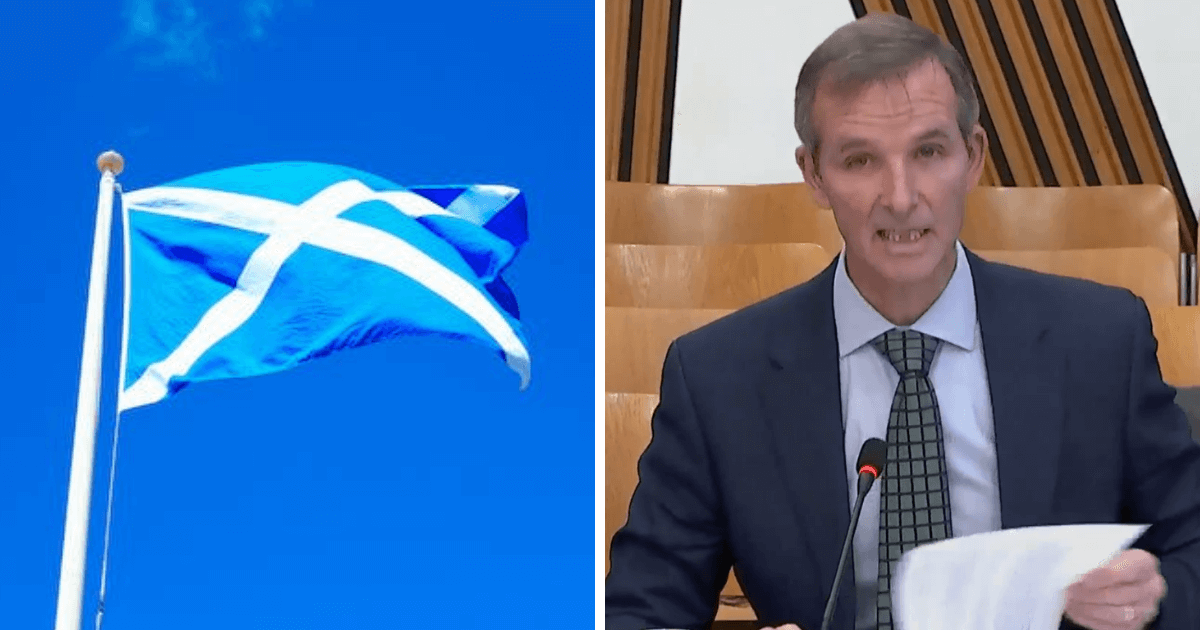
Medical professionals in Scotland could be forced to participate in assisted suicide procedures under a new amendment to the assisted suicide Bill, tabled by its architect.
Architect of the assisted suicide Bill in Scotland, Liam McArthur MSP, yesterday introduced an amendment to remove all conscience protections for medical professionals who do not want to be involved in assisting in the suicide of their patients. In effect, this could force medical professionals to participate in assisted suicide procedures, lest they face the possibility of fines or a loss of employment.
This has prompted a massive backlash from the Royal College of Psychiatrists in Scotland, who have released a statement urging MSPs to vote against the amendment.
The Bill, as written, provides protections for medical professionals who have conscientious objections so that they are not under any duty to assist in the suicide of their patients. However, if McArthur’s amendment is successful, the assisted suicide Bill in Scotland could be passed with no protections for medical professionals who conscientiously object to participating in assisting in the suicide of their patients.
Without such protections, medical professionals could be subject to disciplinary measures, their career progression may be negatively affected, as could their workplace relationships.
Experts say this represents a “serious weakening of the safeguards”
In a briefing for MSPs, the Royal College of Psychiatrists in Scotland said, “[W]e strongly urge MSPs to understand that the removal of Section 18 would not be a technical or procedural adjustment – it would represent a serious weakening of the safeguards that underpin the professional, ethical, and legal foundations of medical practice in the context of assisted dying. We strongly encourage MSPs to vote against any Stage 3 amendments that seek to remove Section 18 or its associated protections”.
The College has said the removal of clause 18, the conscience clause, is an “item of major concern”, adding that for its members, “this creates several very serious concerns”.
These include a “loss of clear statutory certainty”, meaning that psychiatrists would no longer have “confidence that the law protects their right not to participate in assisted dying”.
They are also concerned about a “potential impact on workforce morale and retention”, meaning that with a shortage of psychiatrists and increased demand for services, the changes that McArthur proposes can “influence morale, recruitment, and retention”. The College says that “statutory safeguards are non‑negotiable”.
The Royal College of Psychiatrists in Scotland also highlighted worries about “reputational and relational risks within clinical teams”, emphasising that, without conscience protections, College members “could face pressure from colleagues and employers, or be placed in contentious situations without adequate legal backing”.
They also cite a “diminished legislative process on matters of major ethical importance”, sharing concerns that leaving debate on conscience protections to Westminster through a Section 104 Order “means that they will not receive full parliamentary debate or amendment”.
Other professional organisations have also expressed concern about the Bill
The Royal College of Psychiatrists joins a list of major medical bodies and colleges that have gone public about their concerns with the Bill.
In its formal Scottish Parliament consultation response, the Royal College of General Practitioners Scotland selected “Strongly oppose” and explicitly said it “opposes a change in the law on assisted dying and therefore the Assisted Dying for Terminally Ill Adults Bill”.
Along with the Royal College of Physicians and Surgeons of Glasgow, the Royal College of Psychiatrists in Scotland, the Royal College of Surgeons of Edinburgh, and Royal Pharmaceutical Society, the Royal College of General Practitioners Scotland has also been a signatory to the 2026 joint statement that expresses concern that key protections such as no duty to participate, professional regulation safeguards, and employment protections could be removed from the bill at Stage 3 and pushed into later secondary legislation, which it says weakens transparency, scrutiny, and safe implementation.
The Royal College of Physicians and Surgeons of Glasgow has also raised strong concerns about the Bill. In its 2025 letter to the Scottish Parliament committee, it said clinicians wanted greater clarity on eligibility criteria. The issues highlighted included difficulties assessing coercion, capacity, and the definition of terminal illness, low confidence in current oversight, and concern that professionals lack sufficient legal protection.
Employment protections must be decided in Westminster
In January, Scottish Health Secretary Neil Gray has said that the parts of the Bill dealing with employment protections would be beyond the scope of Holyrood’s powers and so would have to be added to the Bill retrospectively.
Gray told the Health, Social Care and Sport Committee meeting on 20 January that any such legislation ensuring employment protections for conscientious objectors would have to be introduced after the assisted suicide legislation became law.
He said this would mean relying on the Government in Westminster to issue an order under Section 104 of the Scotland Act 1998, which states, “Subordinate legislation may make such provision as the person making the legislation considers necessary or expedient in consequence of any provision made by or under any Act of the Scottish Parliament”.
However, this could only happen after the Bill becomes law, Gray explained. The parts of the Bill spelling out protections for workers would have to be removed before MSPs vote on it and added back in afterwards, if it passes.
The Health Secretary said that failing to do this would mean that there would be a “strong possibility” of the assisted suicide Bill being challenged in the Supreme Court.
Gray admitted that the Westminster Government had not yet confirmed that it would grant any such request under Section 104, so as it stands, MSPs would be voting on the Bill without guarantees that any employment protections would be given to those who conscientiously object to assisted suicide.
Spokesperson for Right To Life UK, Catherine Robinson, said “It is incredibly worrying that medical professionals in Scotland could be forced to carry out assisted suicide procedures or otherwise lose all their employment protections for conscientiously objecting to assisted suicide”.
“That the architect and key supporter of the assisted suicide Bill in Scotland proposed this amendment himself shows how little he cares about the repercussions this may have for medical professionals”.
“This Bill must now be pronounced dead. Assisted suicide in Scotland cannot be legalised in a context where those who conscientiously object could find themselves in perilous situations”.