




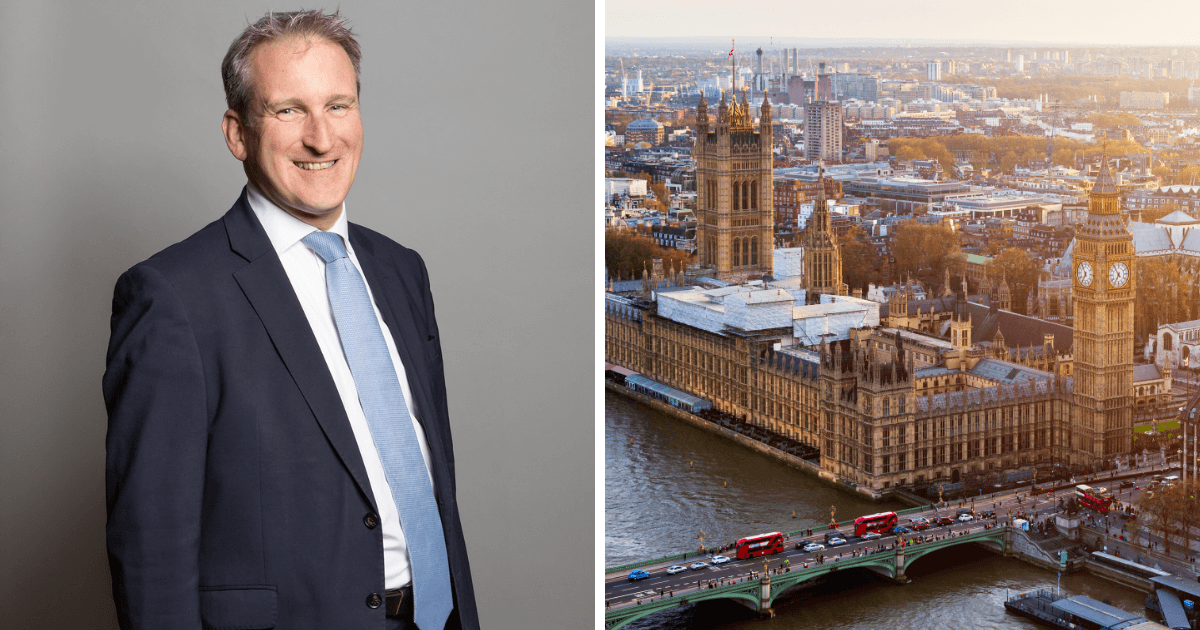
Assisted suicide would come into force “regardless of whether the NHS was ready” for it if it is legalised, due to the wording of the Bill, Shadow Health Secretary Damian Hinds has warned.
Hinds made these comments in The Telegraph ahead of the Second Reading vote on the assisted suicide Bill in the House of Commons, which will take place on Friday 11 September.
In his first intervention since being appointed to the role following last week’s Shadow Cabinet reshuffle, Hinds urged MPs to vote against the Bill, which he called “deeply flawed”.
The Shadow Health Secretary reiterated concerns raised by the House of Lords Delegated Powers and Regulatory Reform Committee, which would give “sweeping, unspecified and unjustified powers to the Government” to change what Hinds referred to as “virtually any aspect of the NHS” in order to carry out assisted suicides.
Delegated powers allow the Government to make secondary legislation, usually in the form of statutory instruments (SIs), which require significantly less scrutiny than Acts of Parliament. These cannot be amended, and, in the case of the negative procedure, they usually become law automatically unless Parliament objects within a fixed period.
This means that many of the most important details in the Bill would not be openly debated by MPs and Peers. Instead, government ministers could decide on them later with very little discussion at all, giving ministers sweeping powers and reducing Parliament’s primary scrutinising role to merely rubber-stamping major aspects of the operation of the law.
Hinds made it clear that these warnings did not come from opponents of the assisted suicide Bill, but rather from “two senior cross-party committees charged with reviewing and reporting on parliamentary legislation”.
The Shadow Health Secretary explained that such powers would allow government ministers – including ministers in any future government, whoever is in power – to “alter the founding principles of the NHS”. He referred to comments made by Lord Stevens, the former chief executive of NHS England, who called the Bill “a Trojan horse clause for fundamental change to the National Health Service by the back door”.
Hinds warns that the auto-commencement of the Bill, irrespective of the state of the NHS, is worrying
Hinds drew attention to the issues regarding the auto-commencement clause of the assisted suicide Bill, which means that the roll-out of assisted suicide would automatically happen after four years, no matter how unprepared the relevant sectors are.
He warned that this auto-commencement clause meant that even if the NHS did not have the relevant staff in place to carry out assisted suicide, even if the relevant training had not been undertaken and the requisite safeguards were not in place, assisted suicide would still become lawful after four years, if the assisted suicide Bill were to be granted Royal Assent.
Hinds posited that such an auto-commencement deadline could be used to justify shortcuts that could be taken in the setting up of the assisted suicide regime, such as relying on inexperienced doctors, reducing the training they require, or cutting the time spent assessing whether individuals have been subject to coercion. In effect, he warned, such a clause could be used to excuse any future scandals that may arise through a lack of institutional readiness.
Government’s revised impact assessment highlights dangers of assisted suicide, Hinds warns
The Shadow Health Secretary drew attention to concerns raised in the Government’s revised impact assessment for the assisted suicide Bill, which, he says, would undermine public trust in the NHS.
Hinds pointed to the new equality impact assessment, which says that people with disabilities may feel pressure to end their lives “due to attitudinal barriers or lack of alternative appropriate services and support (for example, when accessing palliative care)”.
It has also newly identified neglect, poverty and difficult living conditions as potential structural pressures on disabled people considering assisted suicide, to which Hinds also refers.
He posed the question about whether people at the end of their lives would have any meaningful choice if assisted suicide were to be made legal, given the current crisis in end-of-life care and the concerns raised in the new equality impact assessment.
Hinds’ warning comes after the Prime Minister, Andy Burnham, said “the fixing of the funding of palliative care and social care” needs to happen before Parliament debates whether to introduce assisted suicide. Burnham said it would be deeply challenging to hold that debate while people were not receiving the care they needed or the peace of mind that such care would be available.
The Shadow Health Secretary concluded his remarks by stating that the assisted suicide Bill falls short in terms of “how it protects patients, safeguards trust in the NHS and uses scarce resources”, urging MPs not to support the legislation.
Spokesperson for Right To Life UK, Catherine Robinson, said “Damian Hinds is correct. Fixing palliative care and social care must be the priority for Parliament”.
“In the impact assessment, the Government has warned that structural pressures such as poverty, inadequate care, neglect and abuse could result in disproportionate numbers of people from ethnic-minority backgrounds opting to end their lives through assisted suicide”.
“Parliament should be focusing on introducing policies that provide care, protection and support for people facing these structural pressures who may feel pressure to end their lives, not assisted suicide”.
“MPs should put care first and vote against this dangerous Bill at Second Reading on 11 September”.