



Today, Tuesday 27 October, marks the 59th anniversary of the Abortion Act receiving royal assent.
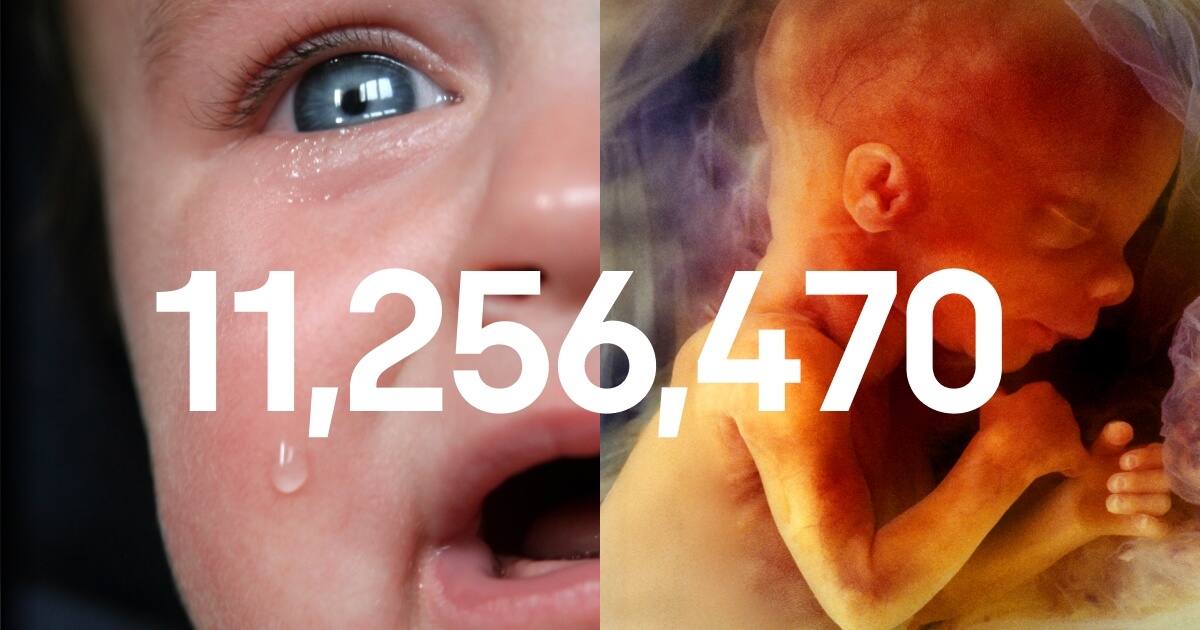
Since then, a staggering 11,256,470* unborn babies have lost their lives to abortion across the UK – one baby is lost to abortion every two minutes; 34 lives are ended every hour**.
There were 278,740 abortions in England and Wales in 2023 according to statistics released by the Department of Health and Social Care, an increase of 26,618 (10.56%) from 2022. This is the most recent year for which abortion statistics for England and Wales are available.
This was the highest number of abortions ever recorded in England and Wales in a single year.
This significant rise in abortions accompanied the third full year that at-home abortion services operated in England and Wales.
More lives likely lost after extreme abortion up to birth amendment
Even more lives will likely be lost to abortion after the abortion up to birth amendment to the Crime and Policing Bill became law earlier this year.
This seismic change to the law was passed in the House of Commons after just 46 minutes of backbench debate – there had been no prior consultation with the public, no Committee Stage scrutiny and no evidence sessions.
Tonia Antoniazzi, who introduced the abortion up to birth amendment, said in an interview that she was comfortable with women being able to abort a viable baby at 37 weeks.
This law change means that it is now no longer illegal for women to perform their own abortions for any reason, including sex-selective purposes, and at any point up to and during birth, likely leading to a significant increase in the number of women performing dangerous late-term abortions at home.
This will likely lead to the lives of many more women being endangered because of the risks involved with ‘DIY’ late-term abortions and also tragically lead to an increased number of viable babies’ lives being ended well beyond the 24-week abortion time limit and beyond the point at which they would be able to survive outside the womb.
The introduction of this extreme abortion amendment to the Crime and Policing Bill provoked a major backlash. 91% of 28,000 respondents to a poll run by The Telegraph said they were opposed to this law change, which has since been introduced.
Further Telegraph coverage following the passing of the extreme amendment expanded on this. A pro-choice academic stated that abortion decriminalisation “undermines feminism”, while columnist Allison Pearson said that it “all but completes our slide into the moral abyss”. Fellow columnist Tim Stanley highlighted how it showed that “our establishment has lost any sense of right and wrong”.
A number of other prominent commentators, both pro-life and pro-choice, spoke out against the law change, while over 1,000 medical professionals had also called on Parliament to oppose the law change.
Who would they be today?
The total number of lives lost to abortion in this country since the Abortion Act received Royal Assent has now passed eleven million. Our 2022 video, The Ten Million, was released to commemorate ten million lives lost.
At 11.41am on Friday 23 September 2022, it was projected that the ten millionth baby had his or her life ended by abortion since the Abortion Act came into effect in England, Scotland and Wales on 27 April 1968.
Right To Life UK released the video to commemorate the ten million people whose lives have been ended through abortion and to illustrate what the UK has lost through the death of these millions of people.
The video began by asking the question “Had these 10 million babies been born, who would they be today?” before proceeding to outline:
- About 500,000 of them would be in their 50s by now.
- There would be nearly 2,000,000 each in their 20s, 30s and 40s.
- 1,500,000 would now be teenagers.
- Nearly 2,000,000 would be children.
- 800,000 would currently be babies and toddlers.
- 5,000,000 would be women or girls, sisters, daughters, aunts, mothers and grandmas. Some of their most common names would be Emily, Jenny, Sarah, Emma and Olivia.
- Of the men and boys, the most common names would be Mike, Chris, Matt, Jake and Josh.
- About 3,300,000 would love Marmite, about 3,300,000 would hate it, and the remainder wouldn’t have minded either way.
- There would have been 2,900,000 more weddings, and millions more couples would be in love.
“The greatest shame of our nation”
Speaking at an event marking the 50th anniversary of the Abortion Act in 2017, Lord Alton lamented the lives that have been lost to abortion since the introduction of the Act (a video of his speech is available here).
He pointed out that the 1948 Universal Declaration of Human Rights, of which the UK is a signatory, guarantees the right to life. He asked “what use are all the other human rights contained in that declaration, if you are denied the right to life in the first place?”
“The fact that we neuter the protection of our laws for our tiniest countrymen and countrywomen is a horror and a disgrace on a massive scale”.
He then went on to talk about the millions of taxpayer pounds that funded abortion overseas in developing countries in the form of foreign aid, an act that activists in these countries consider a form of ‘neo-colonialism’.
He went on to warn about the push towards ‘decriminalisation’, led by the abortion lobby and activist politicians, which would result in “abortion-on-demand, for any reason, in all circumstances, up to birth”.
He urged people not to lose hope in the face of entrenched opposition. “As those who recognise and champion human dignity, it is our role and our duty to stand for every silenced voice”.
“[W]e are not going away, we are not going to remain quiet whilst injustice occurs and we are not going to stop working and educating and campaigning and fighting till we live in a society where the humanity, the dignity and rights of every member of our nation are together recognised”.
Polling shows overwhelming support for more protections for unborn children
Opinion polls repeatedly show that the public want increased protections for unborn babies and more support for mothers facing unplanned pregnancies rather than the wholesale removal of legal safeguards around abortion.
A ComRes poll found that only 1% support the radical pro-choice campaign to introduce abortion up to birth. The vast majority of the general public support more stringent protections for the unborn. 89% of the general population and 91% of women agree that gender-selective abortion should be explicitly banned by law. 60% of the general population and 70% of women believe that the current 24-week gestational limit for abortion should be reduced. 93% of women agree that a woman considering abortion should have a legal right to independent counselling from a source that has no financial interest in her decision. 65% of the general population oppose taxpayer money going to fund abortions overseas.
Polling also found that the public ranked introducing abortion up to birth at the bottom of a list of 20 possible priorities for the UK Parliament, with only 1 in 50 people listing it as a priority.
A spokesperson for Right To Life UK, Catherine Robinson, said “Our abortion laws continue to fail both women and unborn babies. Since the Abortion Act received Royal Assent in 1967, a devastating 11,256,470 lives have been lost to abortion, each one a precious, unique and irreplaceable human being who was denied the right to life”.
“Each of these abortions represents a collective failure of our society to protect the lives of babies in the womb and provide full support to women with unplanned pregnancies”.
“As we pause to reflect on this tragedy, this day also serves as a call to action for people around the country to renew their efforts to do everything they can to help ensure more lives are saved from abortion in the future”.
“This includes contacting MPs and Peers, asking them to ensure that protections for unborn babies are introduced and safeguards are strengthened to protect both mothers and babies – as well as volunteering with pregnancy support centres and joining other pro-life efforts that support mothers and their children in pregnancy and beyond”.
“By taking action, each one of us can be part of building a pro-life nation that protects and defends the right to life of every human being from conception to natural death”.
*11,256,470 cumulative abortions in the UK. Based on the following assumptions:
- This figure is a projection for the United Kingdom through to midnight on 27/10/2026.
- The total number of abortions per day in England & Wales for 2026, 2025 and 2024 remains the same as the total number of abortions per day in 2023.
- The total number of abortions per day in Scotland for 2026 remains the same as the total number of abortions per day in 2025.
- The total number of abortions per day in Northern Ireland for 2026 and 2025 remains the same as the total number of abortions per day for 1 April 2024 – 31 March 2025.
- The rate of abortions throughout the year is evenly distributed
- Please note, we have not included data for any abortions that have occurred in Northern Ireland before 2007.
** This figure has been calculated using the abortion statistics released by the Department of Health and Social Care for England and Wales for the year 1 January 2023 – 31 December 2023; the abortion statistics released by Public Health Scotland for the year 1 January 2025 – 31 December 2025; and the abortion statistics released by the Northern Irish Department of Health for the year 1 April 2024 to 31 March 2025. These are the latest statistics released for each region that provide data for a full year.