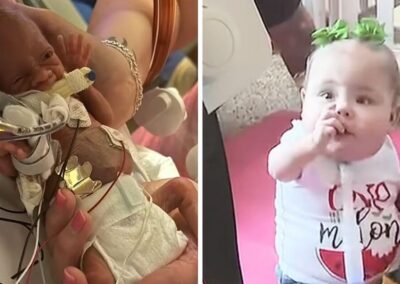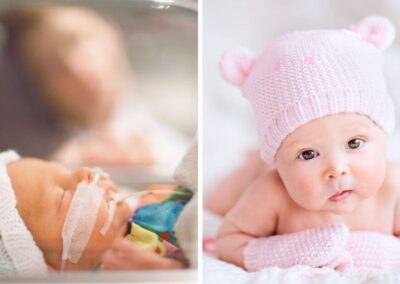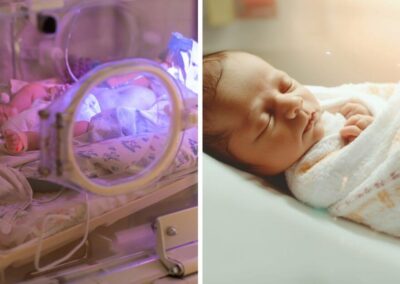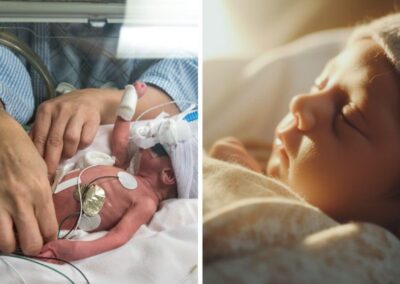




A baby boy who was born at just 25 weeks, weighing only 550g, is now six years old and preparing to finish infant school.
Baby Benji spent the first six months of his life in neonatal intensive care after being delivered 15 weeks early by emergency caesarean section. His mother, Hazel Castelletto, had developed life-threatening pre-eclampsia halfway through her pregnancy, leaving doctors fighting to protect both her life and that of her unborn son.
At just 23 weeks, mum Hazel and dad Johnny were told that if their baby were born now, he could face serious complications and might not make it.
“It was the hardest week for me”, Hazel recalled.
“I knew if he was born this early, there was a high chance he would face many challenges later in life: I was told he could be disabled, legally blind, non-verbal”.
However, mum Hazel managed to remain pregnant for another two weeks, giving her son a significantly better chance of survival.
Now, six years later, baby Benji is thriving, and his family has helped to raise money for other premature babies to receive the lifesaving care that helped him survive.
A miracle pregnancy takes a life-threatening turn
For mum Hazel, becoming pregnant had itself seemed like a miracle.
Having struggled with endometriosis for years, she had feared she might never be able to have children.
“I didn’t actually think I was going to fall pregnant”, she said.
When she discovered she was expecting baby Benji, she was overwhelmed with emotion.
However, at just 20 weeks pregnant, Hazel developed an excruciating headache.
She was subsequently diagnosed with pre-eclampsia, a serious pregnancy complication that can cause dangerously high blood pressure, organ damage and, in severe cases, death.
“I didn’t understand anything. I was only halfway through my pregnancy”, she recalled. “I didn’t even look pregnant yet, I hadn’t even started to feel the kicks. Nothing”.
At that point, her unborn baby was only around the size of a sweet potato.
Doctors administered medication, including magnesium and steroids, to manage Hazel’s condition and help speed up baby Benji’s lung development.
Every additional week in the womb could substantially improve baby Benji’s chances of survival.
Mum Hazel remained on bed rest, determined to give her son as much time as possible.
When her blood tests began showing irregular results, doctors performed an emergency caesarean section at 25 weeks.
Born weighing just 550g
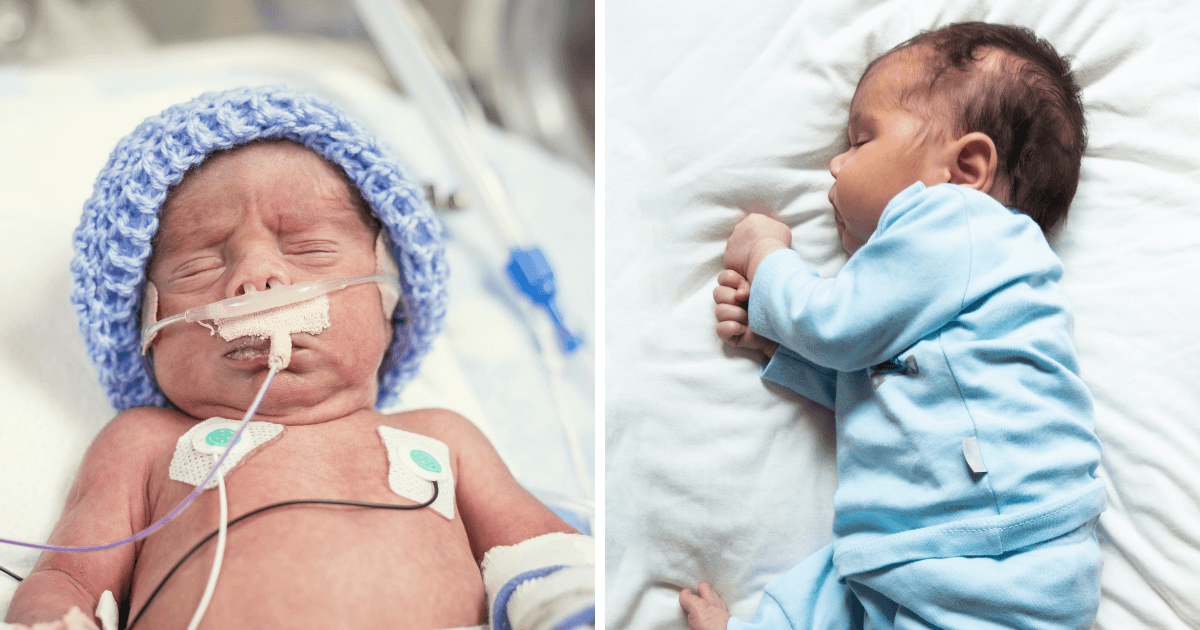
Baby Benji entered the world weighing just 550g, small enough that a ring could slip up to his shoulder.
Seven neonatal intensive care doctors were waiting for his delivery, and he was immediately placed on breathing support and transferred to a specialised incubator.
Mum Hazel was unable to see her baby before he was taken away for treatment.
After the operation, her first concern was whether baby Benji had survived.
“I did not think I missed out on anything because the priority I think as a NICU mum is the baby. The first question I asked the doctor when I came to in recovery was: Is he alive?” she said.
When she was finally able to see him in intensive care, he was surrounded by medical professionals and covered in tubes and wires.
“I actually couldn’t see much of Benji – there were so many doctors and his body was covered in tubes and wires”, mum Hazel explained. “But I just wanted to be with him”.
It would be another 34 days before Hazel could hold her baby boy for the first time.
Four nurses were required to lift him safely from his incubator, carefully managing the medical equipment keeping him alive.
“He was small. I remember him being so small and I couldn’t feel him because there was so many wires attached to him”, Hazel recalled.
“I was happy that I could touch him but I was also angry that that’s the way I had to hold my child for the first time”.
Rather than breastfeeding her newborn directly, mum Hazel expressed breast milk so he could receive nourishment through a feeding tube.
For six months, baby Benji remained in intensive care, receiving treatment from the doctors and nurses working to keep him alive.
During that time, mum Hazel faced the daily anguish of leaving her critically ill son in hospital, uncertain whether he would survive until her next visit.
“I would leave and sit in the car park, not knowing if he’d be alive when I came back the next day”, she said.
“I think that was the […] saddest part of the entire process”.
Family raises $65,000 to help save other premature babies
After six months in hospital, baby Benji was finally well enough to go home.
Although the occasion brought immense joy, mum Hazel found herself struggling with the anxiety of caring for her medically vulnerable son without the constant supervision of hospital staff.
“When Benji finally came home, I thought the hardest part was over. I was so excited, but no one prepares you for the fear of being alone without the machines, nurses and constant monitoring”, she said.
“Is he breathing? Is his feeding tube in the right place? What if something goes wrong?”
Despite the challenges surrounding his birth and early life, baby Benji has continued to defy expectations.
Now six years old, he is thriving and approaching the end of infant school.
His parents have also found a way to help other families facing the uncertainty they experienced.
Spokesperson for Right To Life UK, Catherine Robinson, said “Baby Benji’s remarkable story is a testament to the incredible resilience of premature babies and what can be achieved when they are given the best possible chance at life”.
“It is wonderful to hear that Benji is now thriving, despite the enormous challenges he faced at birth. His story is also a powerful reminder of the importance of providing premature babies with the specialist medical care they need to survive and flourish”.
“We are delighted for Benji and his family and wish them all the very best for the future”.