



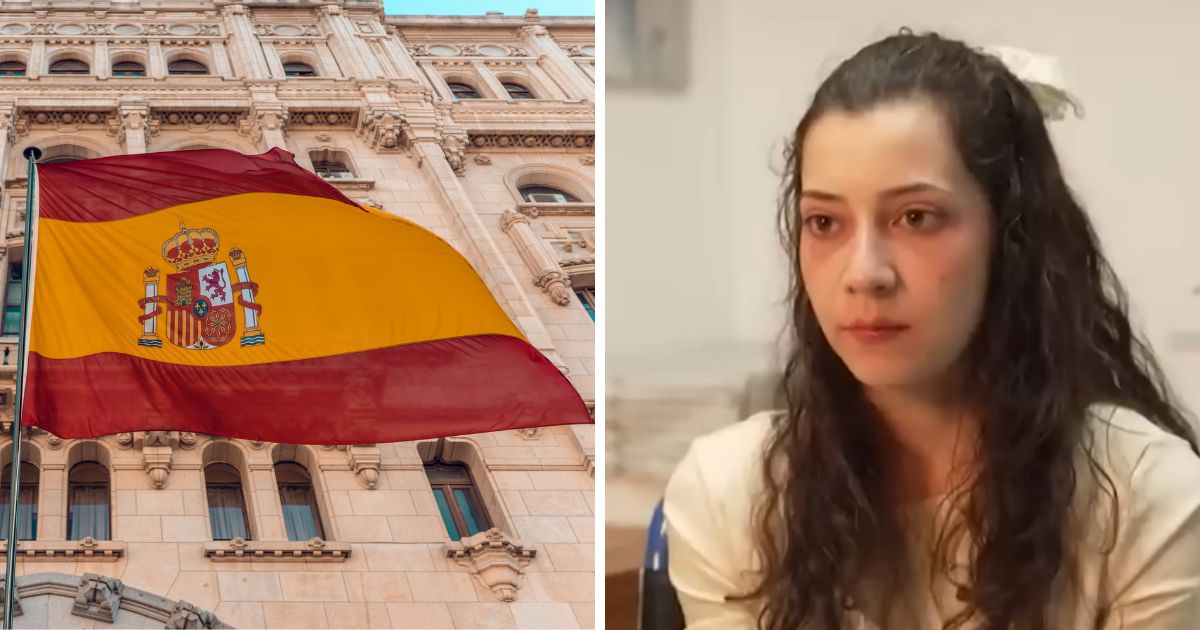
A Spanish woman who became paraplegic following a failed suicide attempt ended her life by euthanasia last night after a legal challenge to prevent her death failed.
According to legal rulings, the 25-year-old woman, Noelia Castillo Ramos, had a psychiatric illness and had attempted to take her own life several times by overdosing on medication.
After being raped by three boys in 2022, she attempted to take her life by jumping from a fifth-floor window; she survived, but has been living with paraplegia and chronic pain ever since.
Subsequently, the woman requested to have her life ended by euthanasia, which was approved by a specialist in Catalonia in July 2024.
Her father, who witnessed Noelia’s attempt to take her life in 2022, had sought to prevent the euthanasia from taking place by arguing that his daughter’s mental illness impeded her ability to make a free and informed decision regarding ending her life.
According to reports, even before requesting euthanasia, Noelia said she “always felt alone” and “saw my world as very dark”. She added that she did not feel like “doing anything”, had back and leg pain and said sleeping was “very difficult”.
Despite these legal challenges from her father, who was attempting to save her life by preventing the state from assisting the ending of her life, Noelia died by euthanasia on Thursday 26 March.
Outside Spain, there has been a considerable backlash against the approval of Noelia’s death. In the UK, Lord Moylan said “As night follows day, this is where the [assisted suicide Bill in Westminster] will take us. [Noelia] had autonomy after all”, while journalist Brendan O’Neill commented “The government’s solution to her suffering was not to wrap its arms of care around her but to give her lethal drugs so that she would die. It sounds like a scene from a dystopic novel but this is reality under the regime of euthanasia so many states have embraced”.
Euthanasia and assisted suicide deaths in Spain increased by almost 30% in 2024 amidst calls to widen eligibility to include mental illness
This case comes in a context where Spain has experienced an almost 30% increase in assisted suicide and euthanasia in 2024 compared with the previous year, according to newly released data.
Released at the end of last year, the statistics have revealed that 426 people ended their own lives by assisted suicide or euthanasia in Spain in 2024, a 27.54% increase from 2023, when 334 people ended their lives in this way. The total number of individuals who have ended their lives by assisted suicide or euthanasia has increased by 47.92% since 2022, the first full year after its legalisation.
Unlike in some other jurisdictions, there is no six or twelve-month prognosis limit for eligibility for assisted suicide or euthanasia in Spain.
According to the Diario Médico journal, in 2024, the Spanish government’s Ministry of Health had considered modifying the “Manual of Good Practices for Euthanasia” to include mental illnesses. The draft of the planned change stated that the Organic Law for the Regulation of Euthanasia “does not exclude mental illness, allowing people with an unbearable suffering due to the presence of a mental illness to request [state-assisted suicide or euthanasia] on equal terms with those whose suffering comes from a bodily illness”.
Supporters of assisted suicide Bill for England and Wales argued for Spanish-style system
Some supporters of the assisted suicide Bill for England and Wales, which is currently at Committee Stage in the House of Lords, have argued that the assisted suicide system they are proposing should take inspiration from some facets of Spain’s regime.
At the 29th sitting of the House of Commons Public Bill Committee, Liberal Democrat MP Tom Gordon argued against extending the implementation period for the assisted suicide Bill to four years and pointed to Spain as a comparator, saying Spain implemented its law in “just three months” after the Bill passed.
During a separate sitting, Gordon referenced the case of Noelia, criticising her father for attempting to save his daughter’s life, claiming that the legal challenge had been “funded and hijacked by outside groups”.
In Oral Evidence sessions for the Bill Committee, Lord Falconer, the Bill’s sponsor in the House of Lords, argued that Spain is the only other country that requires a panel to look at potential assisted suicide cases.
He made it clear that this was considered to be a strong safeguard against harm, saying, “As far as I am aware, with the possible exception of Spain, where there is a committee process, no other country has the sort of regime that we are proposing in this Bill, where a panel will look at the matte”r.
“What that involves is a senior lawyer or judge, a social worker and a psychiatrist looking at it, which is an added safeguard”, Falconer continued. Given that these safeguards did not protect the life of Noelia in Spain, it would be likely that they would not function infallibly in England and Wales, either.
Opponents of the assisted suicide Bill have also made reference to the Spanish system to call for tighter regulation and safeguards for the Bill for England and Wales.
Nikki da Costa, former Director of Legislative Affairs at 10 Downing Street, explained that when the High Court judge safeguard was removed and replaced with an assisted suicide review panel, its proponents said they had “looked to Spain for inspiration”.
At Committee Stage in the House of Lords, Baroness Berger reminded the House that they had been told that Spain “is a model for the new voluntary assisted dying panels”, despite the additional requirement that Spain requires that an individual be experiencing “intolerable suffering” to be eligible to end their life.
Spokesperson for Right To Life UK, Catherine Robinson, said “This is a deeply tragic case of a vulnerable young woman who had experienced serious trauma. Rather than receiving proper care and support to enable her to live in comfort and peace, she was instead allowed to end her life”.
“It is profoundly worrying that proponents of the assisted suicide Bill for England and Wales, in particular its sponsor in the House of Lords, Lord Falconer, have made approving references to the Spanish ‘assisted dying’ law on multiple occasions”.
“If assisted suicide is made legal in England and Wales, it is possible that, provided a patient is thought to be terminally ill, tragedies similar to what was allowed to happen to Noelia could be allowed to occur here”.
“The House of Lords must ensure such a dangerous piece of legislation never becomes law, and Members of Parliament must commit to bringing forward legislation in the next Parliamentary Session to ensure that people receive the care and support they really need – not assisted suicide”.