



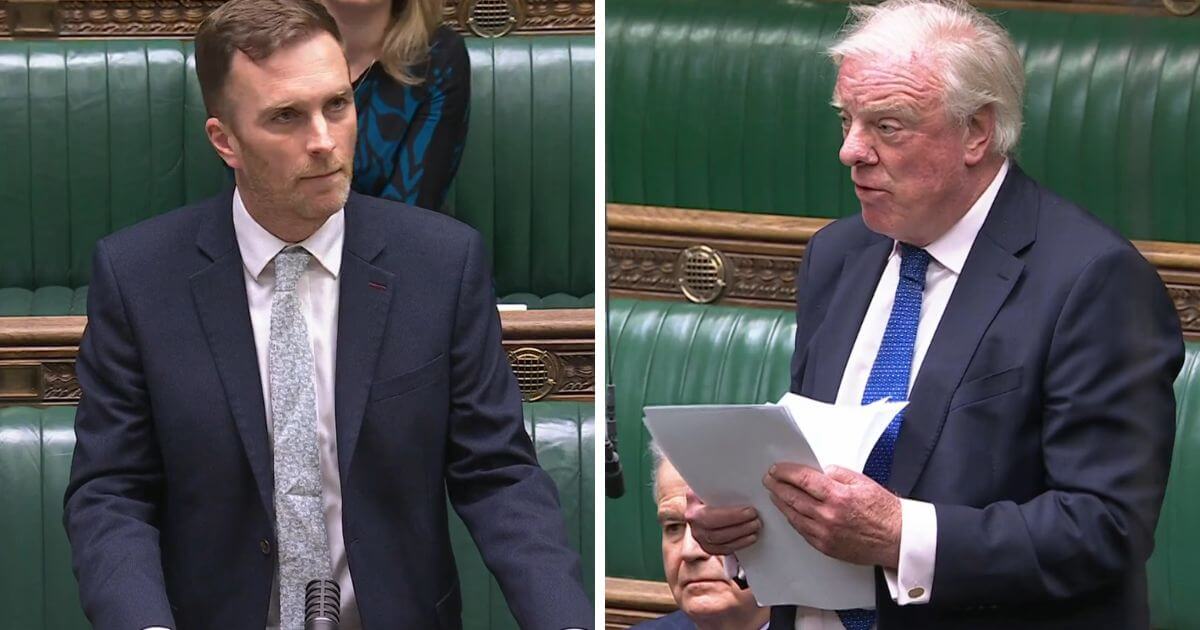
The Deputy Chairman of the Conservative Party and the Father of the House have both expressed their strong concern about the abortion up to birth clause in the Crime and Policing Bill, which is set to become law.
On Tuesday 14 April, during a House of Commons session on the Consideration of Lords amendments to the Crime and Policing Bill, Members of Parliament criticised Tonia Antoniazzi’s amendment, clause 208, which would change the law so it would no longer be illegal for women to perform their own abortions for any reason, including sex-selective purposes, and at any point up to and during birth, likely leading to a significant increase in the number of women performing dangerous late-term abortions at home.
The Father of the House, Sir Edward Leigh, criticised the abortion up to birth clause along with an amendment that will pardon a woman who aborted her baby at 39 weeks, who was described by the judge as showing “no remorse” for her actions.
Sir Edward stated that it was “a terrible indictment of our society that a human life can be taken when it is about to be born, at 39 weeks, and that there should be a free pardon in such a serious case”.
Matt Vickers, the Deputy Chairman of the Conservative Party, stated that he, and many other people throughout the country, shared these concerns.
Vickers criticised how the amendment was added to the Bill after Committee Stage, meaning that it avoided much of the scrutiny that it would otherwise have been subjected to, and ensured that no evidence pertaining to it was given during evidence sessions.
“Such a seismic change in the relationship between the state and individuals should have had more scrutiny in this place”, he said.
Abortion up to birth clause passed after less than an hour of debate
On 17 June 2025, Labour MP Tonia Antoniazzi hijacked the Crime and Policing Bill (a Government Bill not related to abortion) to introduce clause 191 (now clause 208) to the Bill. This drastic change to the law was passed in the Commons after just 46 minutes of backbench debate – there was no prior consultation with the public, no Committee Stage scrutiny and no evidence sessions.
Had this change been introduced as a standalone bill – the normal route for major law changes – it would have received many hours of detailed Commons scrutiny, including a full Second Reading debate, line-by-line examination in Public Bill Committee, further consideration and amendments at Report Stage, and a concluding Third Reading debate.
The law change would likely lead to the lives of many more women being endangered because of the risks involved with ‘DIY’ late-term abortions, and also tragically lead to an increased number of viable babies’ lives being ended well beyond the 24-week abortion time limit and beyond the point at which they would be able to survive outside the womb.
Tonia Antoniazzi said in an interview that she was comfortable with women being able to abort a viable baby at 37 weeks.
Polling shows that 89% of the general population and 91% of women agree that gender-selective abortion should be explicitly banned by the law – and only 1% of women support introducing abortion up to birth.
Polling also shows that the public ranked introducing abortion up to birth at the bottom of a list of 20 possible priorities they want the UK Parliament to pursue over the next 12 months, with only 1 in 50 people (2%) listing it as a priority.
Amendment to overturn abortion up to birth clause rejected
On 18 March, Peers rejected amendment 424, which Baroness Monckton, along with other female Members of the House of Lords, tabled at Report Stage, that would have removed clause 208 from the Crime and Policing Bill. The amendment was rejected by Peers who voted 185 to 148 against it.
Speaking during the debate, Baroness Monckton said clause 208 “would allow mothers to self-administer the abortion of their unborn child for any reason, at any stage of pregnancy, right up to full term”.
She argued that these proposals would have dangerous repercussions for the mental and physical health of women, and fatal consequences for innocent unborn children.
Baroness Monckton took exception to the Royal College of Obstetricians and Gynaecologists’ support for introducing this extreme change to the abortion law, saying that, in their reasoning, “the infant, who without the intervention of lethal drugs would be fully a living person at that stage, if born, is completely unmentioned. It is as if this is unmentionable”.
“Obviously, it is deeply distressing, as we have heard, for the mother to be questioned by the police in the aftermath of an illegal abortion. This should be done with compassion and sensitivity, but the police cannot act as if nothing has happened”, she continued.
Spokesperson for Right To Life UK, Catherine Robinson, said “I am grateful to Sir Edward Leigh and Matt Vickers for reiterating the risks and injustices that the abortion up to birth clause would bring about”.
“The clause should never have been allowed to pass. Such a significant change in the law should have been brought through the proper channels in Parliament, as a standalone piece of legislation, not snuck in to a wider, unrelated Bill”.