



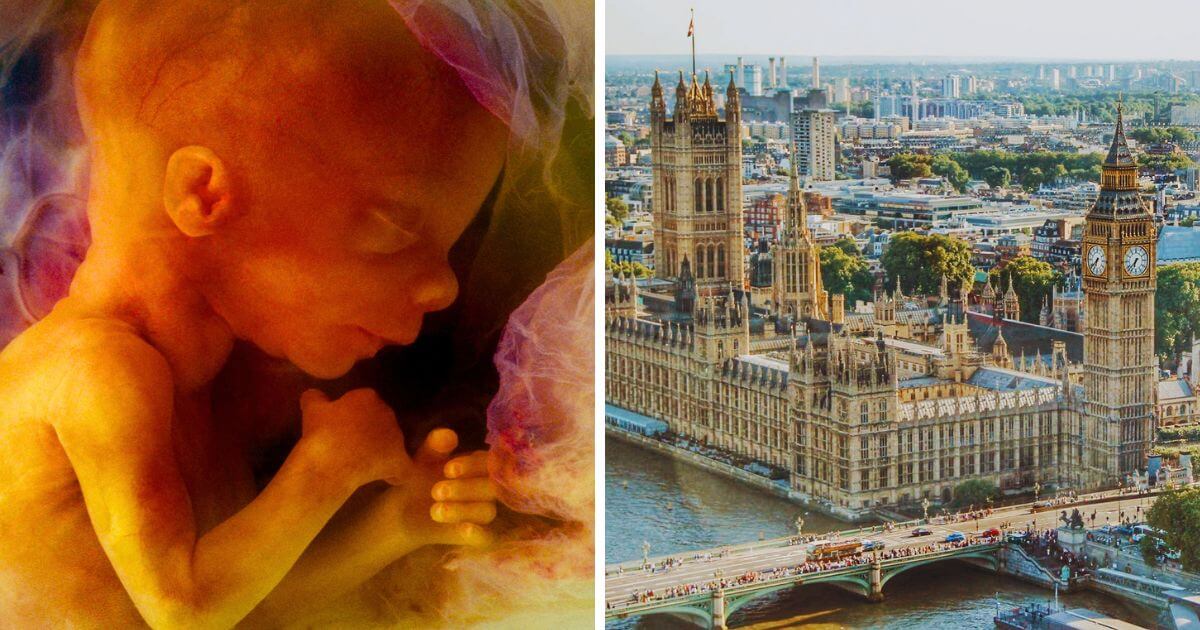
A cross-party group of 79 MPs and Peers have written to the Home Secretary, Shabana Mahmood, and the Secretary of State for Health and Social Care, Wes Streeting, calling for delaying the commencement of the ‘abortion up to birth’ clause (246) in the Crime and Policing Bill until an impact assessment and guidance for police, prosecutors and healthcare professionals have been published and approved by both Houses.
The calls come after clause 246 of the Crime and Policing Bill, which would remove the legal deterrent against self-induced abortions up to birth, was controversially approved by the House of Lords last week.
The calls coincide with Baroness O’Loan, former Police Ombudsman for Northern Ireland, supported by a large cross-party group of Peers, tabling a Regret Motion at Third Reading of the Crime and Policing Bill in the House of Lords, which was debated this afternoon.
Shortly before MPs voted on the abortion up to birth proposals last summer, The Times reported the opposition of Shabana Mahmood and the unease of Wes Streeting, the two recipients of the cross-party letter, with the proposals.
Mahmood was Justice Secretary at the time but is now Home Secretary and would have to oversee the implementation of clause 246, since the Crime and Policing Bill is a Home Office bill.
Large number of high-profile MPs and Peers have joined the call
The letter includes multiple signatories from Labour, the Conservatives, Reform UK and the Liberal Democrats. 8 Labour MPs have signed the letter.
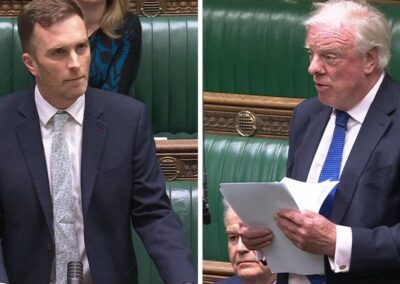
The letter has been signed by a large number of prominent MPs and Peers, including Shadow Cabinet members Neil O’Brien and Julia Lopez; all 8 Reform MPs including Nigel Farage, Suella Braverman and Robert Jenrick; and former Liberal Democrat Deputy Leader, Lord Beith.
Leading Peers who have signed the letter include former OFTSED Head, Amanda Spielman; former President of the BMA, Sheila Hollins; former Olympian and women’s rights campaigner, Sharron Davies; Helena Morrissey; former Northern Ireland First Minister, Arlene Foster; former Cabinet Minister, David Frost; former Telegraph editor, Charles Moore; Chair of the JCHR, David Alton; former Labour minister, Kate Hoey; former Co-Chair of Vote Leave, Matthew Elliott; former SDLP leader and Labour Peer, Margaret Ritchie; former NI Police Ombudsman, Nuala O’Loan; and Nigel Biggar.
Other prominent signatories include Father of the House, Sir Edward Leigh MP, and Rosa Monckton & Philippa Stroud, the Peers who tabled amendments in the House of Lords last week seeking to overturn the abortion up to birth proposals.
Kemi Badenoch reiterated her opposition to the proposed law change in an opinion piece in The Telegraph on Thursday after the Lords’ vote the previous evening.
After the amendment passed last summer, Badenoch also whipped her MPs to vote against the entire Crime and Policing Bill at Third Reading on the basis of the inclusion of the abortion up to birth amendment.
Robust guidance and impact assessment needed before ‘abortion up to birth’ clause comes into force
Currently, clause 246 will come into force as soon as the Bill receives Royal Assent without any impact assessment or guidance being issued, following Third Reading in the Lords today, Wednesday 25 March, and subsequent ‘ping pong’ between the Lords and Commons.
The letter draws attention to the lack of an impact assessment, some of the disturbing, likely unintended consequences of the proposed change to abortion laws, and calls on Mr Streeting and Ms Mahmood to delay the commencement of the clause until an impact assessment and guidance for police, prosecutors and healthcare professionals have been published.
The letter calls for a delay in the clause’s commencement since it would not be possible to adequately consider these issues and draw up robust guidance before Royal Assent is given.
The letter also calls for both Houses to approve the guidance before commencement may take place.
‘Abortion up to birth’ clause makes extreme changes to abortion laws
Clause 246 was introduced by Tonia Antoniazzi MP in the Commons last summer after just 46 minutes of backbench debate – there was no prior consultation with the public, no impact assessment, no Committee Stage scrutiny and no evidence sessions.
It was then passed following a truncated debate and late-night vote after 11 pm in the Lords last Wednesday.
Clause 246 would change the law so it would no longer be illegal for women to perform their own abortions for any reason, including sex-selective purposes, and at any point up to and during birth, likely leading to a significant increase in the number of women performing dangerous late-term abortions at home.
Polling shows the public opposes abortion up to birth and legalising sex-selective abortion. 89% of the general population and 91% of women agree that gender-selective abortion should be explicitly banned by the law – and only 1% of women support introducing abortion up to birth.
Further information on Clause 246 and the House of Lords votes at Report Stage last Wednesday is available here.
Spokesperson for Right To Life UK, Catherine Robinson, said “The abortion up to birth clause is one of the most extreme pieces of legislation ever introduced in Parliament”.
“Pro-abortion MPs hijacked a government Bill to rush through this radical and seismic change to our abortion laws after just 46 minutes of backbench debate”.
“This was the first time this extreme amendment had been debated in Parliament. There had been no prior public consultation, no impact assessment, and no evidence sessions on this far-reaching change to our laws”.
“Bringing the abortion up to birth clause into force before a proper impact assessment has been produced, and before police, prosecutors and healthcare professionals have been given clear guidance on these and other serious issues, would be deeply irresponsible”.
“This is the most significant change to abortion legislation since the Abortion Act was introduced in 1967. There is no public appetite for this change, and it was not part of the Government’s manifesto”.
“There are now almost 300,000 abortions every year in this country. Britain’s abortion time limit is already double that of the most common abortion limit among EU countries. And yet Parliament has just voted for even fewer safeguards for women and fewer protections for the unborn, even late in pregnancy”.
“The law change would likely lead to the lives of many more women being endangered because of the risks involved with self-administered late-term abortions and also tragically lead to an increased number of viable babies’ lives being ended well beyond the 24-week abortion time limit and beyond the point at which they would be able to survive outside the womb”.
“The abortion lobby is pushing to decriminalise abortion to cover up the disastrous effects of its irresponsible pills by post scheme, which endangers women by removing the requirement for in-person consultations before abortion pills may be prescribed”.