



Peers have rejected amendments to overturn an extreme abortion clause in the Crime and Policing Bill and to reinstate in-person medical consultations before an abortion.
During a late-night session on Wednesday, 18 March, the House of Lords voted in favour of a clause – clause 208 – that would change the law so it would no longer be illegal for women to perform their own abortions for any reason, including sex-selective purposes, and at any point up to and during birth.
The clause was originally introduced last summer by Tonia Antoniazzi MP in the Commons after just 46 minutes of backbench debate with no prior public consultation, no Committee Stage scrutiny and no evidence sessions.
Peers rejected amendment 424, which Baroness Monckton, along with other female members of the House of Lords, tabled at Report Stage, that would have removed clause 208 from the Crime and Policing Bill. The amendment was defeated by 185 votes to 148.
The second amendment, also defeated, would have reinstated in-person medical appointments before an abortion could take place, as was the case prior to March 2020.
Peers rejected amendment 425, tabled by Baroness Stroud, along with other female Peers, which would have protected women by reinstating face-to-face consultations with a medical professional before abortion pills can be prescribed. This amendment was defeated by 191 votes to 119.
If this Bill becomes law, it will now likely lead to a significant increase in the number of women performing late-term abortions at home, endangering the lives of many more women.
Polling shows that 89% of the general population and 91% of women agree that gender-selective abortion should be explicitly banned by the law – and only 1% of women support introducing abortion up to birth.
Another poll shows that more than half of the general public agrees that it should remain the case that a woman is breaking the law if she has an abortion of a healthy baby after the current 24-week legal time limit up until birth. Only 16% disagree.
Reject abortion up to birth for women in relation to their own pregnancies, Peers says
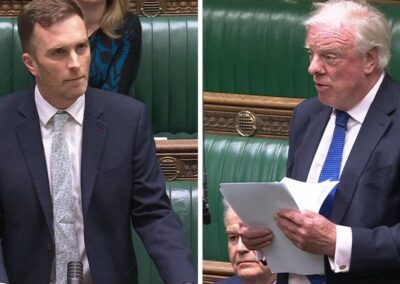
Speaking during the debate on Wednesday evening, Baroness Monckton said clause 208“would allow mothers to self-administer the abortion of their unborn child for any reason, at any stage of pregnancy, right up to full term”.
She argued that these proposals would have dangerous repercussions for the mental and physical health of women, and fatal consequences for innocent unborn children.
Baroness Monckton took exception to the Royal College of Obstetricians and Gynaecologists’ support for introducing this extreme change to the abortion law, saying that, in their reasoning, “the infant, who without the intervention of lethal drugs would be fully a living person at that stage, if born, is completely unmentioned. It is as if this is unmentionable”.
“Obviously, it is deeply distressing, as we have heard, for the mother to be questioned by the police in the aftermath of an illegal abortion. This should be done with compassion and sensitivity, but the police cannot act as if nothing has happened”, she continued.
Reintroduce in-person medical appointments before an abortion
Baroness Monckton also went on to support Baroness Stroud’s amendment, which would have required women to have in-person medical appointments prior to abortions taking place at home, as was required before the Covid pandemic.
The Baroness reminded the House that she had warned of the potential dangers of the ‘pills by post’ scheme before it was introduced, stating that these warnings now proved to be “prescient”.
She continued, saying that allowing these abortions to take place would allow “traffickers and abusers to cover up the effects of sexual exploitation by coercing their victims to phone up and ask for abortion pills”.
Lord McCrea argued for the removal of clause 208, suggesting that the clause would not even accomplish what its supporters say it would, that is, remove women who have an abortion from any possible legal repercussions.
“[W]hat do supporters of Clause 208 think the police should do if they discover the dead body of a 39-week-old baby in a rubbish bin?” he asked. “The noble Lord, Lord Hogan-Howe, explained in Committee that investigations would often still be required even if Clause 208 passes, as police would need to investigate the circumstances if a deceased full-term baby’s body is found away from a clinical setting”.
Lord McCrea reminded the House that when talking about the termination of pregnancies, what we are really referring to is the deliberate ending of the lives of humans who would otherwise be born.
Changes to abortion law agreed after very little debate
Baroness Lawlor stated that such a change in the law was “constitutionally wrong”, as the policy itself is incredibly unpopular among the public and it was not included in any manifesto.
Baroness Spielman told Peers that the changes were decided upon despite there being no public consultation on the issue or the legislation, and no impact assessment conducted to discern what may result.
She also predicted that clause 208 was the beginning of abortion up to birth without qualification.
“If this clause is enacted, it is obvious where the next push will come. We will be told by the same people that it is cruel for a woman in late pregnancy to have to abort on her own, without access to the full range of drugs and clinical procedures and without support, and that all of these things must, therefore, be decriminalised – at which point we will have no abortion law at all”.
Lord McCrea highlighted that Members of Parliament agreed to accept the clause allowing for these abortions after only 46 minutes of backbench debate. He argued that this was a “hurried parliamentary process” that was “unworthy of our democracy”.
Lord Cameron of Lochiel reiterated that the abortion clause was tacked on to a much larger piece of legislation, and left MPs and Peers without the ability to hear evidence from experts regarding what may be the outcomes of such a change in the law.
Lords Spiritual criticise abortion up to birth clause
The Archbishop of Canterbury posited that such a complex issue as allowing abortion up to birth should not be allowed to become law via a clause added “hastily” to another piece of legislation with very little scrutiny.
The Bishop of Leicester expounded on the real-life risks of such policies of late-term abortions through the harrowing story of one 16-year-old girl who had an abortion of a child with a gestational age estimated at eight weeks, but who was in fact 20 weeks. The Bishop of Leicester stated that, if in-person medical appointments had been required, this gestational age estimate would not have been so inaccurate.