



MPs participated in a Westminster Hall debate on Monday, 8 June, in which it was made clear that the failure of the assisted suicide Bill to become law during the last parliamentary session was constitutionally proper.
The debate arose as a result of an e-petition created by pro-assisted suicide campaigner Sophie Blake. The objective of the petition was to ensure Bills, including the assisted suicide Bill, “have the time to complete all their stages in Parliament”, despite the fact that bills frequently fail due to running out of time at the end of a parliamentary session.
Assisted suicide campaigners have made it clear that they are going to attempt to resurrect Kim Leadbeater’s assisted suicide Bill in this parliamentary session.
Their plan involves persuading an MP who was successful in the Private Members’ Bill ballot to bring back Kim Leadbeater’s assisted suicide Bill – and then use the Parliament Acts to bypass the House of Lords to force it into law. Lauren Edwards and Andrew George came second and fourth respectively in the ballot, and both voted in favour of Kim Leadbeater’s assisted suicide Bill at its Third Reading in the House of Commons. They have been rumoured to be coming under the most pressure to bring back the assisted suicide Bill. As of this week, Andrew George has now confirmed that he will not be tabling a new assisted suicide Bill.
Taking the unprecedented route of using the Parliament Acts to bypass House of Lords’ scrutiny of a Private Members’ Bill would be politically explosive and divisive, setting a precedent that may worry many MPs. It would be the first time ever that the Parliament Acts would be used for a Private Members’ Bill. At Monday’s Westminster Hall debate, this is effectively what supporters of the assisted suicide Bill were arguing in favour of.
The House of Lords did not act improperly in scrutinising the assisted suicide Bill
A number of MPs pointed out that there was nothing irregular about how the assisted suicide Bill had progressed through Parliament and then fallen at the end of the parliamentary session. House of Lords’ scrutiny was necessary because the Bill had not been subject to the same levels of pre-legislative scrutiny that other bills often are.
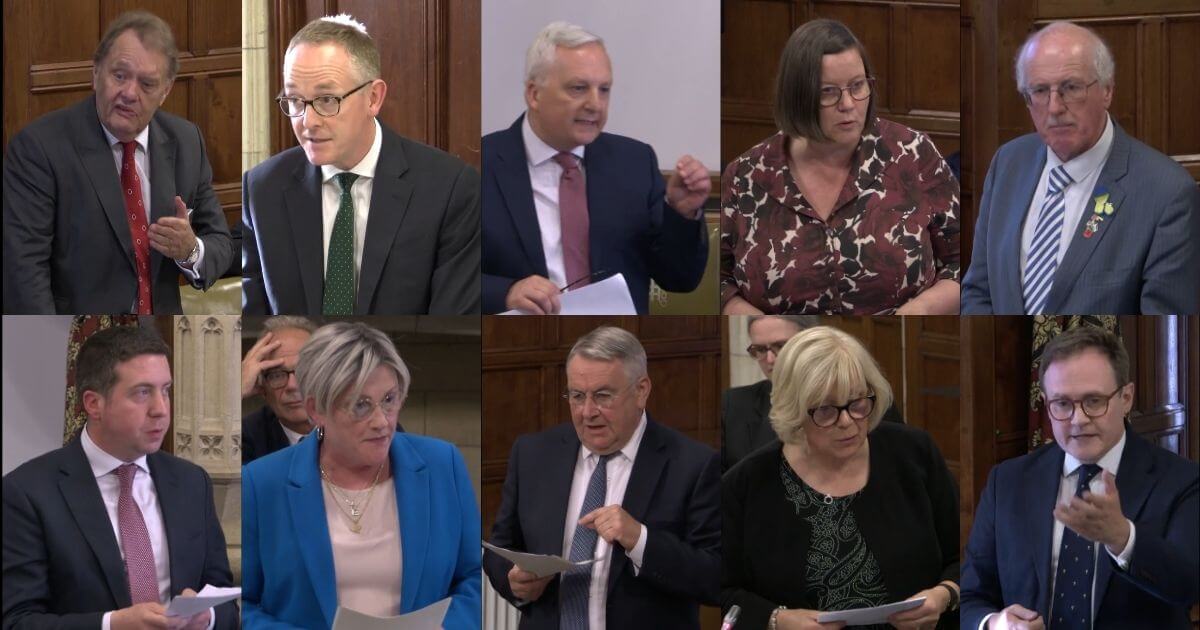
Sir John Hayes MP made it clear that the assisted suicide Bill did not receive unusual levels of consideration, as many of its supporters had complained. The Bill had not been subjected to any pre-legislative scrutiny, and had no independent reports commissioned concerning it.
John Lamont MP agreed with this assessment, adding that the House of Lords Constitution Committee clarified that it was “constitutionally appropriate for the Lords to scrutinise, amend or reject the Bill”, while the Hansard Society similarly confirmed that the Lords “has the authority to reject, delay, or otherwise block” legislation of its kind.
The Salisbury Convention does not apply to the assisted suicide Bill, since it was not a manifesto commitment, nor was it a Government Bill, he reminded MPs.
“[T]he vast majority of Private Members’ Bills do not become law”.
“That is not a constitutional failure; it is a long-standing feature of our parliamentary system”, he concluded.
Daniel Francis MP, who sat on the assisted suicide Bill Committee last year, drew attention to the fact that the length of time the assisted suicide Bill spent in the House of Lords was not unusual. “There were 310 days between the Bill being sent to the House of Lords and Prorogation. Well, it took 327 days to deal with the Children’s Wellbeing and Schools Act 2026, and 347 days to deal with the Tobacco and Vapes Act 2026, so the situation is not unique to this Bill”, he said.
Similarly, Dame Meg Hillier MP criticised the speed with which the assisted suicide Bill had been launched in the House of Commons, comparing this to other Private Members’ Bills that “have often been knocked around for a long while and discussed in detail, so that their flaws were recognised, adjusted and amended at different times”.
The assisted suicide Bill was widely opposed in the House of Lords, and by external organisations
Angus MacDonald MP revealed that many of his constituents had contacted him to say they were glad that the assisted suicide Bill failed. He explained that what they really want is increased investment in hospices, not a hastened death through the legalisation of assisted suicide.
John Lamont MP, speaking for the Conservative Party’s frontbench, corrected the myth that only a handful of peers attempted to delay the assisted suicide Bill, pointing out that more than 140 peers expressed opposition to, or serious concerns about, the Bill. He explained that this opposition came from experts in relevant fields, including former leaders of the medical professions, senior NHS figures, specialists in psychiatry and palliative care, legal experts, and representatives of groups for vulnerable people.
Despite the claims of pro-assisted suicide MPs, Jim Shannon MP similarly noted that, had the individuals who did table a lot of amendments not done so, “dozens of other peers would have tabled the same amendments”.
Daniel Francis MP suggested that the assisted suicide Bill was not sent to the Lords in as good a shape as its supporters claim, demonstrated by the fact that the Bill’s sponsor, Lord Falconer, tabled 77 of his own amendments. He went on to say that this was the fourth-highest number of amendments tabled to the Bill by anyone in the House of Lords.
Jonathan Davies MP reiterated that organisations representing people with disabilities and Royal Colleges continue to take issue with the assisted suicide Bill due to the very real problems within it – problems which the House of Lords was doing its job to attempt to resolve.
Tom Tugendhat MP warned that those who simply wish to rush assisted suicide into law are playing hard and fast with the lives of hundreds of thousands of people.
Dangers of forcing assisted suicide Bill into law using Parliament Acts highlighted
Ashley Dalton MP, who herself has incurable breast cancer, made it clear, during a powerful speech, that scrutiny of legislation is of the utmost importance. It would not be right to force assisted suicide onto the statute books without such scrutiny, putting many people’s lives at risk, she said.
Jim Allister MP said that forcing the assisted suicide Bill, “riddled with flaws”, through Parliament using the Parliament Act would bring Parliament into disrepute – it would “end vulnerable lives”.