



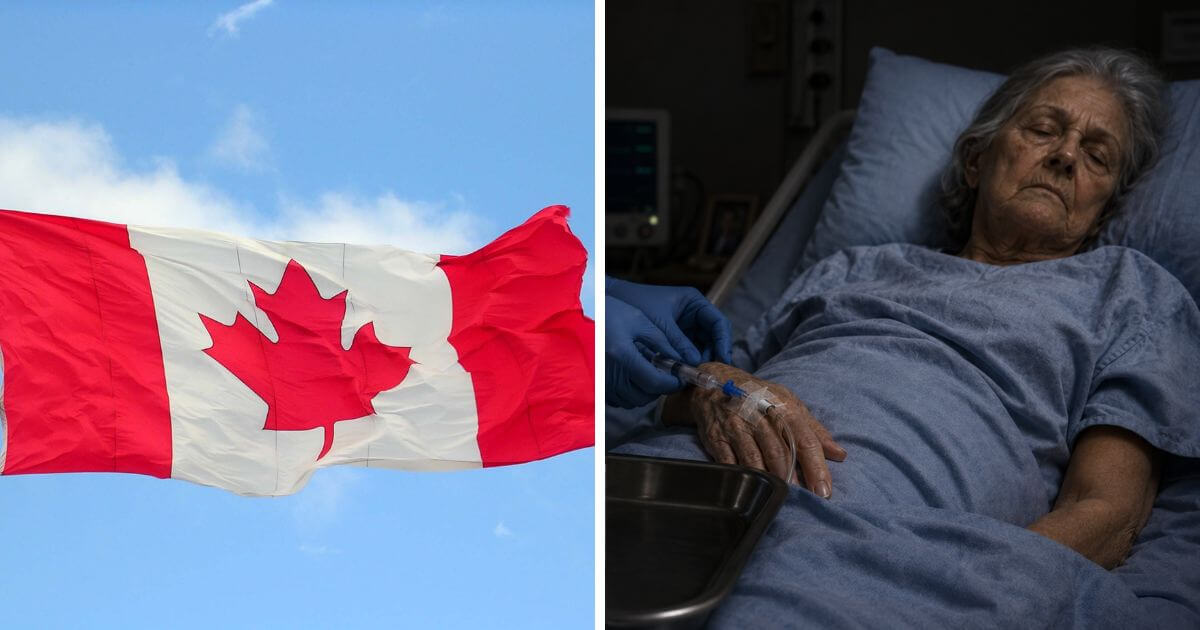
An 83-year-old grandmother allegedly had her life ended against her will in a Canadian nursing home, contrary to her wishes and her religious beliefs, her family has claimed.
Brigitte Stegemann, known to her family as “GG”, had her life ended by euthanasia on 10 July under Canada’s Medical Assistance in Dying (MAID) programme.
According to her granddaughter, Brigitte Kranendonk, who held power of attorney for her grandmother and was the primary contact responsible for all personal care and medical choices, Stegemann received a stage four stomach cancer diagnosis approximately five months before her life was ended.
According to a statement released by her granddaughter, around two months before Stegemann’s death, the topic of assisted suicide and euthanasia was brought up for the first time by staff at the care facility in which she resided.
Stegemann “clearly stated that she did not wish to pursue it”, the statement read. “[S]he explicitly expressed that MAID conflicted with her personal beliefs and faith”.
During the final weeks of her life, Stegemann was described as “largely unresponsive and extremely weak”. When the family told staff at the care facility that Kranendonk was serving as her grandmother’s advocate, a nurse is alleged to have become agitated and defensive. When the nurse left the room, Kranendonk told the remaining staff member that her family opposed euthanasia or assisted suicide for her grandmother.
The family attempted to convince medical staff that Stegemann was “not mentally capable of making such a significant decision independently” due to her illness, and that they had “serious concerns” with the process.
In one instance, during a capacity assessment with Stegemann, a physician asked her how many siblings she had, to which she replied that she only had one, when in reality she was one of 14 children. Despite the family’s objections, the physician informed them that Stegemann did have capacity to make an informed decision about ending her life. The family asserted that this was “a deeply alarming farce”.
Disagreeing with the doctor’s assessment, Kranendonk asked her grandmother if she truly wished to proceed with the euthanasia procedure.
Stegemann is said to have responded, “I’m going to die on Friday? They’re going to kill me on Friday?” before crying for a long time and repeatedly telling her family that a mistake had been made.
Despite this and the family’s pushback, Stegemann had her life ended by the state, apparently against her will, on 10 July.
According to the family, when they were summoned to the room in which her life was ended, they witnessed a large volume of blood covering Stegemann, her bedding, and the immediate surroundings.
Stegemann then died surrounded by her family, with her hands locked in a position of prayer.
Stegemann’s case is not an isolated example
An official report by the Chief Coroner of Ontario’s Medical Assistance in Dying Death Review Committee (MDRC) revealed that another woman died by euthanasia despite informing doctors just hours beforehand of her wish to stay alive and receive palliative care.
The report highlighted significant concerns that resulted in the death of Mrs B, a woman in her 80s who suffered from complications following coronary artery bypass graft surgery and who chose to receive palliative care support at home.
After sharing her desire with her family to end her life through Canada’s euthanasia and assisted suicide programme, her spouse requested an assessment. However, Mrs B informed the euthanasia and assisted suicide assessor she “wanted to withdraw her request, citing personal and religious values and beliefs”, preferring instead to pursue “in-patient palliative care/hospice care”.
After being denied hospice palliative care, Mrs B’s spouse subsequently requested another euthanasia and assisted suicide assessment, which deemed Mrs B eligible for the euthanasia and assisted suicide programme. This approval was granted despite reservations from the first practitioner, who held “concerns regarding the necessity for ‘urgency’ and… the seemingly drastic change in perspective of end-of-life goals, and the possibility of coercion or undue influence (i.e. due to caregiver burnout)”.
A request from the euthanasia and assisted suicide assessor, who expressed concerns about this newfound urgency, to meet with Mrs B to reassess her claim was rejected because “the clinical circumstances necessitated an urgent provision”. A third assessor then arrived, who backed up the second assessor’s view, and Mrs B died by euthanasia that same day.
Rachael Thomas, a Canadian Member of Parliament, said “This woman’s life was taken against her will. That’s called murder”.
Dr Ramona Coelho, a member of the MDRC at the time, criticised the actions of those involved in Mrs B’s death, saying “The focus should have been on ensuring adequate palliative care and support for Mrs B and her spouse. Hospice and palliative care teams should have been urgently re-engaged, given the severity of the situation”.
“Additionally, the MAiD provider expedited the process despite the first assessor’s and Mrs B’s concerns without fully considering the impact of her spouse’s burnout”.
Spokesperson for Right To Life UK, Catherine Robinson, said “It is distressing to hear of the tragic story of Brigitte Stegemann’s death by euthanasia, seemingly against her own wishes and the wishes of her family”.
“This case delivers a stark warning that a legal assisted dying service can never be completely without error, and that tragedies like this will likely occur”.
“As MPs gear up to vote on our own assisted suicide Bill in Westminster on 11 September, they should heed these myriad warnings from Canada. This dangerous Bill, with its inadequate safeguards, must never be allowed to become law”.