



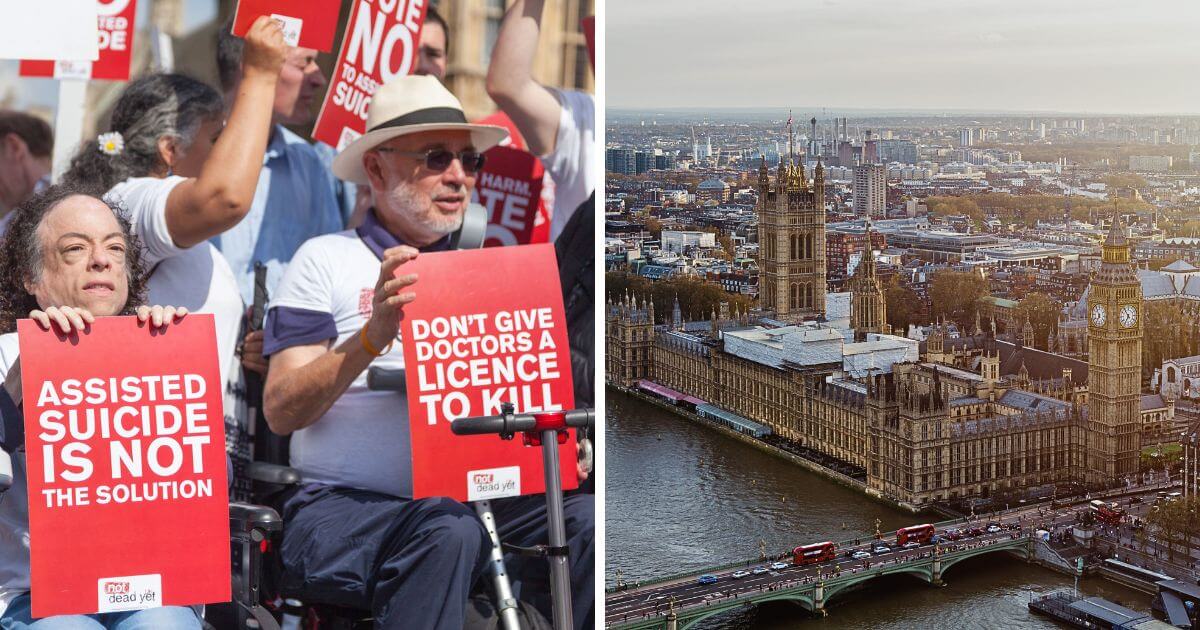
Campaigners for the rights of people with disabilities have spoken of their relief at the rejection of the assisted suicide Bill by MPs.
The Terminally Ill Adults (End of Life) Bill, which would have legalised assisted suicide in England and Wales, was defeated at Second Reading in the House of Commons by 286 votes to 270 in a major victory for opponents of the Bill, settling the issue in England and Wales for a generation after a two-year national debate.
Following the Bill’s rejection, a significant number of campaigners with disabilities have expressed their relief, reiterating that the onus must now be placed on improving palliative and social care.
Baroness (Jane) Campbell, founder of the grassroots-led organisation of people with disabilities who campaign against assisted suicide, Not Dead Yet UK, and who was a vocal opponent of the last assisted suicide Bill in the House of Lords, told the Disability News Service of her relief.
“We knew if it passed that it would be rushed through the Lords and we would not be able to oppose it”, Baroness Campbell said.
However, even though she was glad the Bill was rejected, she said she is still not satisfied.
“Nobody wants people to die intolerable deaths, we all want people to feel as comfortable as they can be during end of life”, she added. “There are so many people who we know are having such a difficult time with their health and social care support, and that’s where I am going to turn my attention in the future”.
Phil Friend, convenor of Not Dead Yet UK, described the turnout by those protesting at Parliament against the assisted suicide Bill on the day of the vote as “fantastic”.
“It shows what we can do when we get organised and come together”, he added.
Friend described the campaign against the assisted suicide Bill as being like David against Goliath, with small grassroots organisations representing vulnerable people taking on a large, well-funded campaigning lobby and winning.
Baroness Grey-Thompson, who was also a staunch opponent of the previous assisted suicide Bill in the House of Lords, said she was “really emotional” following the result because of the impact that it will have on many people with disabilities.
She said the rejection of assisted suicide “gives MPs a little breathing space in terms of having time to look at these other issues”.
Like Baroness Campbell, Baroness Grey-Thompson stressed the importance of this next stage of their mission to achieve “all the things we are trying to fight for: decent health and social care, palliative care, an NHS that works”.
The disabled actress and activist Liz Carr, who described the prospect of legalising assisted suicide in the UK as “terrifying” in her BBC documentary Better Off Dead?, said that the rejection of the assisted suicide Bill left her with a sense of “overwhelming relief”.
She described the prospect of assisted suicide being legal in England and Wales as being “so terrifying to so many of us [people with disabilities]”.
Anna Landre, co-founder of the disability rights collective Assist Us to Live!, agreed with this messaging, saying, “We have a lot of work to do on palliative care and social care and to hold MPs to account on that”.
MPs with disabilities voted against the assisted suicide Bill by two to one
Analysis of MPs who voted during Second Reading of the assisted suicide Bill on Friday 11 September revealed that twice as many MPs with disabilities voted against the Bill than voted for it, according to the Disability News Service.
The analysis includes MPs who either self-describe as disabled, or who have spoken or written of having a significant long-term health condition or impairment.
Of the 26 MPs whom this definition includes, 17 voted against the legislation, while only nine voted in favour of it.
Spokesperson for Right To Life UK, Catherine Robinson, said “We are very grateful for the many people with disabilities who gave up so much of their time and energy to campaign against the introduction of assisted suicide legislation in England and Wales”.
“Their relief that this Bill has been rejected is understood and shared by all of us”.
“These campaigners are right that the focus should now be on improving social and palliative care with the urgency that it requires, so there should be no need again to ever debate about assisted suicide being an alternative to care”.