



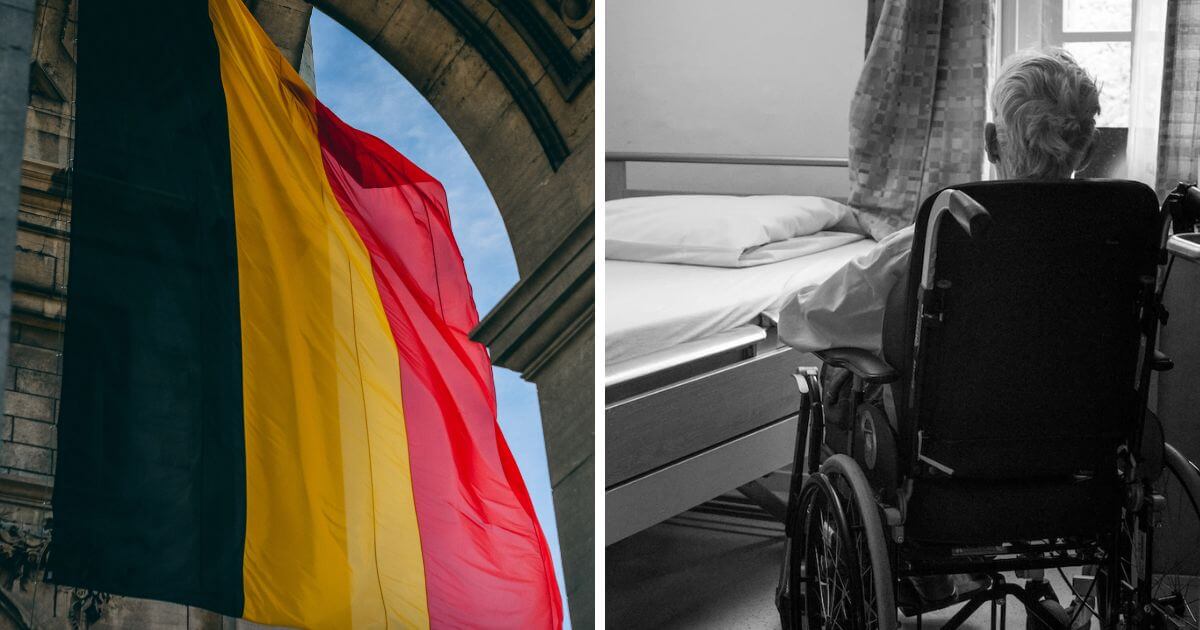
Belgium had a record 4,486 assisted deaths in 2025, an increase of 12.4% on the previous year, accounting for 4% of all deaths in the country, with almost a quarter of all deaths not expected in the short-term.
According to the annual review released by Belgium’s ‘Federal Commission for the Control and Evaluation of Euthanasia’:
- 4,486 people ended their lives by assisted suicide or euthanasia in Belgium in 2025, which is the biggest number of Belgian assisted deaths in any single year since the practice was made legal.
- This accounted for 4% of the total 113,217 deaths that happened in Belgium in 2025, which is the highest percentage share of all deaths since the practice was made legal.
- This also represents a 1,809% increase in assisted suicide or euthanasia deaths compared to the 235 deaths that occurred in the first full year that the law was in operation (2003).
- Almost a quarter of people (24.9%) who had their lives ended by euthanasia or assisted suicide were not expected to have a natural death that would occur in the short term, understood as meaning it was not expected in the coming months. In other words, they were not terminally ill.
- In the past, people who have ended their lives where death was not expected in the coming months have included people with depression, PTSD and blindness.
- The percentage of those who had their lives ended by euthanasia or assisted suicide who were not terminally ill has almost quadrupled from 6.88% in 2004 to 24.9% in 2025.
- In 2025, 151 people died by euthanasia or assisted suicide with ‘cognitive disorders’ or ‘psychiatric conditions’ as their underlying condition.
- This has increased by 36.04% since the previous year.
- This has increased by 169.64% since 2018, when there were 56 people who ended their lives with these underlying conditions.
- In 2025, 92.72% of people whose underlying condition was either a cognitive disorder or a psychiatric condition who died by euthanasia or assisted suicide were not expected to die in the coming months. In other words, they were not terminally ill.
- For every year since 2018, over 90% of people whose underlying condition was either a cognitive disorder or a psychiatric condition who died by euthanasia or assisted suicide were not terminally ill.
- Since assisted suicide and euthanasia were legalised in Belgium, over 42,000 people have ended their lives in this manner.
- The number of people who ended their lives by euthanasia or assisted suicide in 2025 has more than doubled in the last decade.
- In the UK in 2024, if 4% of deaths were assisted deaths as in Belgium, there would have been a total of 25,958 assisted deaths in that year.
There is no requirement that someone seeking an assisted death in Belgium be near the end of their lives. The law allows adults and emancipated minors experiencing “constant, unbearable physical or psychological suffering due to a serious and incurable condition” to end their lives by euthanasia or assisted suicide.
A major amendment to the law in 2014 removed the age restriction for assisted suicide and euthanasia in Belgium, making Belgium the first country to legalise euthanasia for minors “with capacity of discernment”.
One minor ended their life by assisted suicide or euthanasia in Belgium in 2025.
Deaths of people for whom a natural death is not expected in the short term are increasing
The number of people for whom a natural death was not expected in the short term, understood as meaning it was not expected in the coming months, who ended their lives by assisted suicide or euthanasia in 2025 was 1,117, representing 24.9% of the total.
This percentage share is a drastic increase from the first full year that assisted suicide and euthanasia were legal, in which only 6.88% of deaths were people for whom a natural death was not expected in the short term.
The underlying condition for 77 people who ended their lives by assisted suicide or euthanasia was a cognitive disorder, while the underlying condition for 74 people was a psychiatric condition.
Overwhelmingly, these conditions were not likely to result in the natural death of these individuals in the short term; 92.72% of people whose underlying condition was either a cognitive disorder or a psychiatric condition and who died by euthanasia or assisted suicide were not expected to have a natural death in the short term.
Additionally, the number of people who ended their lives by assisted suicide or euthanasia for a cognitive disorder or a psychiatric condition in 2025 increased by 36.04% since the previous year.
Spokesperson for Right To Life UK, Catherine Robinson, said “It is heartbreaking to hear of the increasing number of people who are ending their lives in Belgium as a result of assisted suicide or euthanasia”.
“It is particularly distressing to hear that so many of these people did not have deaths that were to be reasonably expected to occur in the short term, and that a number of these individuals ended their lives due to cognitive disorders or psychiatric conditions”.
“People with physical or psychological suffering deserve to receive the care and support necessary to reduce their suffering while allowing them to continue living. The state should not be enabling their suicide”.