



The Scottish assisted suicide Bill was defeated on Tuesday 17 March in a major victory for opponents of the Bill by 69 votes to 57. This defeat has likely settled the issue in Scotland for a generation after a two-year national debate, and will likely contribute to the demise of the assisted suicide Bill in Westminster.
After two years of debate, and the most intense scrutiny that the question of assisted suicide has ever received in Scotland, Holyrood, widely regarded as one of the world’s most socially and politically progressive legislatures, has come to the conclusion that introducing assisted suicide is unsafe and dangerous.
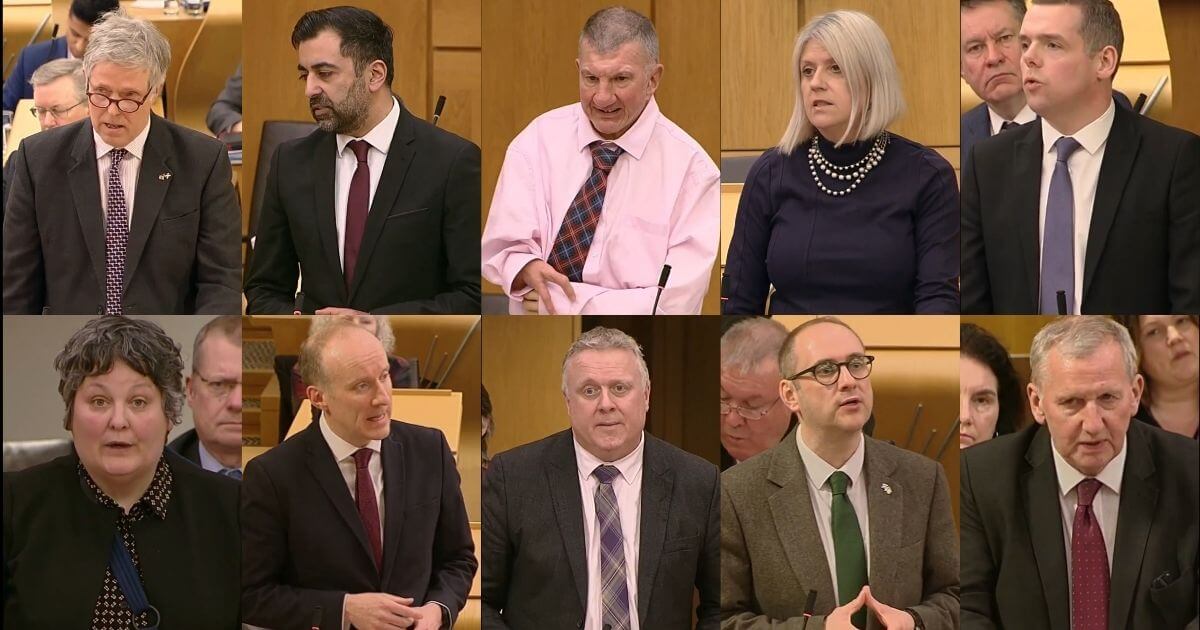
The Bill was defeated at its decisive stage, with the leader of the SNP, Scottish First Minister John Swinney, Scottish Labour leader Anas Sarwar, and the leader of the Scottish Conservatives, Russell Findlay, all uniting in their opposition to the proposals. They were joined by Deputy First Minister Kate Forbes and former First Ministers Nicola Sturgeon and Humza Yousaf.
The debate focused on access to palliative care rather than assisted suicide, concerns about the potential for coercion and the Bill’s lack of safeguards to address this, and the fact that Holyrood would not have the power to create protections for medical professionals who did not want to assist in the suicide of their patients.
Assisted suicide should not be introduced when palliative care access is so poor, MSPs argue
At the beginning of the debate, Edward Mountain MSP highlighted that over 14,000 Scots die each year without adequate palliative care. If assisted suicide were to be introduced when access to palliative care is so poor, individuals may be left with no real choice at the end of life, he argued.
Former First Minister of Scotland, Humza Yousaf, agreed with this, stating that terminally ill people should not be forced to choose between suffering and an early death. He reiterated calls for improved palliative care that “gives people comfort, relief and, yes, dignity in their death”.
Pam Duncan-Glancy, the first permanent wheelchair user in the Scottish Parliament, concurred with this assessment, saying that people with disabilities should always be able to access the care and support they need. If assisted suicide were made legal, she said, there would be a risk that it would be easier for people with disabilities to die than to access care.
She continued by saying that although she, as an MSP, is one of the most empowered people in the country, even she has difficulty accessing the right care and support that she needs. For people who are more vulnerable than she is, care access can be almost impossible.
It would be “inconceivable”, she said, to suggest that there would be choice at the end of life if assisted suicide were legalised. “In a world where so many have little or no choice, we cannot risk making death the only choice that they ever have”.
Bob Doris also drew attention to the tension between a potentially fully funded assisted suicide service and limited access to care. Quoting the disability advocacy organisation, Inclusion Scotland, he said “legalising assisted dying will only exacerbate existing inequalities rather than expand genuine choice and control”.
Concerns were raised about the lack of safeguards against coercion
As with the parallel Bill in Westminster, MSPs raised numerous concerns about coercion into assisted suicide, arguing that the assisted suicide Bill did not take sufficient account of this. Edward Mountain stated that the area of the Scottish assisted suicide Bill that gave him the “greatest concern”, even at that late stage of the legislative process, was that the risk of coercion and self-coercion was still so prevalent.
Jeremy Balfour, who lives with a disability, criticised the lack of adequate safeguards in the Bill to protect people with disabilities who are less fortunate than himself, arguing that the legislation had “no meaningful protection against coercion”.
Paul O’Kane suggested that the potential to be coerced into assisted suicide was a particular concern for people with disabilities and said he did not believe that, under the legislation, it would be possible to look people with disabilities in the eye and tell them that they could be given “safety, dignity and protection”.
Humza Yousaf and Douglas Ross agreed that the assisted suicide Bill is not worth the risk of one person dying, with Yousaf remarking that if even one person ended their life by assisted suicide due to being pressured or coerced into it, then that would be one too many.
Douglas Ross said that if any person has their life ended as a result of pressure or coercion, then MSPs “will have failed as legislators, and this Parliament will have failed”.
Russell Findlay also agreed, saying that he changed his mind to oppose the legislation out of fears that it would not adequately protect against coercion.
Ruth Maguire pointed out that the risk of coercion is especially present for women who are living with domestic abuse. She argued that assisted suicide could become “another lethal tool to be wielded by an abusive partner”.
Daniel Johnson, who voted in favour of the Bill at Stage 1 but voted against during the final Stage 3 vote last week, said there can be no compromise when it comes to assisted suicide. Legislation that is “‘good enough’ is not good enough”.
“If MSPs do not believe that those safeguards are in place, they should not vote for the bill”, Johnson remarked.
Stephen Kerr brought up a letter written to MSPs from hundreds of medical professionals who raised concerns that the assisted suicide Bill would not adequately protect patients from coercion.
Michael Matheson shared concerns about the Bill from Isabelle Kerr, who runs rape crisis centres in Scotland. She said that, due to her experience with domestic abuse victims, coercion would inevitably happen under this Bill. “In my view, the real questions are who will be coerced to die, and how many such deaths will be missed”, she said.
Medical professionals could be forced to participate in their patients’ suicides
Michael Marra said that not allowing employment protections for medical professionals who refuse to assist in their patients’ suicides to be placed on the face of the Bill was risky, calling it an “unsafe dereliction” to cede this process to backroom officials to implement at a later date through regulations.
Paul O’Kane outlined that he could not understand why organisations that have provided care for hundreds of years are now being asked to end lives, without including employment protections for medical professionals who may not want to be involved in this.
Keith Brown told Holyrood that one GP told him that they would immediately resign if assisted suicide were legalised, due to there not being any protections for medical professionals in the Bill.
Dozens of major medical bodies and organisations also came out against the Bill
Dozens of major medical bodies and organisations representing the most vulnerable in Scottish society also came out in opposition to the Bill.
This included the Royal Pharmaceutical Society in Scotland, the Royal College of Psychiatrists in Scotland, the Association of Palliative Medicine, Social Work Scotland, the Association of Palliative Care Social Workers, the Scottish Association of Social Work, and the British Islamic Medical Association.
They were joined by groups representing tens of thousands of people in Scotland including, a coalition of major disability groups, such as Inclusion Scotland, Disability Equality Scotland, Glasgow Centre for Inclusive Living, Glasgow Disability Alliance, Our Duty of Care, People First, Self Directed Support Scotland, Disabled People Against Cuts, Group for Autism, Insurance, Investment and Neurodiversity, LegaCare, We Thrive and Down’s Syndrome Research Foundation, who all came out in opposition to the Bill.
Alisdair Hungerford-Morgan, Chief Executive of Right To Life UK, said “This is a great victory for the most vulnerable in our society. They deserve protection and care, not a pathway to suicide. If this legislation had passed, countless vulnerable people would have been pressured or coerced into ending their lives”.
“A large number of MSPs from across the political spectrum came together to recognise the dangers this Bill posed and have rightly rejected it”.
“The question of assisted suicide has dominated the five-year term of the current Scottish Parliament. The issue is now settled for a generation”.
“But as this debate ends, we must begin a new conversation. It is vital that after the Holyrood elections in May, MSPs come together to redouble their efforts to invest in universal access to high-quality palliative care”.
“Holyrood has sent a decisive message to Westminster by rejecting assisted suicide. The Westminster Bill is already on life support as Peers continue to address its multiple flaws and unanswered questions. Rather than ploughing on with their dangerous Bill, the Bill sponsors in Westminster must now follow Scotland’s example and accept that assisted suicide is not the answer. It cannot be introduced safely”.