



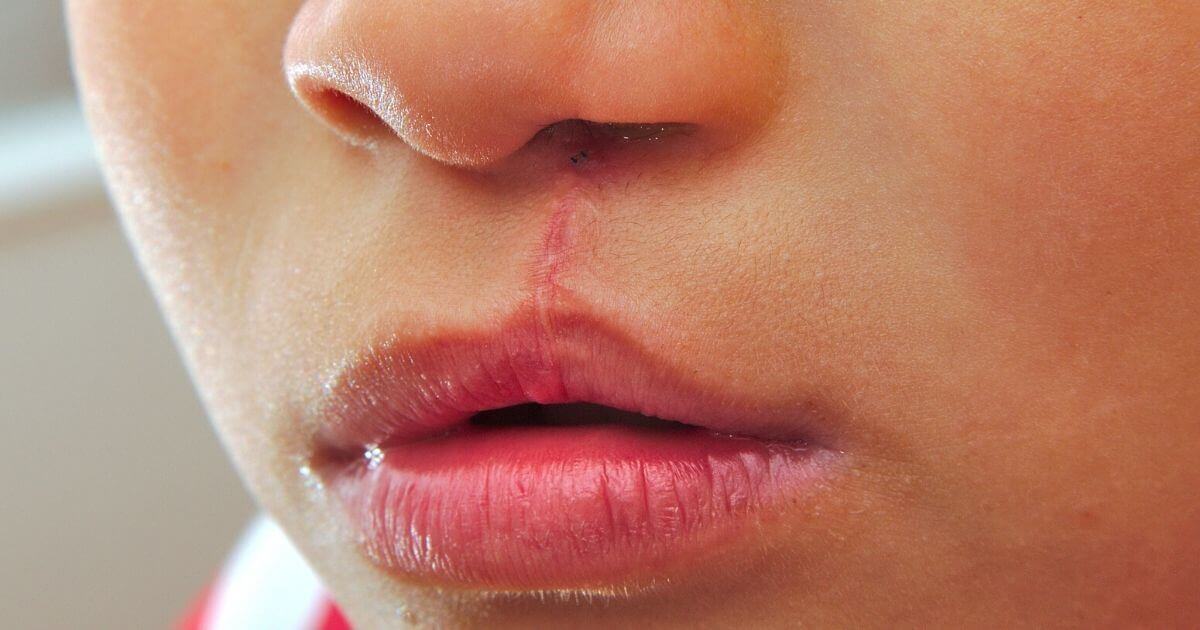
The number of abortions performed on unborn babies with cleft lip and palate has increased 150% since 2011, in England & Wales.
The new figures, released in response to a parliamentary question by pro-life MP Fiona Bruce, revealed that there were 10 terminations for those with the condition in 2011 with the figure rising to 25 in 2018 – representing a 150% increase.
The data also found that there had been a total of 223 abortions on unborn babies with cleft lip over the last 10 years.
However, the figures are likely to be even higher as abortions for cleft lip are routinely under-reported.
In 2013, findings from a European register revealed that abortions for cleft lip and palate can be over ten times more common than what is being reported.
Eurocat, which was set up to register congenital abnormalities across 23 countries, found that 157 unborn babies, with the condition, were aborted in England and Wales between 2006 and 2010.
The Department of Health only recorded 14 such abortions, during that time, but admitted in a 2014 report that some disability abortions had been wrongly recorded.
Joan Morris, national coordinator for Eurocat and professor of medical statistics at Queen Mary, University of London, said the group also found the number of babies aborted in 2010 for Down’s Syndrome was double that recorded officially – 886 compared to 482.
She told The Sunday Times: “Babies are aborted for Down’s and they still don’t put that on the abortion form, so if they can’t do it for Down’s, why would they put cleft lip?”
Currently, abortion is available up to birth in England, Wales and Scotland if the baby has a disability, including Down’s syndrome, cleft lip and club foot whereas if the baby does not have a condition, there is a 24-week time limit.
A 24-year-old woman with Down’s syndrome has now launched a landmark case against the UK Government over the discriminatory abortion law that singles out people like her.
Heidi Crowter has joined with Cheryl Bilsborrow, whose two-year-old son Hector has Down’s syndrome, to bring forward the case.
Heidi Crowter, who has the condition and is getting married this summer, told the BBC’s Victoria Derbyshire programme she is challenging the current law because it is “deeply offensive” and makes her feel “unloved and unwanted”.
Cheryl told the BBC that the current law was “downright discrimination” and disclosed how she felt “pressured to terminate”, saying she was offered an abortion at full term, just three days before giving birth to Hector.
Cheryl recalled a medical professional saying: “You do know we still terminate babies with Down’s syndrome at 38 weeks?.”
Mothers whose children were born with a cleft lip and palate have recently spoken out in horror that the proposed abortion framework that the Conservative Government is contemplating imposing on Northern Ireland will allow babies with the condition to be aborted up to birth.
Last year, in the absence of a functioning Stormont Assembly, politicians in Westminster voted to impose an extreme abortion regime on Northern Ireland which would also allow abortion for disability up to birth.
Terri Thomas told Right To Life UK: “To read that some people [in Northern Ireland] may now consider a termination simply because of a cleft lip or palate is so upsetting”.
Another mother, with a similar experience to Terri, was distraught and heart-broken when she heard that the proposed change in the law would mean that unborn babies could be aborted just because they had a cleft lip and palate.
Over 1,600 people with Down’s syndrome and their families have signed an open letter urging the UK Prime Minister Boris Johnson not to introduce abortion up to birth for babies with the condition in Northern Ireland.
The United Nations’ Committee on the Rights of Persons with Disabilities’ concluding observations on the initial report of the United Kingdom of Great Britain and Northern Ireland made a key recommendation that the UK change its abortion law on disability so that it does not single out babies with disabilities. However, the Government has decided to ignore this recommendation.
The Disability Rights Commission (now the Equality and Human Rights Commission) has said that this aspect of the Abortion Act “is offensive to many people; it reinforces negative stereotypes of disability…[and] is incompatible with valuing disability and non-disability equally”.
The 2013 Parliamentary Inquiry into Abortion for Disability found the vast majority of those who gave evidence believed allowing abortion up to birth on the grounds of disability is discriminatory, contrary to the spirit of the Equality Act 2010 and that it affects wider public attitudes towards discrimination. The Inquiry recommended Parliament reviews the question of allowing abortion on the grounds of disability and should consider repealing section 1(1)(d) of the Abortion Act which allows for it.
Disabled peer Lord Shinkwin has previously had a Bill in the House of Lords that would have repealed section 1(1)(d) of the Abortion Act – the Bill was undefeated but unfortunately ran out of time. Lord Shinkwin’s Bill was supported by Disability Rights UK.