



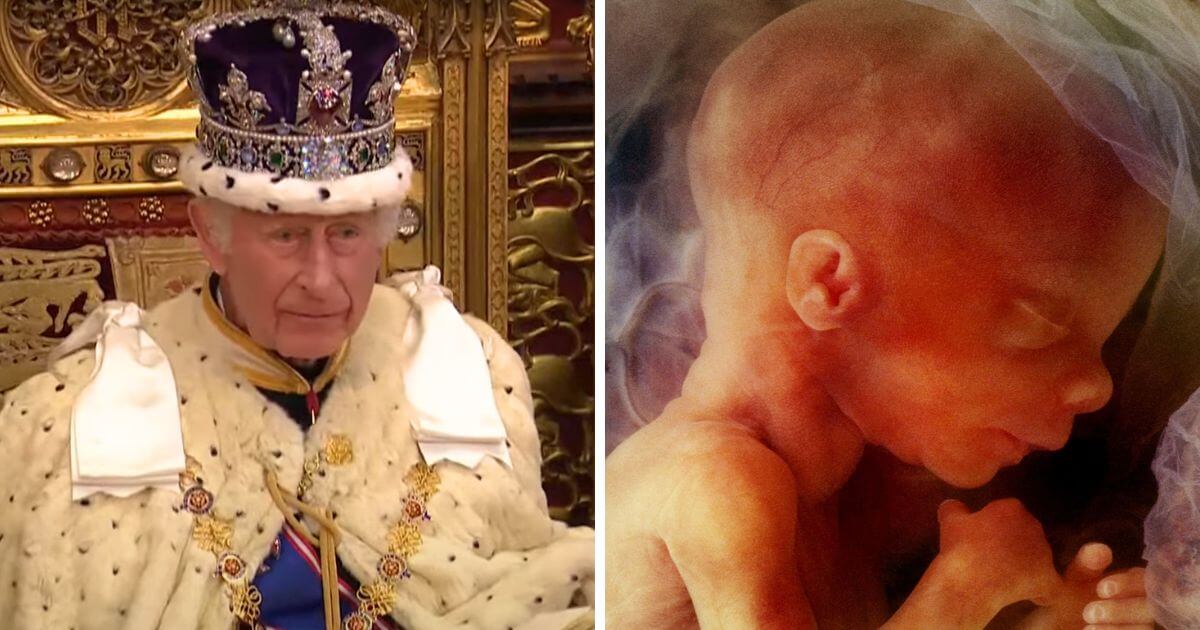
While the King’s Speech made no mention that the Government would take up the failed assisted suicide Bill, the Government’s legislative agenda could be hijacked to introduce further extreme changes to our abortion law.
In his speech earlier today, as part of an Oral statement to Parliament, the King outlined the Government’s intention to introduce legislation to modernise the NHS and the Criminal Justice system. However, given past attempts to change the abortion law, there is a risk that, if abortion amendments are allowed, some MPs will attempt to hijack these Bills by adding extreme abortion amendments.
This is precisely what happened in the last parliament. On 17 June 2025, Labour MP Tonia Antoniazzi hijacked the Crime and Policing Bill (a Government Bill not related to abortion). This changed the law so that it is no longer illegal for women to perform their own abortions for any reason, including sex-selective purposes, and at any point up to and during birth. This will likely lead to a significant increase in the number of women performing dangerous late-term abortions at home.
This drastic change to the law was passed in the Commons after just 46 minutes of backbench debate – there was no prior consultation with the public, no Committee Stage scrutiny and no evidence sessions.
Assisted suicide Bill not part of King’s Speech
Consistent with previous statements, the Government did not indicate that it would take forward a Government Bill on assisted suicide.
During a House of Lords Committee Stage session on Friday 30 January, the Government Chief Whip in the House of Lords, Lord Kennedy, made it clear that the assisted suicide Bill would absolutely not become a Government Bill if the Parliament Acts were used to attempt to force the Bill through, as some supporters of the Bill have argued it should.
“The Government have no intention of bringing back this Private Member’s Bill”, Lord Kennedy said. “It will remain a [Private Members’ Bill], and the Government have no intention of bringing it back in the next Session”.
The lack of mention of the assisted suicide Bill follows a media campaign instigated by the sponsor of the Bill in the House of Lords, Lord Falconer, in which he seemed to threaten the use of the Parliament Acts to attempt to push through the assisted suicide Bill without the consent of the Lords.
However, polling has suggested that more MPs would oppose the assisted suicide Bill than could be relied upon to back it if the Bill were revived.
The polling, which was carried out by Whitestone Insight, found that only 41% of MPs surveyed can now definitely be relied upon to vote “Aye” again, while 45% said they would continue to vote no, suggesting that if the legislation were to be put to a vote today, it would likely be rejected by the House of Commons.
Only 12 MPs need to change from supporting the previous Bill to opposing the new Bill for the new Bill to fail, so the poll suggests that any MP considering bringing back the assisted suicide Bill after the King’s Speech would likely be destined to fail.
In addition, a majority of MPs surveyed, approximately 61%, support the constitutional authority of the House of Lords to amend, block or reject the legislation if safeguards are deemed inadequate. Only 28% of MPs disagreed.
Spokesperson for Right To Life UK, Catherine Robinson, said “While there is no explicit mention of abortion or assisted suicide in the King’s Speech, and the details of the proposed legislation have not yet been released, there is always the risk that MPs supportive of extreme abortion laws will seek to make amendments to the NHS Modernisation Bill and the Courts Modernisation Bill”.