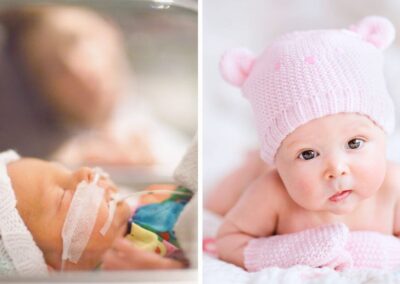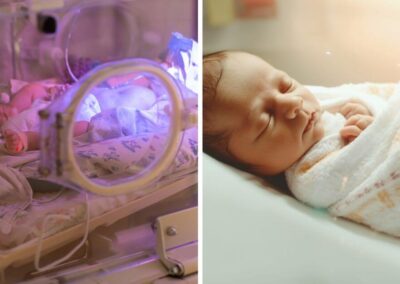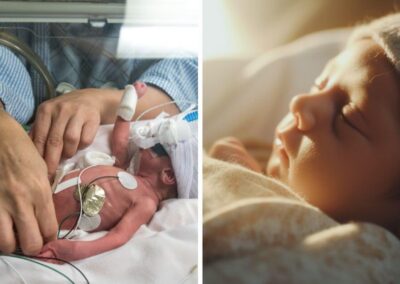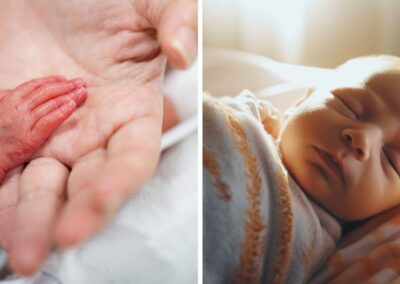




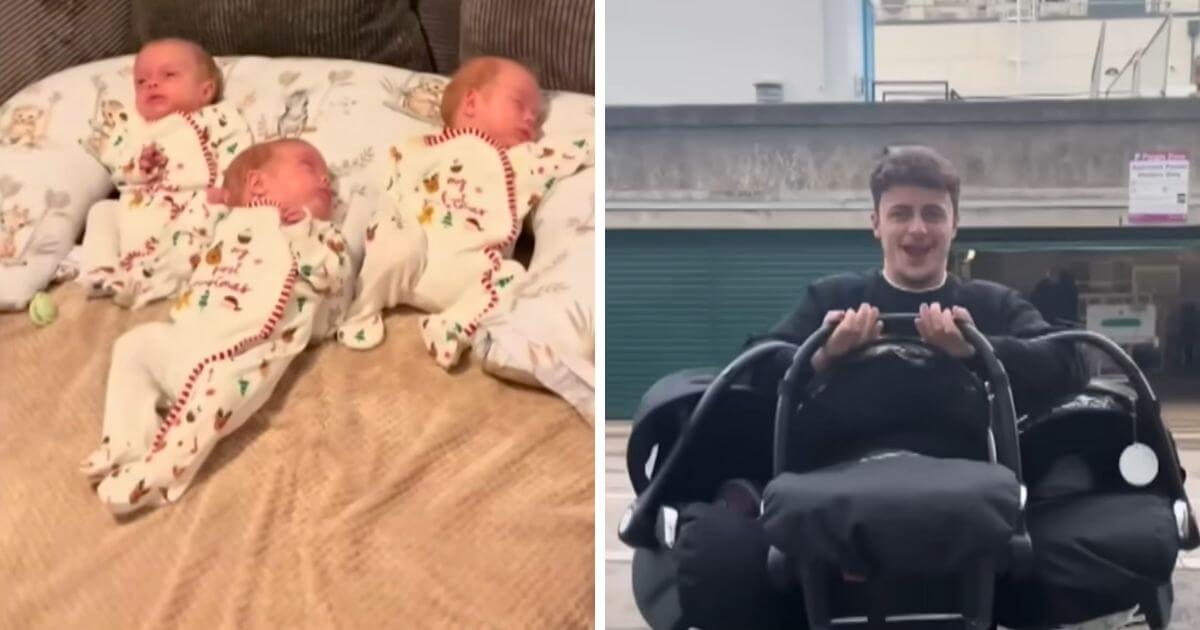
Identical triplets who were born prematurely have finally made it home from the hospital in time for Christmas.
Husband and wife Ace and Shannon Page, from Somerset, were told during a pregnancy scan when Shannon was just seven weeks pregnant that they would be having twins. However, just two weeks later and much to their amazement, the couple was left “shocked” when doctors said they would be having triplets instead.
It was only a few weeks later, though, that this joyful news turned into crisis. At 19 weeks gestation, Shannon was suffering from complications, being told that her cervix had tunnelled and shortened, which meant that she could give birth in as little as two weeks’ time. She had begun to faint frequently and was told that one of the babies was taking more nutrients from the placenta, which they shared, than the other two babies.
Doctors told the couple that they should consider ending the lives of one or two of the unborn babies to improve the chances of survival for the remainder, but thankfully, Shannon and Ace refused.
“We were advised by several people to maybe terminate one or two to help one survive”, Ace, the triplets’ father, said. “We decided to not go ahead with it and it is the best thing we have done. We let nature take its course and we are super grateful”.
At 29 weeks gestation, Shannon went into early labour, prematurely giving birth to triplets Cruz, Enzo, and Aljo. The babies were quickly relocated to the neonatal intensive care unit (NICU) at Gloucestershire Royal Hospital, where they remained for the next 10 weeks. After this time, and less than a week before Christmas, the tiny babies were finally allowed to go home.
The progress has not been without its setbacks, however. In November, baby Cruz had to be separated from his brothers for a fortnight due to a bowel infection common in premature babies. Thankfully, he has recovered well.
“It’s an absolute whirlwind and very up and down”, Shannon, their mother, said. “We’ve been living out of hospital and trying to navigate each day as it comes”.
“But last week I learnt that it will end, even if it feels like it doesn’t at the time. The boys are doing really well – their feeding tubes came out and they are now feeding from bottles. Having them home for Christmas is the best present we could have possibly hoped for and we feel so incredibly fortunate to have all three boys doing so well. Our home will certainly never be the same again!”.
“We’ve gone from having no children and almost feeling it may never happen, to having three before I’m 30″.
“We’re not religious but this is like a gift from God – it’s amazing”, she said.
Ace continued, “We’re lost for words to be honest, I don’t think it’s really sunk in that we’ve got three identical boys. The last few months have been hectic, to say the least, so we’re looking forward to getting into our routine and getting back into a sense of normality. But we can’t be more thankful for the love and support we’ve received”.
“We can’t wait to spend Christmas Day together as our little family”, Shannon added.
Spokesperson for Right To Life UK, Catherine Robinson, said “This heartwarming story exemplifies the joy that little children can bring, no matter how tiny and premature they are. It is wonderful to hear they all will make it home for Christmas”.