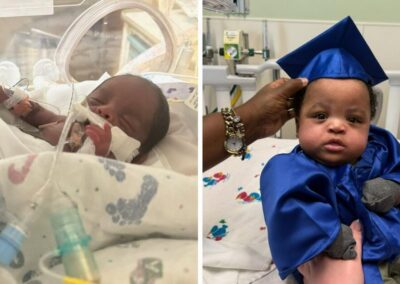




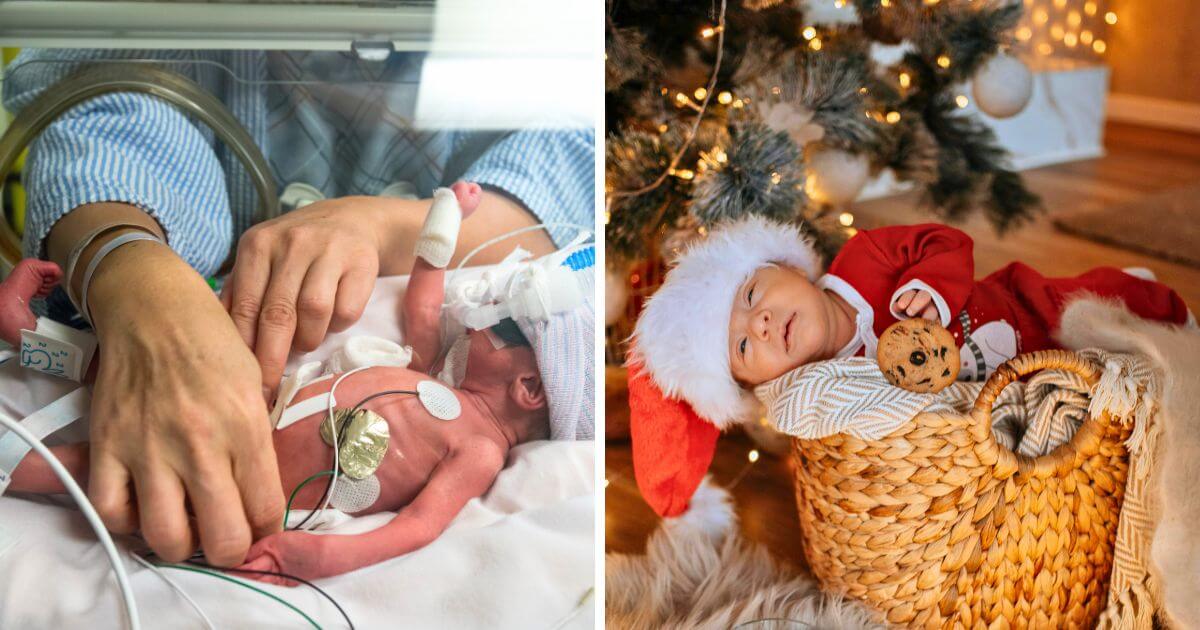
A baby girl born in the family car at only 22 weeks gestation has made it home from the hospital in time for Christmas.
Baby Daleyza weighed just over one pound when she was born in the front seat of the family car on the way to the hospital. Her mother, Jazmin, was only 22 weeks pregnant when she unexpectedly went into labour and had to drive 50 miles to a hospital after she discovered the local hospital was not equipped to care for such a premature baby.
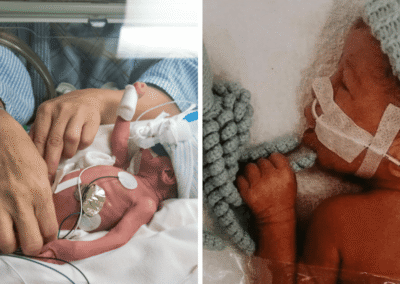
Baby Daleyza wouldn’t wait until they got to the hospital, however. She was born in the car while an emergency dispatcher gave instructions to Jazmin over the phone, including how to break the amniotic sac and perform CPR. Thankfully, paramedics arrived within minutes and performed CPR on the tiny baby using a single finger before she was rushed to the Neonatal Intensive Care Unit (NICU).
“The call came in at 2 am. Most of us have had labour and delivery calls, but not for someone this premature”, said Engine 6 Capt David Fike, one of the emergency personnel who attended the initial scene. “Those initial moments matter”, he added.
Janelle Beall, nurse manager at the NICU, said, “In our own controlled environment with the NICU, it can be challenging to maintain thermoregulation in extremely preterm infants. It is incredible what [the paramedics] did to get the baby here safely. It made all the difference”.
“When [the paramedics] brought the baby to our Emergency Department, the baby had a good temperature and a good chest rise”, she continued.
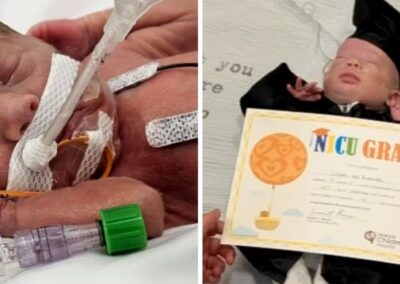
Baby Daleyza then spent 146 days in the NICU, cared for by a dedicated neonatologists, NICU nurses, NICU-focused dietitians, respiratory therapists, and pharmacists. Finally, after all this time and all her ups and downs, she has been allowed to go home, just in time for Christmas.
“Not all family is blood relatives. There is the family that you make and these doctors and nurses are my family”, Jazmin said of those who helped save baby Daleyza’s life. “There are no words to express how thankful we are”.
Improved survival rates for extremely premature babies
The survival rates for extremely premature babies like Daleyza have significantly improved in recent decades. A 2008 study looking at survival rates for a neonatal intensive care unit in London found that neonatal survival rates at 22 and 23 weeks gestation had improved over time. In 1981-85, no babies who were born at these gestational ages survived to discharge. However, by 1986-90, 19% did and this increased to 54% in the period 1996-2000.
In the decade to 2019 alone, the survival rate for extremely premature babies born at 23 weeks doubled, prompting new guidance from the British Association of Perinatal Medicine (BAPM) that enables doctors to intervene to save premature babies from 22 weeks gestation. The previous clinical guidance, drafted in 2008, set the standard that babies who were born before 23 weeks gestation should not be resuscitated.
Spokesperson for Right To Life UK, Catherine Robinson, said “It is great to hear that baby Daleyza has made it home in time for Christmas after a tough 146 days in the NICU. Her story is a testament to the strength of unborn babies, and highlights the increasingly high chances of survival that extremely premature babies like her have”.