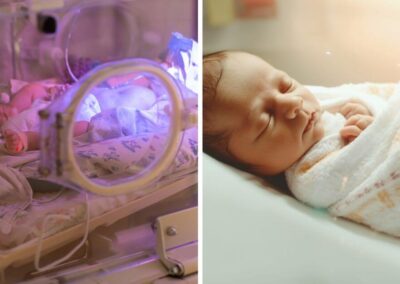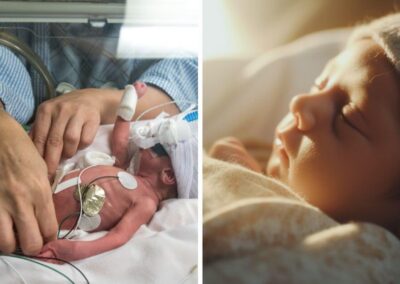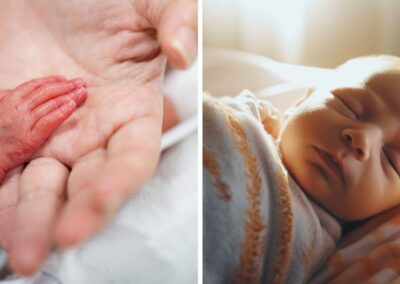




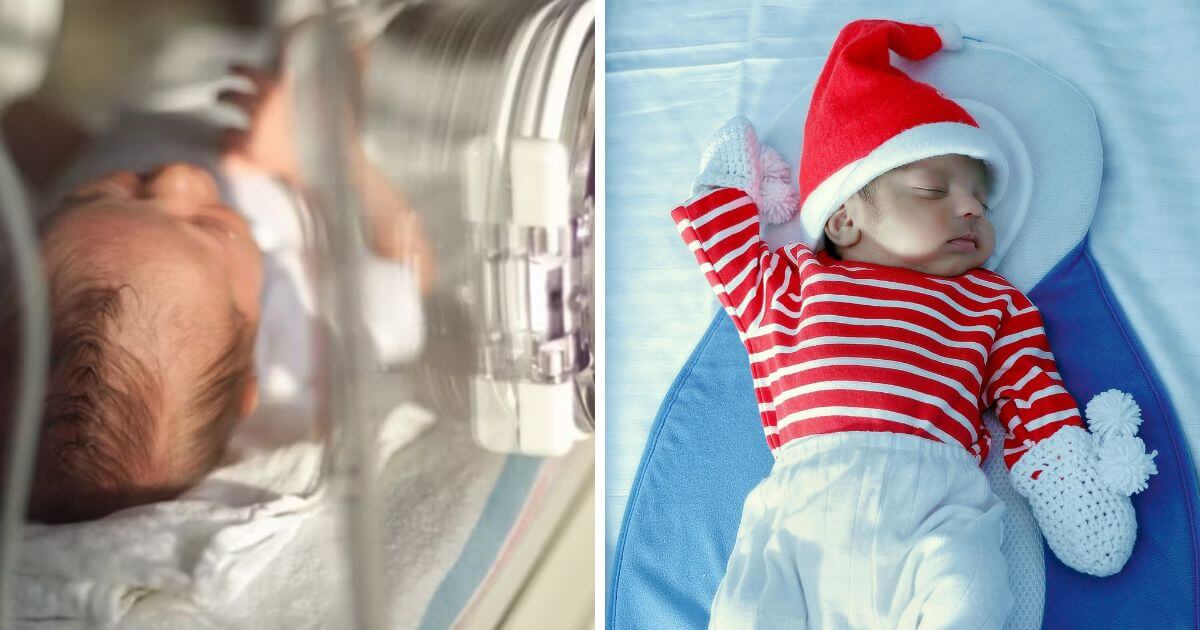
A family facing the holidays in hospital after their baby was diagnosed with multiple medical conditions were able to have a very happy Christmas with the help of medical staff at Great Ormond Street Hospital.
Mum, Laura, shared her family’s story after baby Oliver was born with Down’s syndrome and a hole in his heart. He was on respiratory support from birth.
“My husband Christopher, 38, and I weren’t expecting a smooth ride, but we could never have prepared for what was to come”, she reported.
Oliver, who was born in Oxford, was transferred to the family’s local hospital in Northamptonshire. The plan was that he could go home before having his operation to close the hole in his heart at Great Ormond Street Hospital (GOSH) at six months old.
However, Oliver was not able to come off respiratory support and was transferred to GOSH only two months after his birth.
Unexpected medical complications put Christmas celebrations in doubt
While Oliver’s operation went smoothly, it became clear there was another problem.
“Oliver had airway malacia, which is a condition that causes the airway to go floppy”, Laura wrote. “His respiratory support was increased to help with his breathing and we were discussing different options for him. One of those options was having a tracheostomy procedure”.
“At this point, we were heading into December and we knew there was no chance of getting Oliver home for Christmas”, she added.
Laura and Christopher are also parents to Henry, eight, and Freddy, seven, and were finding it difficult to plan their Christmas celebrations. However, three days before Christmas, they were told that they were able to stay in a nearby flat funded by Great Ormond Street Hospital Children’s Charity.
A “different but lovely” Christmas
“The flat meant we were able to be together as a family every day of the Christmas holidays”, Laura wrote. “The difference that made to our family is hard to put into words. We brought suitcases and presents down to London. The boys love decorating our house for Christmas, so I bought some decorations for the flat as well as a tree with help from the GOSH play team”.
With the help of the medical staff at the hospital, Laura’s family were able to enjoy their Christmas together.
“Christmas Day was different but lovely”, she continued. “We went with a sack of presents for Oliver. The hospital staff were amazing – they also did a sack for all the children, including Henry and Freddy. Henry wrote a quiz and was the quizmaster in the hospital. We didn’t have to think about food because the hospital put on a dinner for parents and siblings. There weren’t many people on the ward that Oliver was in because the hospital really tries their best to get families home for Christmas”.
“They put a lot of thought into how to make it as special as possible for those in the hospital”, Laura went on. “You don’t get to enjoy the magic of Christmas with your children for many years, so it was very important for us to still celebrate despite our situation”.
Laura and the family are hoping that Christmas this year will be different now that little Oliver has made it home. However, after such a good experience in the hospital, she shared that their celebrations last year “showed us that you can have Christmas anywhere”.
Spokesperson for Right To Life UK, Catherine Robinson, said “Thank you to the staff of Great Ormond Street Hospital for going the extra mile to make sure that families like Oliver’s in hospital for Christmas are able to celebrate together. We hope that this Christmas, wherever it is celebrated, is just as wonderful!”