



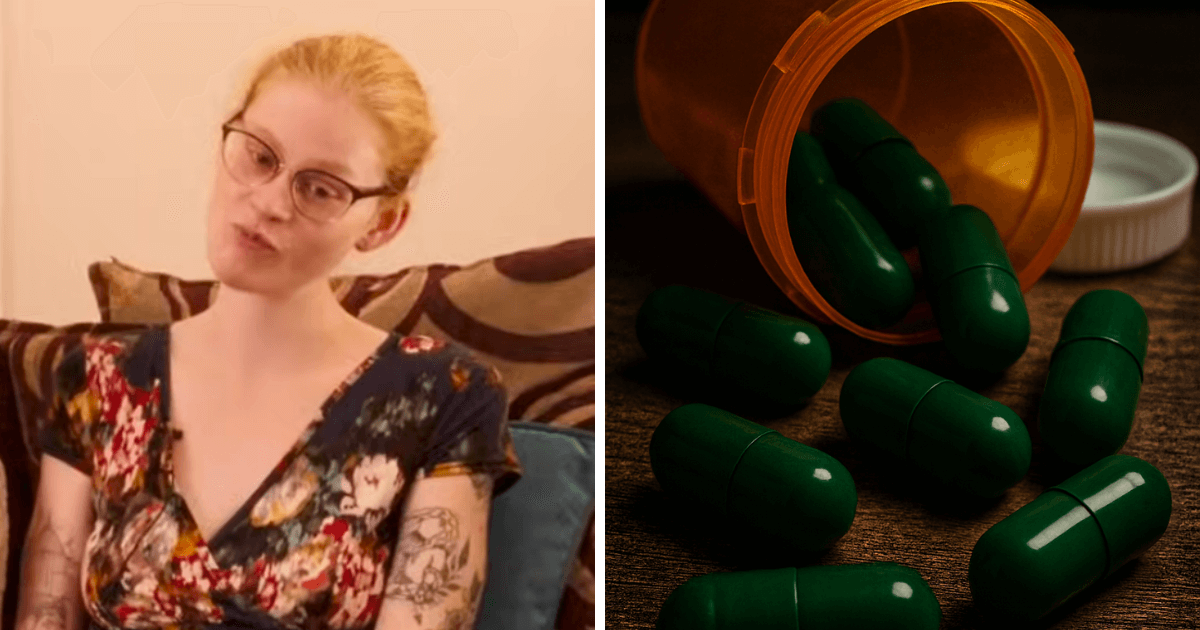
A woman in recovery from anorexia has shared her fears about the dangers the assisted suicide Bill could cause for people living with eating disorders.
Speaking with Chelsea Roff, the founder of leading eating disorder charity Eat Breathe Thrive, Ailidh Musgrave said “My concerns lie with people like myself who are still in the throes of anorexia right now, what the assisted dying Bill could mean for them and their families”.
The Terminally Ill Adults (End of Life) Bill would legalise assisted suicide in England and Wales for those with a prognosis of six months or less. People with anorexia could be eligible for assisted suicide after the House of Commons assisted suicide Bill Committee chose not to close a loophole in the Bill, according to eating disorder charities. The Bill is currently going through Committee Stage scrutiny in the House of Lords.
Having been diagnosed with anorexia at the age of 13, Musgrave spent years going in and out of hospitals, at times being given less than a week to live. Refusing to be fed and hydrated, Musgrave only survived because her mother encouraged her to eat. She said “I didn’t see a future […] there was no future. There was absolutely no way out”.
Now in recovery, Musgrave, 28, shared her concerns about the implications of the assisted suicide Bill for people with eating disorders, saying “What I don’t want is that people like myself who are young, who have so much ahead of them if they are able to get treatment, to fall through a crack”.
‘I would not be standing here today if the Bill had been law when I was ill’
Musgrave said she would have previously chosen assisted suicide if it were legal, telling Parliament earlier this year “There is no doubt in my mind that I would not be standing here today if the [assisted suicide] Bill had been law when I was ill”.
Musgrave now hopes to go to university to study policing, saying “I want people to know that there is an end to the pain that we live through. If I had ended my life, I would not know that actually, recovery’s possible”.
Musgrave’s comments came as an open letter, whose signatories include actress Sophie Turner and Gail Porter, warned that the Bill “could make individuals with eating disorders eligible for assisted death at times when they are unable to access or accept treatment”.
The letter, coordinated by Eat Breathe Thrive, warned that the Bill’s definition of “terminally ill” could be interpreted to include people with eating disorders who develop severe complications from starvation, vomiting or, in those cases in which someone has Type 1 diabetes, insulin restriction.
“In a health system already stretched beyond capacity, someone who is severely ill and ambivalent about treatment could be assessed as eligible for assisted death”, the letter says.
Threat of the Bill towards people with eating disorders
Chelsea Roff previously published a study that identified “at least 60 patients with EDs who underwent assisted dying between 2012 and 2024” in countries with assisted suicide and/or euthanasia.
The letter states they “were not individuals who were inevitably dying, but individuals whose illnesses had become life-threatening in the absence of effective treatment”.
Concerns that the Bill poses a threat to people with eating disorders have been shared throughout the Bill’s parliamentary journey. At Third Reading in the House of Commons, Naz Shah MP pointed to Roff’s evidence where at least 60 women with anorexia died by assisted suicide, not because they were terminally ill, but because they weren’t given proper treatment. She warned that the amended Bill still does not “close the [anorexia] loophole”.
Spokesperson for Right To Life UK, Catherine Robinson, said “It is clear that the lives of people with eating disorders would be under threat if the dangerous assisted suicide Bill were to become law”.
“Vulnerable people deserve our care and support, no matter what condition they may be suffering from. What they do not need is help and encouragement to end their lives”.