



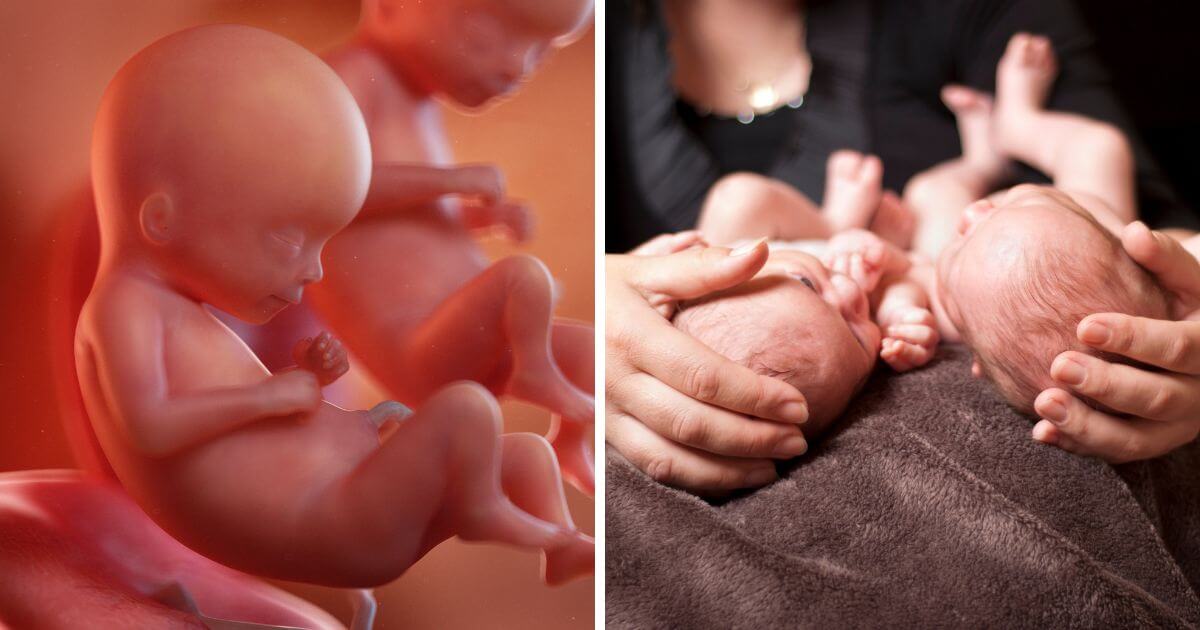
A woman who worried she was “overreacting” when she raised concerns about pain during her pregnancy unexpectedly gave birth to twins 10 weeks prematurely.
Courtney Flower said she first started feeling uncomfortable during her pregnancy at around 25 weeks gestation, but thought that the discomfort she felt was simply because she was pregnant with twins.
“I’d struggle to go to work, so I’d stay home once or twice a week so I could get myself comfortable enough to go back”, she said.
However, things took a turn for the worse around five weeks later, when Flower felt a more intense pain that prompted her to call her doctor, who advised her to go to the hospital, telling her to trust her intuition that something might be wrong.
While in the car journey to the hospital, Flower assumed that she was simply “overreacting” and that the pain she was feeling must be normal. However, upon her arrival at the hospital, nurses determined that she was already four centimetres dilated and that her children were arriving 10 weeks ahead of schedule.
Attempting to delay their birth as long as possible, doctors administered a steroid to improve the children’s lung function; however, one child had a ruptured amniotic sac, while the other was already in the breech position, making their birth imminent.
“I felt guilty that my body couldn’t make it another 24 hours”, Flower remembered.
Only 11 hours after arriving at the hospital with thoughts that she was overreacting, her twin boys, Brooks and Jax, were born, with each newborn weighing around three lbs.
The new mother reflected that she felt “overwhelmed” and “really worried” during the experience, revealing that she “kind of blacked out”.
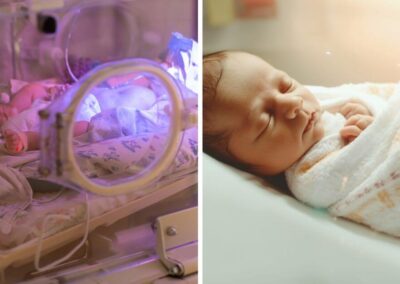
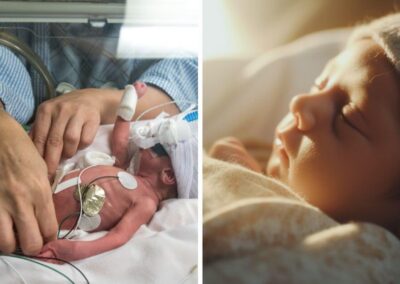
Moments after being born, the premature twins were rushed to the neonatal intensive care unit (NICU), where they remained for over a month, confined to incubators.
During their stay in the NICU, the newborns were fed and changed every three hours on a strict schedule. While both children made progress, Flower revealed that Jax was developing more quickly.
“He went through normal premmie things like underdeveloped lungs”, she said, adding that both children had to have supplemental oxygen to breathe, but Brooks remained on this support for longer.
Despite the challenges that the babies and their parents faced, Flower said that she came away from the experience feeling like the NICU was a “training camp for parents”, leaving them “very prepared” for the road ahead.
“They gave us so many tips and tricks for changing their diapers and feeding them”, she said.
Joanna Nickles, a nurse at the NICU, said that parents are “pretty much learning all of what we do and how to figure out what’s going on with their baby just by seeing”, adding that “eventually by the end of their stay, they’re a pro and I’m like, ‘You guys wanna come work with us?’”
The two premature babies have now gone home from the NICU – Jax after 46 days, Brooks after 55 – and the family is now enjoying their time together at home.
“We’re just so grateful”, Flower said.
Spokesperson for Right To Life UK, Catherine Robinson, said “We are delighted that Courtney Flower and her twin boys have finally been able to go home together”.
“Despite being born 10 weeks prematurely and facing health challenges, these little babies are now thriving at home – sooner than they were originally expected!”
“Their journey through adversity is a testament to the strength that all premature babies have”.