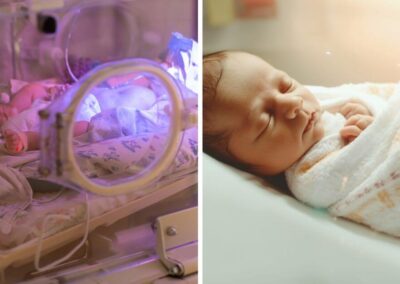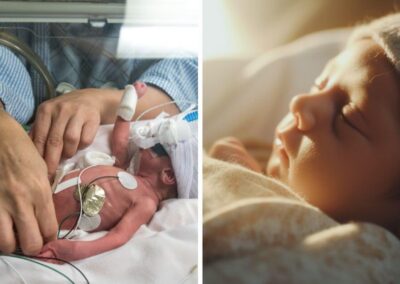




A premature baby who was born without a heartbeat has survived after doctors spent around an hour attempting to revive him.
Baby Luca was delivered by emergency Caesarean section seven weeks before his due date, weighing just 3lb 5oz, after they found that his heart had stopped beating. Medical staff continued working to resuscitate him for approximately an hour before successfully restoring his heartbeat.
Three months into the pregnancy, scans showed that baby Luca had gastroschisis, a condition in which a hole in the abdominal wall allows part of the bowel to develop outside the baby’s body.
The condition affects around one in every 2,000 babies and can increase the likelihood of premature birth and low birth weight.
Doctors initially told his parents, Demi and Charlie, that Luca’s condition was not severe, and the pregnancy continued without further problems for several months.
Concerns during the pregnancy prompt emergency hospital trip
When Demi was 30 weeks pregnant, she became concerned after she could no longer feel Luca moving. She rushed to the hospital and was later transferred for further scans. After six days of observation, she was discharged.
Demi returned two days later for additional checks. She and Charlie were told Luca’s “bowels were fine” and that his condition “would be monitored every few weeks” at the hospital.
Less than two weeks later, Demi again noticed that Luca was not moving. She returned to the hospital, where doctors found that his heart rate had flatlined, meaning his heart was not pumping blood.
Baby Luca was subsequently delivered immediately by emergency Caesarean section without a heartbeat, and doctors worked to revive him for around an hour before their resuscitation efforts succeeded.
His dad, Charlie, said that “Seeing him born dead was so hard. It took the doctors around an hour to work on him. It’s the longest hour I’ve ever been through”.
Following the birth, Luca was transferred to another hospital for specialist treatment, accompanied by his father. Demi remained behind to recover from the Caesarean section. She discharged herself eight hours later, despite being advised to remain under observation for 24 hours.
“There was nothing stopping me from being with my Luca”, she said.
Demi’s sister drove her to the hospital, where she was reunited with Charlie and their baby boy.
Three operations
Luca underwent an operation to place his bowels inside his abdomen and later required two further procedures. He now remains in hospital, and doctors have warned his parents that his condition is still serious. However, he has since been taken off the ventilator that was supporting his breathing.
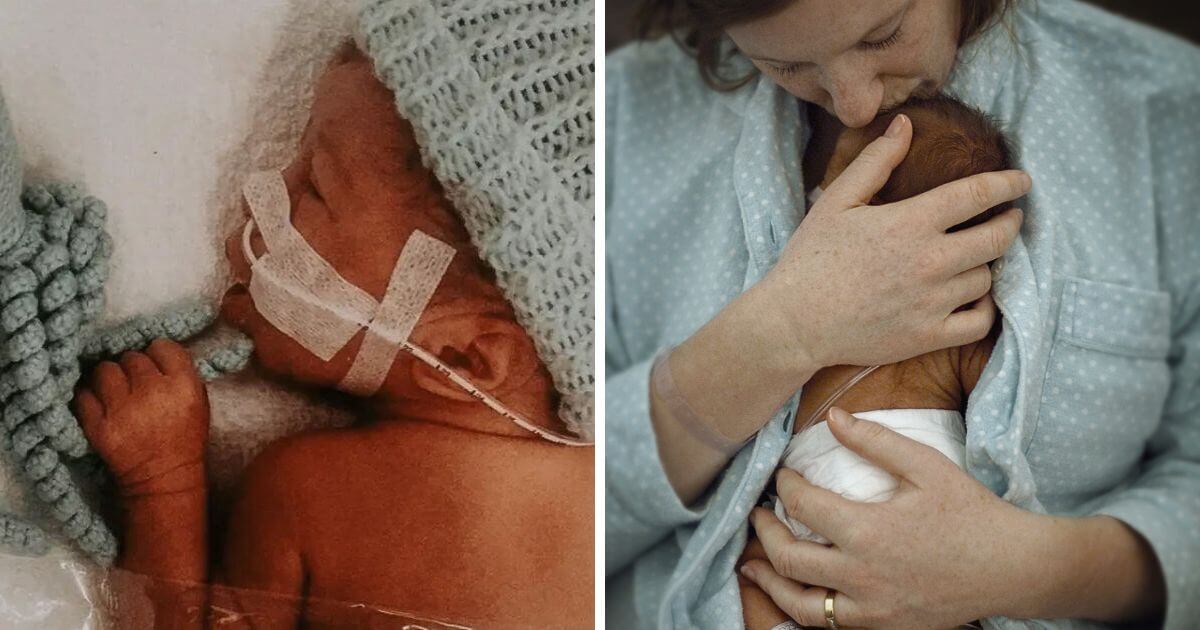
Luca’s father, Charlie, said “Me and Demi got to hold him the other day and got to do skin-to-skin contact for the first time. That was amazing. It was quite literally like holding my world in my hands”, he explained. “I’ll never forget that moment”.
Spokesperson for Right To Life UK, Catherine Robinson, commented “Luca’s survival is a striking example of what can be achieved when a seriously ill baby is given sustained medical care. His story underlines why medical vulnerability should never diminish a child’s right to care and protection”.
“Every baby, before and after birth, should be treated as a patient whose life is worth fighting for, regardless of how uncertain the prognosis may initially appear. Every unborn child deserves a chance at life”.