



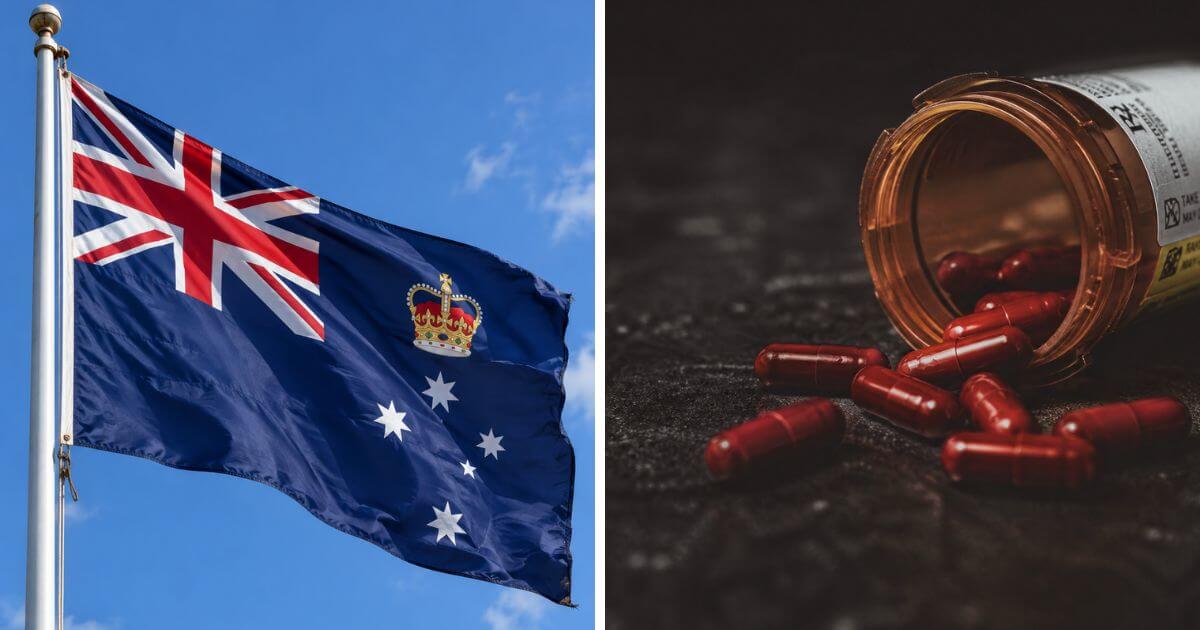
A person has died by suicide after taking lethal assisted suicide drugs left unused when their partner died in hospital without taking them, according to a report from the Victoria Government.
The report, released earlier this month, says the ‘Voluntary Assisted Dying Review Board’ for Victoria, Australia found “no evidence” that any aspect of the euthanasia and assisted suicide process or the dispensing of the lethal drugs contributed to the unintended death by suicide of the partner.
Despite the unintended death, the Board claims the euthanasia and assisted suicide programme “continues to operate safely” and it has not altered its assessment of “the safety and integrity” of the assisted suicide framework.
The report states that, in April 2026, the person who had been found eligible for assisted suicide and had the lethal drugs supplied to them died in the hospital without having ingested the lethal drugs. The applicant’s partner, according to the report, “is assumed to have consumed the [assisted suicide] substance at some point over the subsequent 2 days”.
Under the law in Victoria, any unused lethal assisted suicide drugs must be returned to the relevant pharmacist within 15 days after the death of the person they were intended for, whether they died by assisted suicide or not. Despite the 15-day provision in the law, the “contact person”, whose responsibility it is to return the drugs, managed to use the unused assisted suicide drugs to end their own life.
Potential for almost 700 unused assisted suicide drugs to remain in the Victorian community
Between June 2019, when assisted suicide and euthanasia became legal, and 30 June 2026, there were 2,452 instances of assisted suicide drugs being dispensed for self-administration, yet only 1,755 people have ended their lives by self-administering these substances over the same time period.
This means that there could be more than 697 unused batches of lethal drugs in the community right now in Victoria or elsewhere, even sitting in someone’s bedside drawer.
The total figure for the number of unused batches of lethal drugs that have been returned to date has not been published.
Non-compliance issues
The 2025-26 report has also found issues of non-compliance with the law. 21 completed applications reviewed by the Board were not in compliance with the law, and six of these were due to “a delay in the return of the unadministered substance by the contact person”.
In five of these cases, the Voluntary Assisted Dying Review Board revealed that the substance was returned late; the other case resulted in the death of the individual above.
The report also explains that “no penalties were applied” in those instances of non-compliance with the law.
Euthanasia deaths in Victoria have increased by 400% in only five years
According to the report, there was a 59.09% increase in instances of euthanasia for the year 1 July 2025 to 30 June 2026, when there were 140 cases of euthanasia, compared with the previous year, when there were 88.
The report also reveals that deaths by assisted suicide and euthanasia in 2025-26 accounted for 1.1% of all deaths in Victoria, almost four times higher than the first year of operation in 2019-20, when euthanasia and assisted suicide deaths accounted for 0.3% of all deaths in Victoria.
There were a total of 512 deaths by euthanasia and assisted suicide in 2025-26, an increase of 31.62% from the previous year, when there were 389 such deaths.
Over the course of just a year, the number of applicants for assisted suicide and euthanasia who did not access palliative care increased from 118 in 2024-25 to 179 in 2025-26, an increase of over 50%.
Since 2019, when the state began ending the lives of some of its own citizens by assisting in their suicides and by euthanasia, to the end of June this year, a total of 2,188 people have ended their lives by assisted suicide and euthanasia in Victoria. The number of people who have ended their lives in this way has increased by 153.47% in the five years from the reporting year 2020-21 to the reporting year 2025-26.
Of the 512 deaths in 2025-26, 372 (72.66%) were instances of assisted suicide, where the person who wishes to die ingests or otherwise takes the lethal substance themselves, and 140 (27.34%) were instances of euthanasia, where a medical practitioner administers the lethal substance to the patient to end their life.
Only three applications in the year 2025-26 involved referral for an additional assessment regarding decision-making capacity. Since assisted suicide and euthanasia were made legal in June 2019, there have only been 38 such referrals.
Significant expansion of assisted suicide and euthanasia law in Victoria to take place in 2027
In 2027, a significant expansion of the assisted suicide and euthanasia law is set to take place in Victoria. This change was agreed only six years after the law came into effect in June 2019.
The raft of changes made by the Government of Victoria, Australia, includes increasing the prognosis limit for those who want to end their lives by assisted suicide or euthanasia from six to 12 months and ending the restriction on doctors raising the possibility of assisted suicide or euthanasia with one of their patients unprompted, according to reports.
Previously, individuals had to have been given a prognosis of death within six months in order to access state-assisted suicide or euthanasia, unless they had been diagnosed with a neurodegenerative disease, in which case their prognosis could be extended to those with a life expectancy of 12 months. Now, the law has been changed to double the eligible life expectancy to 12 months for all conditions.
Doctors will also be allowed, for the first time, to raise the topic of state-assisted suicide and euthanasia unprompted with patients thought to be nearing the end of their lives, as well as requiring health practitioners who conscientiously object to assisted suicide and euthanasia to provide information to patients.
According to reports, the requirement for individuals with a neurodegenerative condition to have a third assessment before being able to end their lives by assisted suicide or euthanasia has also been removed. The time limit between the first and final access requests has been decreased, from nine days to only five days.
The eligibility rules have also been changed to allow people who have lived in Australia for only three years to end their lives by assisted suicide or euthanasia, even if they are not citizens or permanent residents of the country.
Additionally, changes to the law have been made to make it easier for medical practitioners to join the programme to administer assisted suicide. The eligibility rules for practitioners have been changed to make it easier for them to get involved in the programme, while permits have been simplified and a new administrative practitioner role has been created.
According to the new annual report on assisted suicide and euthanasia in Victoria, the Voluntary Assisted Dying Review Board “expects further growth in [assisted suicide and euthanasia] applications following the legislative change”.
Chief Executive for Right To Life UK, Alisdair Hungerford-Morgan, said “A bereaved person has died after taking assisted suicide drugs prescribed for their partner. Yet the body overseeing assisted suicide in Victoria still insists the system is safe. It is extraordinary to give that reassurance when drugs supplied through the system appear to have been used to end someone else’s life”.
“Victoria’s Health Minister must commission an urgent, wider review of the assisted suicide system, including how lethal drugs are stored and returned and whether claimed safeguards in current legislation protect people in practice”.
“We have seen this before. In Queensland, a person died in 2023 after taking assisted suicide drugs prescribed for their spouse. A coroner later warned of ‘further calamity and heartbreak’ if nothing changed. Victoria is now reporting a similar tragedy”.
“This case comes as euthanasia deaths in Victoria have risen by 400% in five years, and they rose by nearly 60% in the last year alone”.
“Sadly, as in other jurisdictions, once assisted dying is made legal, often more and more people have their lives ended every year”.
“This will likely only get worse once the law expands. The removal of safeguards and the expansion of assisted suicide and euthanasia in Victoria, Australia, is a very concerning development. It provides yet another example of how the slippery slope of assisted suicide so often becomes a reality, and that there is a clear tendency towards reducing safeguards and widening the eligibility criteria in places where assisted suicide has been legalised”.
“People nearing the end of their lives deserve protection and the best possible care, not a pathway to suicide”.