




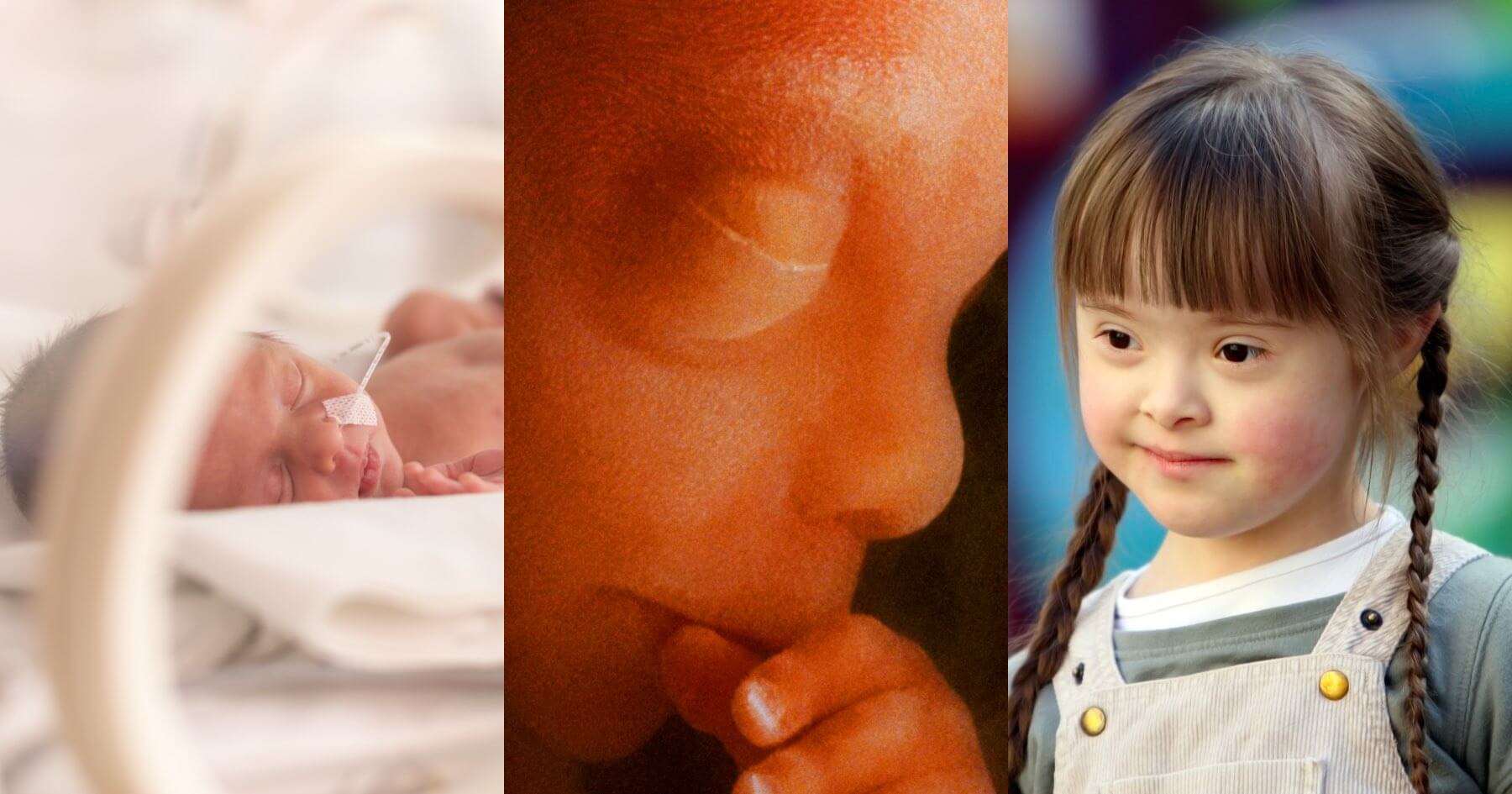
A cross-party group of MPs has come together to introduce three amendments to the Government’s flagship Health and Care Bill that propose major changes to abortion law.
These amendments have been tabled for Report Stage of the Bill, which will take place on Monday and Tuesday.
Time limit reduction from 24 to 22 weeks
Amendment NC31 reduces the upper gestational limit for abortion from 24 to 22 weeks’ gestation.
The latest guidance from the British Association of Perinatal Medicine enables doctors to intervene to save premature babies from 22 weeks. The latest research indicates that a significant number of babies born at 22 weeks’ gestation can survive outside the womb, and this number increases with proactive perinatal care.
The abortion time limit in the UK is more extreme than the majority of other European countries, being double the median time limit among EU countries of 12 weeks’ gestation.
Polling from Savanta ComRes demonstrates the widespread public support for this change to the law, with 70% of women favouring a reduction of the time limit on abortion from 24 weeks to 20 weeks or below.
Ban sex-selective abortion
Sex-selective abortion is the practice of terminating a pregnancy based upon the predicted sex of the unborn child. Amendment NC51 clarifies that abortion on the ground of sex of the foetus is illegal.
An undercover Telegraph investigation revealed that doctors were agreeing to provide sex-selective abortions “no questions asked”, and uncovered that sex-selective abortions were being offered in the UK, including by a doctor who worked both privately and for the NHS.
Furthermore, there is an increasing body of first-hand testimony from UK-resident women who say that they have been coerced into obtaining sex-selective abortions in the UK and abroad. A Department of Health and Social Care report on sex-selective abortion detailed the personal testimonies of women who had been coerced into obtaining a sex-selective abortion in the UK by their partner or family.
Once again, there is widespread public support for this change to the law, with polling from Savanta ComRes showing that 91% of women agree that gender-selective abortion should be explicitly banned by the law.
Disability discrimination
Lastly, Amendment NC52 introduces an upper gestational limit on abortion on the grounds of disability equal to the upper gestational limit set out in section (1)(1)(a) of the Abortion Act.
Currently, abortion for disabilities including Down’s syndrome, cleft lip and club foot is available right up to birth. This contrasts with the time limit set out under section 1(1)(a) of the Abortion Act, which is set at 24 weeks.
A recent court case was brought against the Government for allowing disability discrimination in abortion by Heidi Crowter, 26, who has Down’s syndrome and Máire Lea-Wilson, whose son has Down’s syndrome. Ms Crowter has consistently described how the current law “makes [her]feel that [her] life is not as valuable as anyone else’s”, whilst Ms Lea-Wilson was “placed under intense pressure” to have an abortion after a 34-week scan revealed her son had Down’s syndrome.
The UN Committee on the Rights of Persons with Disabilities has recommended the UK update its law on abortion, specifically suggesting they amend abortion legislation to clarify abortion should not be singling out babies with disabilities.
Polling has again shown the support of the public with only one in three people thinking it is acceptable to ban abortion for gender or race but allow it for disability.
“These three amendments would make changes to our abortion legislation in areas that polling shows have broad support from the public”.
Carla Lockhart MP, one of the cross-party group of MPs tabling the amendments, said:
“The public support for Heidi Crowter’s court case seeking to end abortion up to birth for disabilities such as Down’s syndrome, cleft lip and club foot has shown that abortion legislation needs to be urgently updated in this area”.
“The latest guidance from the British Association of Perinatal Medicine establishes 22 weeks gestation to be the point of viability and enables doctors to intervene to save premature babies from 22 weeks. This leaves a real contradiction in British law. In one room of a hospital, doctors could be working to save a baby born alive before 23 weeks whilst, in another room, a doctor could perform an abortion that would end the life of a baby at the same age”.
“A recent BBC investigation revealed that new NIPT pre-natal tests are being used on a widespread basis to determine the sex of babies early in pregnancy and some women are coming under intense pressure to undergo sex-selective abortions when they are found to be expecting a girl. Abortion legislation needs to be urgently updated to clarify that abortion on the ground of sex of the fetus is illegal”.
A spokesperson for Right To Life UK, Catherine Robinson, said: “Polling shows there is widespread public support for these changes to our abortion legislation”.
“The UN Committee on the Rights of Persons with Disabilities has made it clear that we must update our abortion law so that it is not singling out babies with disabilities. Our current disability-abortion legislation is out of date and is a throwback to a time when we had different attitudes to the societal inclusion and contribution of people with disabilities”.
“It has been over 30 years since Parliament reviewed our abortion time limit. It’s time that Parliament reviewed the abortion time limit. Our gestational limits on abortion are way out of line with the majority of European countries, being double the median time limit among EU countries of 12 weeks’ gestation”.
“There is an increasing body of first-hand testimony from UK-resident women who say that they have been coerced into obtaining sex-selective abortions in the UK and abroad. There is an urgent need to explicitly protect against sex-selective abortion in UK law for the sake of women and girls in this country”.