



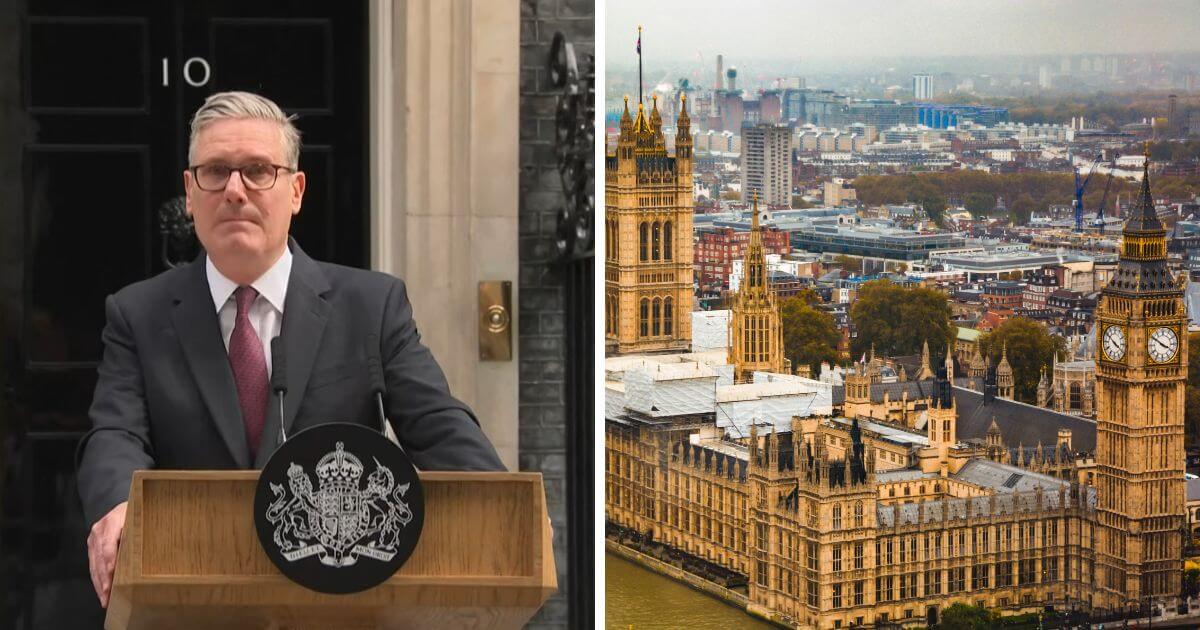
The Prime Minister, Sir Keir Starmer, who has long been a supporter of assisted suicide, has announced his intention to resign as Prime Minister, following Andy Burnham’s by-election victory on Friday 19 June. But what does his resignation mean for the pro-life movement?
Unsuccessful attempt to make assisted suicide legal under Keir Starmer
Starmer has long signalled his support for introducing assisted suicide to the United Kingdom. The Prime Minister previously voted in favour of making assisted suicide legal in 2015 and has been an outspoken supporter of a change in the law since.
Prior to becoming Prime Minister, Starmer made a promise to Esther Rantzen, former TV personality and assisted suicide activist, that he would allow a vote on assisted suicide in the next parliament if he won the next election – which he subsequently did. Previously, Starmer told Rantzen that he was “personally in favour of changing the law” to allow assisted suicide, saying, “We will make the commitment”.
During his first trip abroad as Prime Minister, Sir Keir reaffirmed his position in favour of assisted suicide, promising a free vote “by way of a private member’s bill”.
When Kim Leadbeater was successful in the Private Members’ Bill ballot in 2024, The Guardian reported that there was a private meeting between her and No10 to see if there would be any objections to her bringing forward an assisted suicide Bill; there were no objections.
Despite His Majesty’s Government, led by Prime Minister Keir Starmer, claiming to be neutral regarding Kim Leadbeater’s assisted suicide Bill, and allowing a free vote on it, the Government made considerable allowances for the Bill. Significant additional time was allocated for scrutiny of the assisted suicide Bill in the House of Lords, with the Government in November 2025 allocating seven additional sitting Fridays for the Bill on top of those that had already been scheduled. This decision required Peers to sit every Friday in January, and on most other Fridays before Easter, including 27 March, when the House was supposed to be in recess.
Abortion up to birth for women in relation to their own pregnancies under Keir Starmer
Keir Starmer’s tenure as Prime Minister also saw the law change so it would no longer be illegal for women to perform their own abortions for any reason, including sex-selective purposes, and at any point up to and during birth, likely leading to a significant increase in the number of women performing dangerous late-term abortions at home. While the ‘abortion up to birth’ clause (246) in the Crime and Policing Act was not a Government decision, it was tabled by a Labour MP, Tonia Antoniazzi, and the Prime Minister did not heed calls from a cross-party group of 79 MPs and Peers who wrote asking for its commencement to be delayed.
Prime Ministerial support of assisted suicide Bill unlikely under new leadership
The support of the Prime Minister that the assisted suicide Bill and its sponsors have enjoyed under Starmer’s tenure is unlikely to continue if he is succeeded in his role by Andy Burnham.
The New Statesman reported on Tuesday 16 June that Andy Burnham may oppose a new assisted suicide Bill, and would not welcome its return.
The article stated that, should Burnham become Prime Minister, “it is hard to see a world in which he would welcome this Labour Party-dividing legislation”.
Burnham has said he supports the principle of assisted suicide, but has set a precondition that hospices must be “properly funded and sorted out” before any law change.
Burnham previously stated, “[In] terms of the implementation of it, I would say there should be a kind of requirement that the hospices of this country get properly funded and sorted out before that law change comes in”.
He added that palliative care is not “in the strong position it should be in”, stating that, “Consequently, you can’t have this law change with an underfunded hospice movement”.
Given the end-of-life care crisis in this country, Burnham’s precondition, that palliative care is properly funded before assisted suicide is introduced, has plainly not been met. It therefore seems unlikely he will support the revived assisted suicide Bill.
Burnham’s position is similar to that of Wes Streeting, the former Health Secretary who came out in support of Burnham’s bid for leadership. Streeting is also not opposed to the principle of assisted suicide, but has said that end-of-life care is not in a condition where people at the end of their life would have genuine freedom to choose an assisted death. On this basis, the former Health Secretary opposed the Leadbeater Bill at both Second and Third Readings.
Additionally, Louise Haigh, Burnham’s highly influential by-election campaign chief, told constituents she “would not support attempts” to invoke the Parliament Acts to force the assisted suicide Bill through. Haigh’s opposition is significant because she supported Leadbeater’s Bill.
Spokesperson for Right To Life UK, Catherine Robinson, said “With the resignation of the Prime Minister, Sir Keir Starmer, comes a real chance for his successor to refocus attention on uniting the Labour Party and the country. To do this, the succeeding Prime Minister, whoever they may be, must commit to ensuring that the assisted suicide Bill does not pass Second Reading on Friday 11 September”.
“A renewed focus should be placed on improving hospice and palliative care, so that the suffering endured by many at the end of life can be ameliorated in a way that gives people dignity, without unnecessarily hastening their death”.