


PRESS RELEASE – FOR IMMEDIATE RELEASE
Press release – Major setback for assisted suicide lobby as Prime Minister Andy Burnham says assisted suicide debate should not happen while palliative and social care remains poorly funded
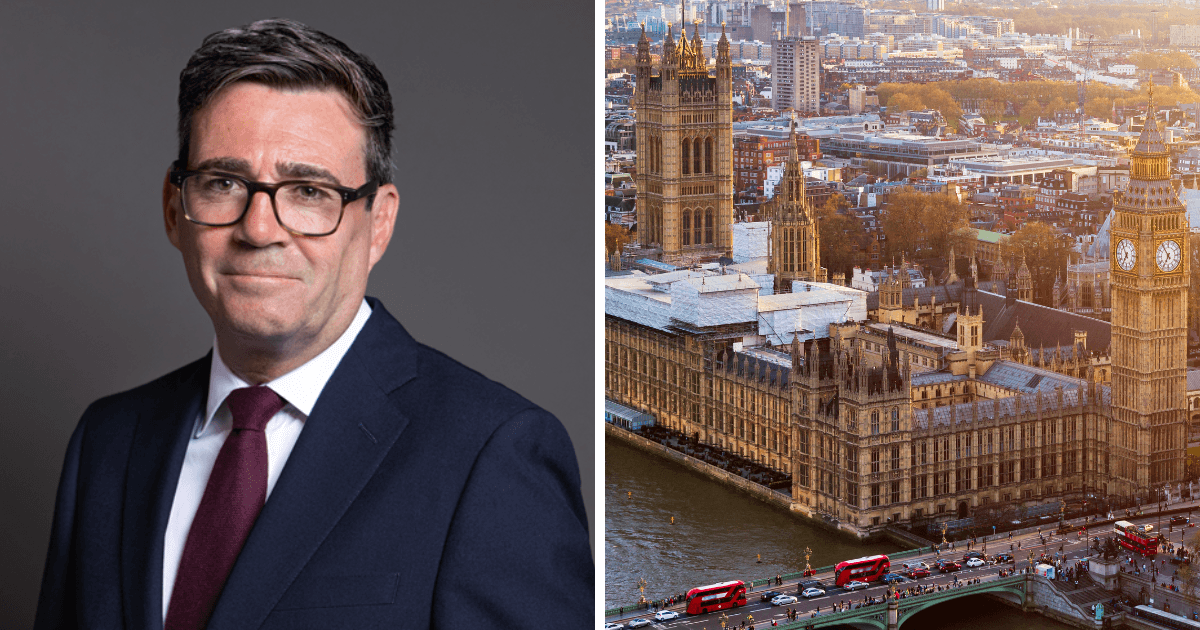
29 July 2026 – In a major setback for the assisted suicide lobby ahead of the 11 September vote on the revived assisted suicide Bill, the Prime Minister, Andy Burnham, has said that the debate around introducing assisted suicide should not take place in a context where palliative and social care remains poorly funded, confirming “that’s the position I will stick to”.
The assisted suicide lobby had relied heavily on the previous Prime Minister, Keir Starmer, publicly backing the previous Leadbeater assisted suicide Bill – with the previous Prime Minister voting in favour of the Bill and giving it time to be debated in Parliament.
This likely swayed a number of Labour MPs to vote for the previous Bill – with the BBC reporting that Sir Keir’s support was privately cited by Labour MPs as a reason they voted for the previous Bill.
Only 12 MPs need to change their minds for the new assisted suicide Bill to fall.
Seven MPs from Labour, the Conservatives and Liberal Democrats who had backed the previous Bill at Third Reading have already said they do not support plans to force it into law via the Parliament Acts / bringing back the Bill in this new Parliamentary session.
This major intervention from the Prime Minister will likely move a number of Labour votes to oppose the Bill, meaning that Lauren Edwards now faces an exceptionally difficult uphill battle to pass the Second Reading vote on 11 September.
Major poll shows Burnham’s holds the same position as the majority of the public
An MRP poll of over 10,000 people, the largest public poll conducted on assisted suicide since Kim Leadbeater’s Bill was introduced in October 2024, has shown that there is no mandate from the public to revive Leadbeater’s failed assisted suicide bill and circumvent the House of Lords to push it into law.
Legalising assisted suicide came rock bottom of a list of voters’ priorities they want their MP to focus on if they have the opportunity to make a law change (e.g. through a Private Members’ Bill) over the next year, with half the support of the next lowest scoring priority. Asked to select three priorities, just 7% of the public and 7% of Labour voters consider assisted suicide a priority.
In line with Burnham’s position on assisted suicide, in every single constituency in Great Britain, the majority of voters agreed that Parliament should prioritise fixing the NHS and improving palliative, social and end-of-life care before considering whether to introduce assisted suicide.
Full details on this polling are available in this press release from The Other Half here.
Major intervention confirms PM’s position ahead of 11 September vote
Responding to a question from Sam Coates, deputy political editor of Sky News, Burnham said,
“I take the view that that debate – and I don’t say that there shouldn’t be a debate at some point about those issues – personally, I think there’s something that needs to happen first”.
“That is the fixing of the funding of palliative care and social care”.
“I think it is very challenging to introduce that wider debate in the context of people not receiving that care and having the peace of mind about that care. And that’s the way I kind of see this, and that’s the position I will stick to”.
Lauren Edwards reintroduces same deeply unsafe assisted suicide Bill retaining dozens of serious flaws identified by Royal Colleges, professional bodies and domestic abuse charities
Lauren Edwards has published her assisted suicide Bill in near-identical form to Kim Leadbeater’s deeply flawed and unsafe Bill from the previous parliamentary session, retaining dozens of serious flaws identified by Royal Colleges, professional bodies, the Equality and Human Rights Commission, and disability, mental health and domestic abuse charities.
By publishing a near-identical Bill to the much-criticised version that failed in the previous parliamentary session, the Bill’s supporters have made clear their highly controversial intention to use the Parliament Acts to bypass the House of Lords to force the Bill into law should the Lords fail to pass the Bill again.
The ability to use the Parliament Acts not only requires the Bill to be brought back in a near-identical form, but also means that it could not be amended in the House of Commons, making it impossible for MPs to amend the Bill in the House of Commons to fix the dozens of widely-publicised and serious flaws in the Bill.
The Second Reading vote on the revived Bill on 11 September will now be a referendum on the use of the Parliament Acts for a controversial Private Members’ Bill, as well as on the deeply flawed and unsafe Bill to which MPs will not be able to make amendments. This means September’s vote will be a very different proposition to the previous Second Reading vote on Kim Leadbeater’s assisted suicide Bill.
The Parliament Acts have only been used a handful of times (seven times since 1911) for Government legislation, and never for a Private Members’ Bill like Lauren Edwards’ assisted suicide Bill.
It would be extraordinary for them to be invoked for a Bill that passed the Commons by a narrow margin, with fewer than 50% of MPs voting for it at Third Reading, and which was not in the Government’s manifesto.
The Bill was published on the day MPs leave Westminster for the summer recess, giving MPs only nine sitting days to consider the Bill before the Second Reading debate on Friday 11 September.
Royal Colleges, professional bodies, and mental health and domestic abuse charities identify dozens of major flaws in the Bill
In October last year, a House of Lords Select Committee took evidence from the relevant Royal Colleges, professional bodies, the Equality and Human Rights Commission and mental health and domestic abuse charities on the Bill that has now been brought back in near-identical form by Lauren Edwards. None would confirm that the Bill is safe, and neither would Government ministers when the Committee asked them to.
Among those raising concerns about the dozens of flaws in the Bill were the Royal College of Physicians, the Royal College of Psychiatrists, the Association for Palliative Medicine / CLADD Group, the British Association of Social Workers, Standing Together Against Domestic Abuse, the Royal College of Pathologist, Mind charity, the British Geriatrics Society, the National Down Syndrome Policy Group, the Equality and Human Rights Commission; the Delegated Powers and Regulatory Reform Committee, the Royal College of GPs, a former Chief Coroner, Care England, the Royal Pharmaceutical Society, the Royal College of Nursing; the Chair of the New Zealand Parliament’s Health Committee inquiry into assisted suicide, Hospice UK, Age UK, the Children’s Commissioner, disability rights campaigner & former Paralympian Tanni Grey-Thompson, and The Mental Health and Disability Law Committee.
Long-time advocate of assisted suicide and the sponsor of Kim Leadbeater’s Bill in the previous session in the Lords, Lord Falconer, himself conceded that a number of changes are needed to make the Bill safer. He said that “[The NHS clause] is currently very wide, and as the deregulation committee said, needs to be limited” and he admitted the Bill has poor protections for young adults who “may be more emotionally impulsive and more easily influenced”. He also raised specific concerns about the fact that suicidal patients detained in care homes or hospitals for their own safety may still be eligible under the Bill he sponsored. Falconer recognised too that a person who wants to end his or her own life should be asked for their motivation since “it might throw some light on circumstances that suggest classic coercion”.
Falconer also acknowledged legitimate concerns surrounding online advertising for assisted suicide, the serious danger presented by the possibility of remote consultations prior to assisted suicide, and that there should be some means for recording the reasons for withdrawals from assisted suicide.
However, with the proposed Parliament Acts route, even such flaws in the Bill, which are acknowledged by supporters of the assisted suicide Bill, cannot be addressed by the House of Commons. MPs would need to push through essentially the same flawed, unsafe Bill which left the Commons in the previous parliamentary session.
Return of Bill will cause division in the Labour Party at the worst possible time
The return of the assisted suicide Bill will distract Labour from focusing on core priorities, undermining any attempted political reset planned by incoming Prime Minister Andy Burnham.
After Lauren Edwards announced she would bring the Bill back, several Labour MPs took to social media to point out that bringing back the assisted suicide Bill would fuel the flames of current tensions in the Labour Party, causing further division, at the worst possible time. These MPs include Adam Jogee, David Smith, Rupa Huq and Kirsteen Sullivan. Other MPs, including Ashley Dalton, Emma Lewell, Antonia Bance, Allison Gardner, Daniel Francis, Uma Kumaran, Ian Byrne, Scott Arthur and Andrew Pakes, alongside Labour Peers and former MPs Luciana Berger and Barbara Keeley, all also expressed serious concern about the return of the Bill.
Still more Labour MPs reposted the concerns of their colleagues, including Chi Onwurah, Jess Asato, Mary Glindon, Melanie Ward and Patrick Hurley, as well as former Labour rebel Karl Turner, who predicted defeat for a new Bill, making the division this Bill will cause pointless. Former Labour MPs Diane Abbott and Rosie Duffield also publicly opposed the return of the Bill.
Given the ongoing turmoil in the Labour Party and the fact that 42% of Labour MPs (160, including several Cabinet Ministers) voted against the Bill at Third Reading in 2025, many MPs will be dismayed at the return of a controversial Bill that will cause division and distract from other priorities, while also leading to a backlash from constituents, especially when it will likely fail.
A similar Bill has recently been rejected in Scotland, where, strikingly, 85% of Labour MSPs (17/20) opposed the Bill. Many new intake Labour MPs likely voted for the Westminster Bill previously because of the support of Keir Starmer early on in their parliamentary careers.
In a recent lead article, The Times newspaper described plans to invoke the Parliament Acts for the assisted suicide Bill as “a constitutional outrage” and “unconscionable”. The Times View also defended the House of Lords’ “detailed scrutiny” of the previous Bill, which has been smeared by Bill supporters, as doing “the country a service”. Bill supporters have claimed that a small group of Peers blocked the Bill in the House of Lords and have used this narrative to justify the return of the Bill.
The reality is that over 140 Peers actively opposed the Bill in the House of Lords, including leading experts, while numerous Royal Colleges, professional bodies and groups representing vulnerable people expressed their concerns with the Bill at a House of Lords select committee in the autumn, as outlined above.
Alisdair Hungerford-Morgan, CEO of the charity Right To Life UK, which campaigns against assisted suicide and in support of better access to palliative care, said:
“The Prime Minister is right. Given the state of palliative and social care in this country, introducing assisted suicide would be a disaster”.
“His Labour MPs must now unite in opposition to the deeply divisive assisted suicide Bill and reject it at Second Reading”.
“Burnham’s comments are in line with where the majority of the public sit on this issue. An MRP poll of over 10,000 people, the largest public poll conducted on assisted suicide since Kim Leadbeater’s Bill was introduced in October 2024, has found that in every single constituency in Great Britain, the majority of voters agreed that Parliament should prioritise fixing the NHS and improving palliative, social and end-of-life care before considering whether to introduce assisted suicide”.
“Legalising assisted suicide came rock bottom of a list of voters’ priorities they want their MP to focus on if they have the opportunity to make a law change over the next year, with half the support of the next lowest scoring priority. Asked to select three priorities, just 7% of the public and 7% of Labour voters consider assisted suicide a priority”.
“This new Bill is likely to blow up any attempted Labour reset under Andy Burnham. It is difficult to think of anything more unwelcome, divisive or distracting at this time than bringing back a Bill that is widely opposed by experts and vulnerable groups”.
“Using the Parliament Acts to force through a controversial Private Members’ Bill that was not in the Government’s election manifesto would be unprecedented and unacceptable. It is striking that a number of MPs who previously supported the assisted suicide Bill have already recognised this, and it is highly likely they are not alone”.
“Given the slim majority with which Kim Leadbeater’s Bill passed the House of Commons last year, this major intervention from the Prime Minister, combined with the many flaws in the Bill exposed by experts in the House of Lords, means that Lauren Edwards now faces an exceptionally difficult uphill battle to pass the Second Reading vote on 11 September”.
ENDS
For further information on Right To Life UK visit www.righttolife.org.uk
For additional quotes and media interviews contact 07774 483 658 or email press@righttolife.org.uk