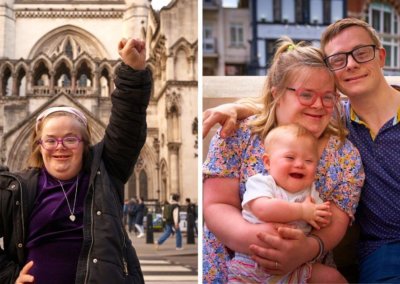




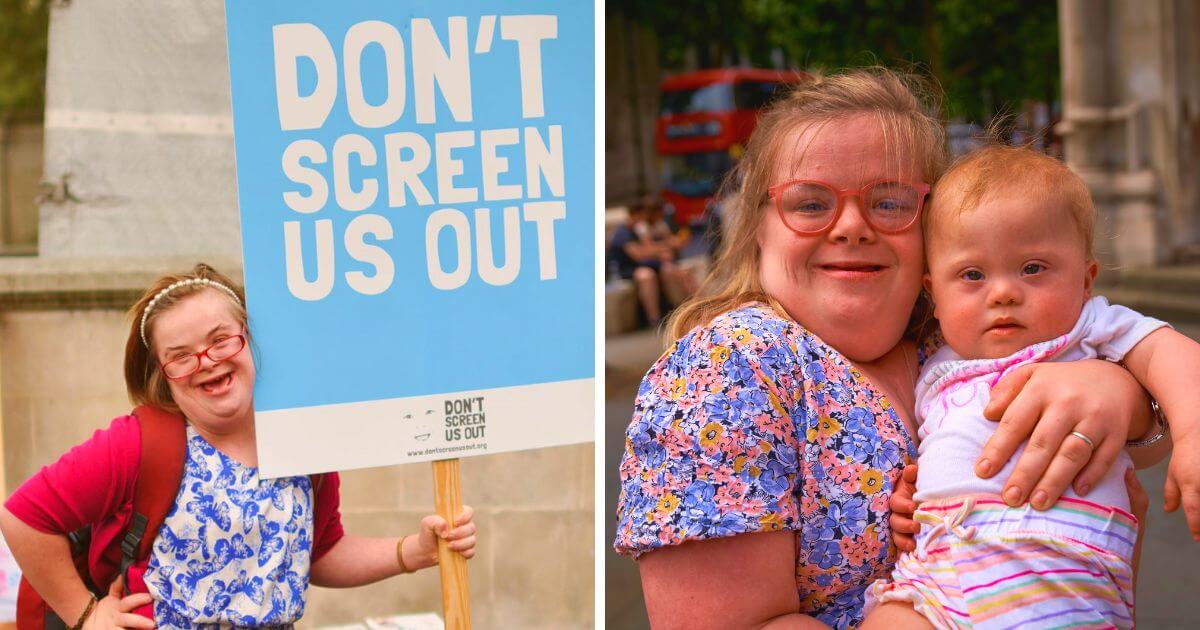
A disability rights campaigner who has Down’s syndrome has announced that she will take her case against the UK Government over the country’s discriminatory disability abortion law to the European Court of Human Rights.
Heidi Crowter, the 27-year-old woman from Coventry behind the challenge, has already had her case heard in the High Court and the Court of Appeal. The current abortion legislation in England, Wales, Scotland and Northern Ireland permits abortion up to birth in cases of disability including in those cases where a baby in the womb is diagnosed with Down’s syndrome.
Heidi is pursuing the case with another woman, Máire Lea-Wilson, whose three-year-old son has Down’s syndrome, and who was put under pressure to have an abortion when a scan at 34 weeks revealed her son’s condition.
Heidi said she is pursuing the case “because it is downright discrimination that people with disabilities are treated differently.”
“I have a great life. I want every baby with Down’s syndrome to have the same chance to live and enjoy their life.”
She said “In 2023, we live in a society where disabled people are valued equally after birth but not in the womb.”
“Our law singles out babies with disabilities. It says that babies can’t be aborted after 24 weeks if they are not found to have a disability, but if a baby is found to have Down’s syndrome, they can be aborted up until birth. This is the current law in the UK and I think it’s not fair.”
“This law sends a message to people like me with Down’s syndrome that we are less valuable than others. This is not true and it is not right.”
“The United Nations Committee on the Rights of Persons with Disabilities recently said that the United Kingdom should change its abortion law to make sure that people like me aren’t singled out because of our disabilities but the Government hasn’t changed the law.”
“I have a great life. I want every baby with Down’s syndrome to have the same chance to live and enjoy their life.”
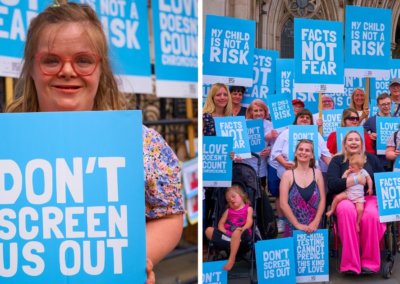
Lynn Murray, spokesperson for Don’t Screen Us Out and mother of Rachel who has Down’s syndrome, said “It’s inspiring to see that Heidi is now going to be taking her landmark case all the way to the European Court of Human Rights at Strasbourg.”
“As a mother of a 23-year-old daughter who has Down’s syndrome, I see every day the unique value she brings to our family and the positive impact she has on others around her.”
Abortion up to birth is legal if the baby has Down’s syndrome
Currently in England, Wales and Scotland, if the unborn child is not prenatally diagnosed with a disability, abortion is legal up until 24 weeks gestation, but if the baby has a disability, including Down’s syndrome, cleft lip and club foot, abortion is legal right up to birth.
There were 3,370 disability-selective abortions in 2021 and the number of late-term abortions at 24 weeks gestation or over where the baby has a disability increased by 20% from 229 in 2020 to 274 in 2021.
The statistics also showed there were 859 abortions where a baby had Down’s syndrome in 2021, an increase of 24% from 2020. The statistics also show a 71% increase in late-term abortions at 24 weeks gestation or over where the baby had Down’s syndrome, increasing from 14 in 2020 to 24 in 2021.
Right To Life UK spokesperson Catherine Robinson said “The current UK abortion law is clearly discriminatory against people with Down’s syndrome and other disabilities. Of course, every abortion is a tragedy but it is an added injustice that babies with Down’s syndrome and other disabilities are singled out for discriminatory treatment.”