



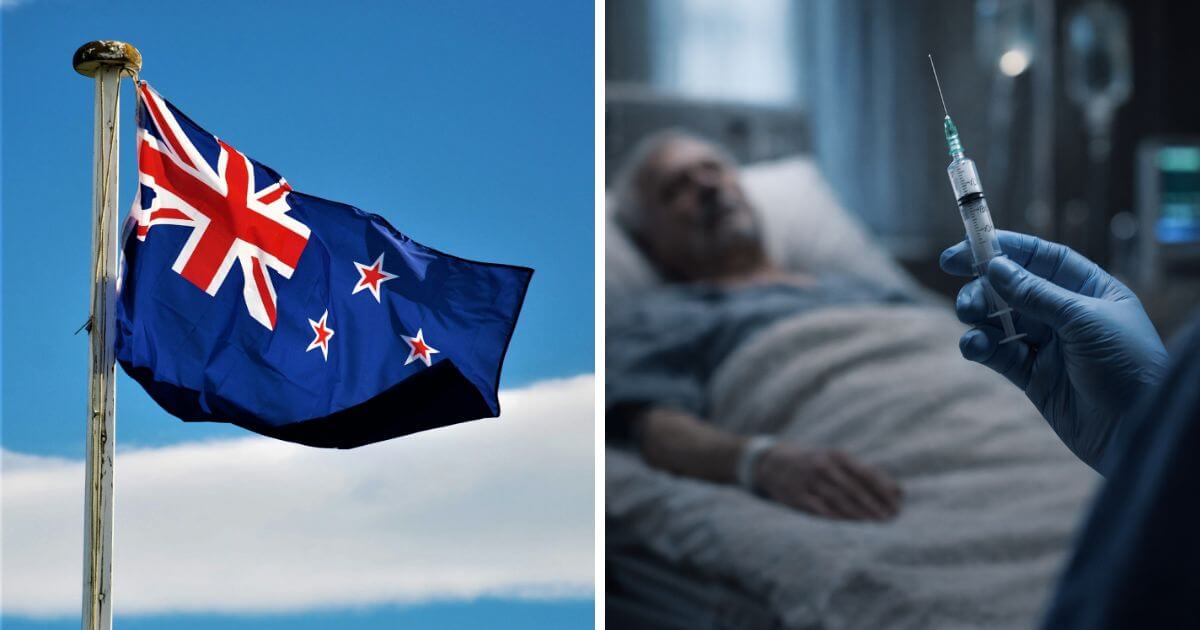
In New Zealand, cases of euthanasia and assisted suicide have increased by almost 50% (48.17%) for the year April 2025 to March 2026 compared with the same period in 2022-2023, just three years ago, according to data released by the New Zealand Ministry of Health earlier today.
According to ‘Registrar (assisted dying) Annual Report to the Minister of Health – June 2026′, there were a total of 486 cases of euthanasia and assisted suicide in New Zealand from 1 April 2025 to 31 March 2026, a 48.17% increase from the same period in 2022-2023, the first full year in which euthanasia and assisted suicide were available, when there were 328 cases of euthanasia and assisted suicide in the country.
In the year 2025/26, the 486 cases of euthanasia and assisted suicides accounted for 1.29% of all deaths in New Zealand.
7% of applicants reported having a disability, and one in five applicants were not receiving palliative care at the time of application.
Only 16 applicants had a psychiatric assessment to check for competence to make an informed decision about assisted suicide.
Fewer than 1 in 10 applicants (8.33%) had a neurological condition, a relatively small proportion, despite the need for people with neurological conditions to access assisted suicide or euthanasia regularly being referred to by campaigners as a key reason for introducing assisted suicide and euthanasia.
Since euthanasia and assisted suicide were made legal in New Zealand in November 2021, 1,696 have ended their lives through these means.
The report also reveals a decline in the number of doctors willing to be involved in assisted suicide and euthanasia. The number of practitioners on the Support and Consultation for End of Life Choice (SCENZ) Group list, which connects patients with doctors willing to assess or carry out assisted deaths, fell from 148 in March 2023 to 121 in March 2025.
While doctors can provide assisted suicide or euthanasia to their own patients, those treating individuals outside their care must be on this list. The shrinking numbers have led to reports of doctors travelling long distances to assess patients, raising concerns about discomfort with helping a patient end their own life among healthcare professionals.
The data also reveals a clear ethnic disparity in those accessing assisted suicide and euthanasia. New Zealand European/Pākehā applicants accounted for 81.1% of applications, while they represent 67.8% of the population. In contrast, Māori applicants made up only 4.9% of applications, despite representing 17.8% of the population; Asian applicants made up 2.49% of applications, despite representing 17.30% of the population; and applications from Pacific peoples made up 0.77% of applications, despite representing 8.90% of the population.
Of the 486 people who died, 94.65% (460) died by euthanasia, where a doctor or nurse ended a patient’s life either through ingestion (1) or through injection (459). 26 people (5.35%) ended their lives through assisted suicide. The key legal distinction between the two is who carries out the act: in euthanasia, it is a third party who ends the person’s life, while in assisted suicide, the person ends their own life.
Attempts to expand the law
Under the current law in New Zealand, a person can end their life by assisted suicide or euthanasia if they are thought to have six months left to live.
However, there have been attempts to expand the law beyond the current six-month prognosis limit. Last year, ACT Party MP Todd Stephenson tabled a Members Bill to remove this.
ACT Party leader David Seymour MP also called for the six-month requirement to be scrapped in 2022, only a year after the law came into effect in 2021. Astonishingly, this is from the same David Seymour who, before the Bill to introduce assisted suicide and euthanasia became law in New Zealand, told the NZ Parliament that opponents’ claims that the law would be expanded in the future were a “slippery slope fallacy”.
New Zealand became the first country in the world to introduce assisted suicide and euthanasia by popular vote in a binding referendum on 19 September 2020, and this came into force on 7 November 2021.
Polling at the time suggests that as many as 80% of voters were unclear about what they were voting for, thinking that the law would permit physicians to turn off life support. This, in fact, was already legal and not the subject of the referendum.
Spokesperson for Right To Life UK, Catherine Robinson, said “The huge increase in euthanasia and assisted suicide in New Zealand found in the most recent report is a cause for alarm. New Zealand appears to be following the same trend as many other countries that have introduced euthanasia and assisted suicide legislation in recent years – a steep increase in deaths through assisted suicide and euthanasia”.
“The experience of New Zealand should serve as a portent of what to likely expect in England and Wales should Lauren Edwards’ assisted suicide Bill become law”.