



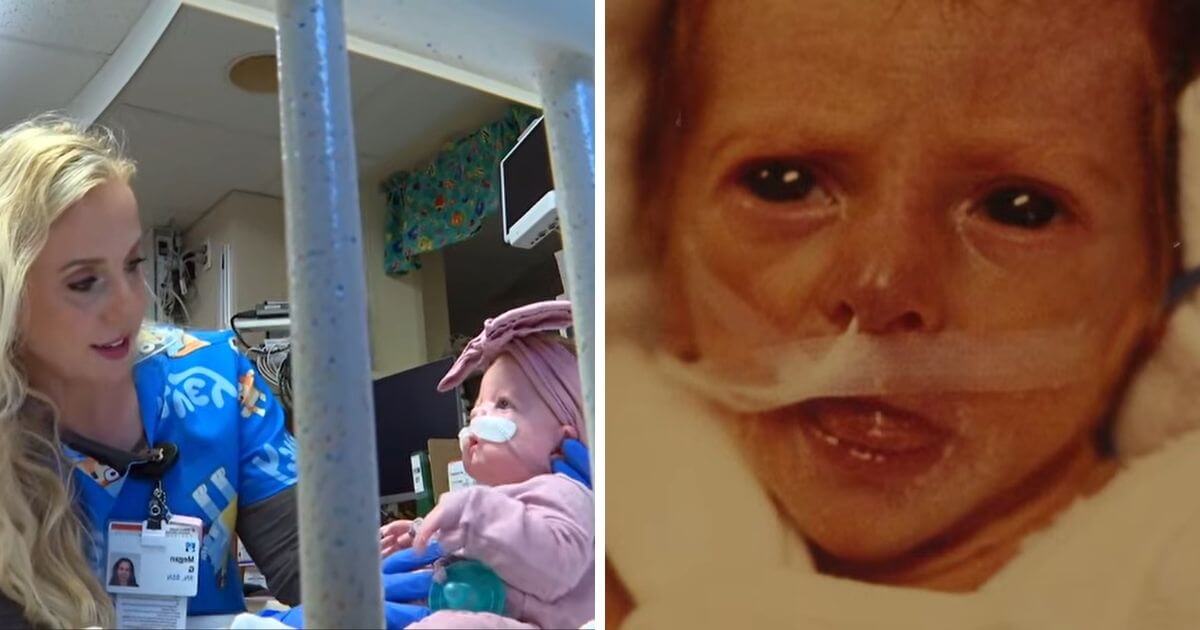
A woman whose identical twin sister died shortly after they were born prematurely has become a neonatal intensive care nurse, helping babies and families facing circumstances similar to those experienced by her own family.
Megan Green now works in a neonatal intensive care unit (NICU). She said that caring for premature and seriously ill babies has helped her process her own early life and the death of her twin sister, Amy.
“It’s like I’m healing as I’m doing my job, which I think is really cool”, Megan said.
Her work has also given her a clearer understanding of the treatment that she and her sister received as newborn babies.
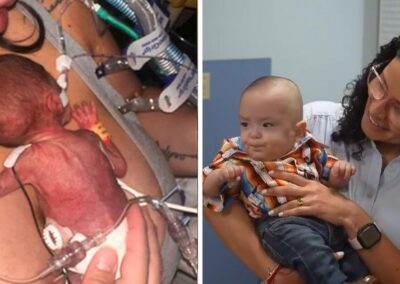
“Working in the NICU, I have a better understanding of what she had to go through at the time”, she explained. “When I look back at the photos, I was like, ‘Oh yeah, she was intubated. I was intubated. I have a chest tube.’ I can correlate”.
Career change leads Megan back to the NICU
Megan did not initially plan to work in neonatal care. She began her career as an interior designer but, after several years in the profession, realised that she did not want to continue along that path.
Her mother, Marie Pinizzotto, recalled: “She called me from the architect firm, and she said, ‘I can’t do this for the rest of my life’”. “I said, ‘Well, then you better find something you can’”, she continued.
Megan returned to education and trained as a nurse. While completing a placement in a neonatal intensive care unit, she realised that the work had a particular personal significance for her.
She subsequently became a NICU nurse within the same hospital system that had helped to save her life after she was born prematurely.
Born at 27 weeks alongside identical twin sister
Megan and Amy were born in 1982 at just 27 weeks gestation. Their lungs were not fully developed, and both babies required neonatal intensive care.
The identical twins had shared the same egg sac. Megan weighed 3lbs 2oz at birth, while Amy weighed 2lbs 3oz.
Ten days after their birth, Amy died in the NICU. “I do believe that I think she stopped fighting so I could live”, Megan confessed.
Megan remained in and out of neonatal intensive care throughout the first year of her life and was discharged home on oxygen.
Her mother said that, before the twins were born, she had known little about premature birth or neonatal care. She recalled that “I didn’t even know premature babies existed”.
Honouring Amy’s memory
As she grew older, Megan would look through baby books containing photographs of herself receiving treatment as a newborn.
“I remember when I was younger asking my mom a lot of questions and then seeing a lot of pictures that we have”, she said. “I just remember always being scared of the pictures when I saw them”.
Her experience as a nurse has since enabled her to understand what the photographs showed and what her family endured following the twins’ premature birth.
Mum Marie said she believed that her daughter’s work in neonatal care was also a way of honouring her sister Amy.
“I’m very proud of her. It gives back to the memory of Amy, and I know that’s one of the reasons she did that”, she said. “I’m very proud of her — and for the memory of her sister”.
Spokesperson for Right To Life UK, Catherine Robinson, said: “Megan’s story is a moving reminder of the value and dignity of every human life, however small or vulnerable. Having survived being born at just 27 weeks gestation and endured the loss of her twin sister, she is now using her experience to care for other premature babies and support their families. Her work is a wonderful tribute to Amy’s memory”.