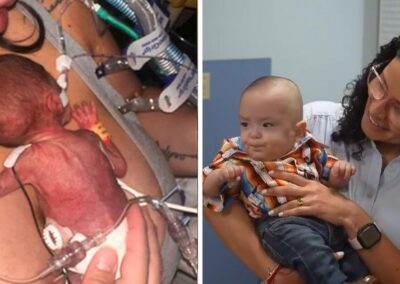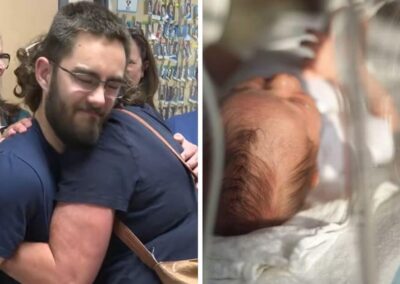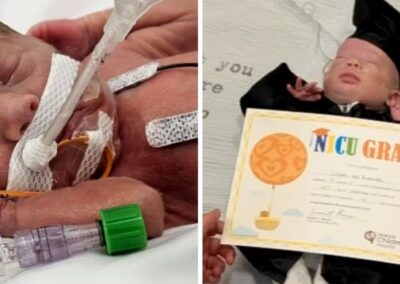




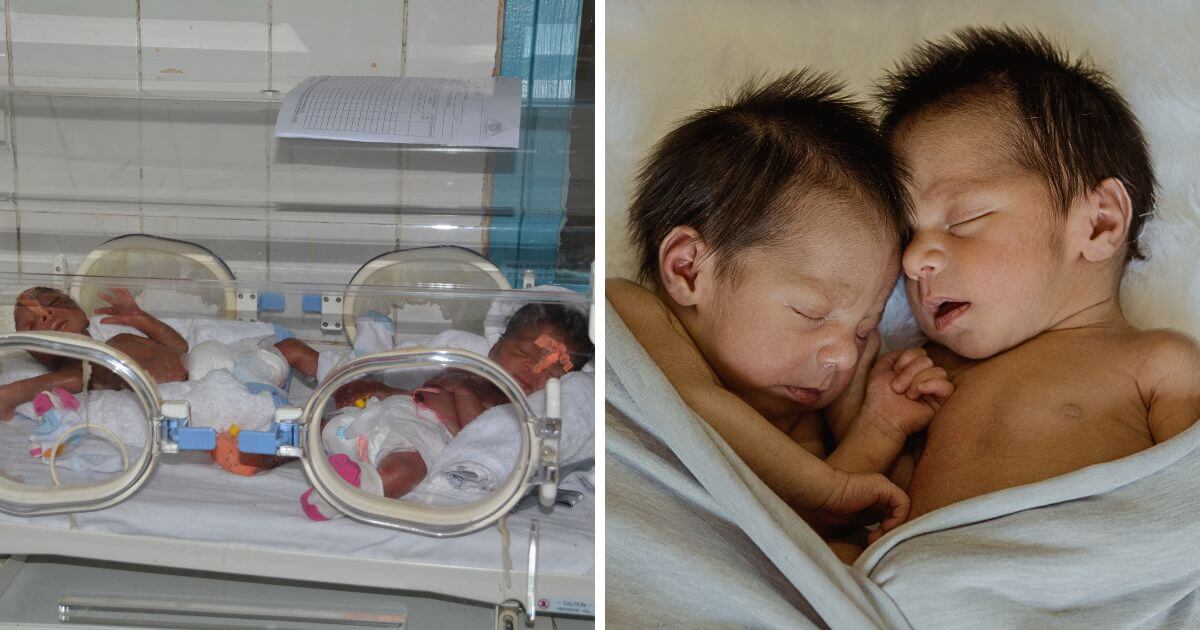
Twin boys born more than eight weeks prematurely in the passenger seat of a moving car have astonished doctors after neither baby required supplemental oxygen following their dramatic arrival.
Kane and Kallan were born at 31 weeks and two days gestation, weighing 4lbs 4oz and 3lbs 15oz respectively. Despite arriving early and without medical assistance, both boys were healthy and exceeded doctors’ expectations.
They are now receiving neonatal care while working towards the milestones commonly required of premature babies before they can return home, including gaining weight, maintaining their body temperature and finishing their feeds.
Their mother, 30-year-old Shelbee Dugger-Kemp, had experienced a healthy pregnancy, with both babies measuring ahead of schedule. Doctors had planned to deliver the identical twins by Caesarean section closer to their July due date.
However, the boys arrived considerably earlier, and in circumstances their family could never have anticipated.
Stomach pains mistaken for food poisoning
Shelbee was camping with her family when she began experiencing stomach pains after eating nachos. Believing she might have food poisoning, she asked her husband Michael’s grandmother, known as Mimi, to drive her to the hospital as a precaution.
Michael remained at the campsite with the couple’s four other children, as Shelbee expected to undergo a brief examination before returning to her family.
“I really thought nothing of it”, she said.
Six miles into the journey, however, the pain intensified, and Shelbee realised that what she had dismissed as indigestion was actually her going into labour.
An ambulance was still 20 minutes away, and it soon became clear that there was no possibility of reaching the hospital before the babies arrived.
“I was like, ‘Mimi, don’t panic, but I’m about to have these babies in the car’”, Shelbee recalled. “She said, ‘Oh no, Shelbee,’ and I said, ‘Oh yes, Mimi, it’s about to happen’”.
Twin boys born five minutes apart in the car
As Mimi continued driving, Shelbee delivered her first son in the passenger seat of the moving car.
Kane was born first. Five minutes later, Shelbee delivered Kallan, who remained completely enclosed within his amniotic sac. Known as an en caul birth, this exceptionally rare event is estimated to occur in fewer than one in 80,000 vaginal deliveries.
Shortly after the twins were born, Shelbee’s sister called on FaceTime to ask for the gate code to the campsite. Shelbee asked Mimi to answer the call and used the opportunity to reveal the unexpected new arrivals.
“It was FaceTime, so I showed her that I had the babies”, Shelbee said with a laugh.
Michael then called his sister-in-law to ask when she would arrive at the campsite. Instead, she answered the telephone in tears.
“When she picked up, she was crying”, Shelbee said. “That’s how he found out”.
“Your body just kicks into gear”
The twins’ early arrival came as a complete surprise to the family. Yet, despite being born without medical assistance more than eight weeks before their due date, neither Kane nor Kallan needed supplemental oxygen.
The boys remain in neonatal intensive care as they continue to grow and develop.
Looking back on their extraordinary birth, Shelbee said she did not consciously know how to deliver her sons safely but relied entirely upon instinct.
“Everyone keeps asking me how I knew what to do, and I don’t know”, she said. “Your body just kicks into gear”.
Spokesperson for Right To Life UK, Catherine Robinson, said “Kane and Kallan’s extraordinary arrival is a testament to the strength and resilience of both mother and babies. It is wonderful that, despite being born more than eight weeks prematurely and in such dramatic circumstances, neither boy required supplemental oxygen. We wish them continued progress and hope they will soon be able to return home from the hospital with their family”.