



Canadians are warning of the multi-generational trauma of losing their family members to euthanasia and assisted suicide, as a record 16,499 people died by euthanasia in Canada in 2024, accounting for 5.1% of all deaths in the country.
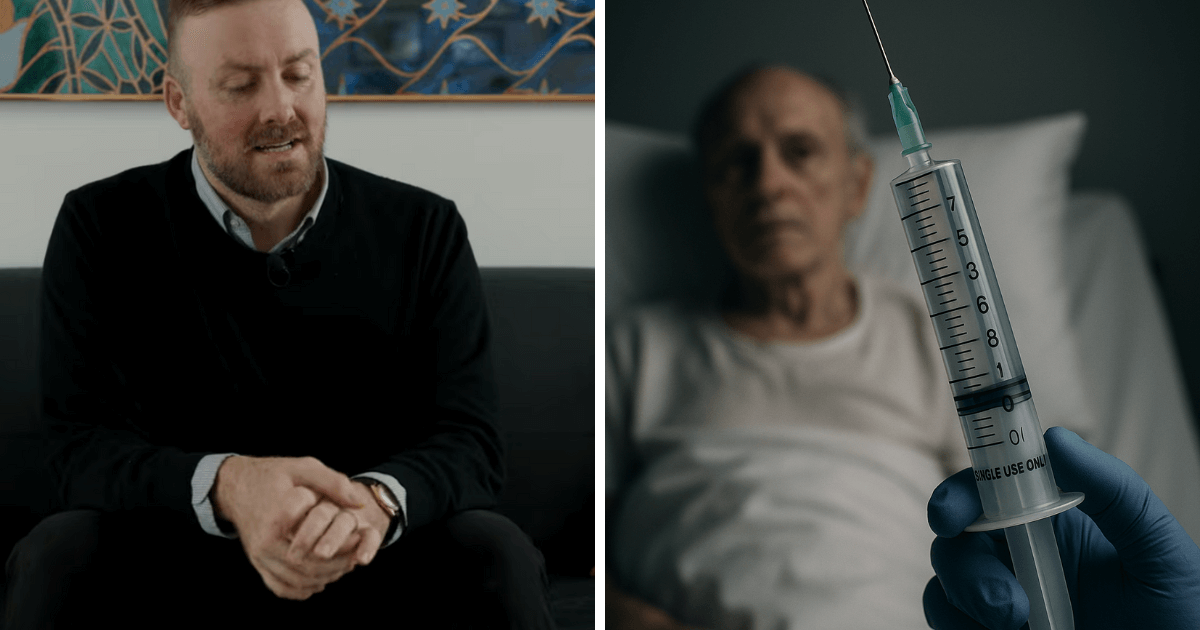
Benjamin Turland, who lost both of his grandmothers to euthanasia, commented that he was “wrecked” and their deaths “impact[s] multiple generations”.
Speaking in an interview with anti-euthanasia campaigner Amanda Achtman, on hearing that his first grandmother had chosen euthanasia, Turland said “it felt like someone punched me in the gut”.
Knowing that his grandmother was likely to die a natural death very soon, Turland said “I didn’t understand why [my grandmother would] want to go through with this. It just wrecked me”.
When Turland’s other grandmother, whom he described as “one of my best friends”, also decided to end her life via euthanasia two months later, he said “There’s a strong guilt of like, why didn’t I say something?”
“The message it sends to me is, I’m like, did I not love you enough? Did I not love you the correct way? Did I not make you feel like you’re not a burden?” he added.
‘It’s no use if the strongest person in my life chose to give up’
Reflecting on his two grandmothers’ decision to end their lives by euthanasia, Turland said “It’s the choice of [euthanasia] that hurts”.
Achtman commented on the number of grandchildren sharing their stories about losing grandparents to euthanasia, saying “Adult grandchildren are increasingly speaking to me about having lost their grandparents to medical assistance in dying (MAID). I’m telling you, this is creating intergenerational trauma – the consequences of which are just beginning to be seen”.
Reflecting on Turland’s account, Jonathon Van Maren, Communications Director for the Canadian Centre for Bio-Ethical Reform, said “Activists insist that euthanasia and assisted suicide are necessary to address and reduce suffering. The reality, as Turland details, is far different. Those who are killed by lethal injection often leave conflicted, grieving, suffering loved ones in their wake”.
Achtman also interviewed a woman named Lovanie, who described her struggles after losing her grandmother to euthanasia, saying “It was really hard because I had also struggled with mental health in the past few years. Why should I just keep swimming? Why should I just keep climbing? It’s no use if the strongest person in my life chose to give up”.
“My biggest fear is that it’ll encourage the rest of my family to follow through in the future. I don’t want people in my family to see it as a power move that they can pull whenever times are difficult”, she added.
Being a burden a significant factor for people choosing euthanasia
Lovanie also explained the difficulty of trying to explain what her grandmother did to her own children. “How do you tell them how strong and wonderful she was? And then they ask you, ‘Oh, so nice. How was she in the last days?’ And you tell them, ‘Oh, she gave up. She decided to no longer fight because she was so scared’”.
She went on to say “I think in that moment of vulnerability, she just thought, ‘I am a burden. My health is stopping everybody else’s life from going forward, and I will just remove myself from this’”.
In the latest report on euthanasia and assisted suicide from Health Canada released at the end of last month, being a burden was identified as a factor recorded by medical practitioners as part of a person’s application for euthanasia in 2024. 48.5% of all those who died by euthanasia cited being a “perceived burden on family, friends or caregivers”. Among those whose natural death was not reasonably foreseeable (Track 2), over half (50.3%) were concerned about being a burden.
According to the latest report on “medical assistance in dying” (MAiD) from Health Canada released at the end of last month, there was a 6.9% increase in state-assisted deaths in Canada in 2024.
There have been a total of 76,475 instances of euthanasia and assisted suicide since they were made legal in Canada in 2016.
Spokesperson for Right To Life UK, Catherine Robinson, said “These alarming accounts from distraught Canadians highlight the devastating and traumatic effects of euthanasia on family members who are left behind”.
“It would be naive to assume that similar awful stories would not occur if assisted suicide were to become law in the UK. Politicians in Scotland, England and Wales must ensure that assisted suicide never becomes law”.