

Urgent appeal to build on the momentum from the defeat of the assisted suicide Bill and make this victory last.
DONATE NOW
Select Page

540g premature baby born at 27 weeks is now a thriving two year old

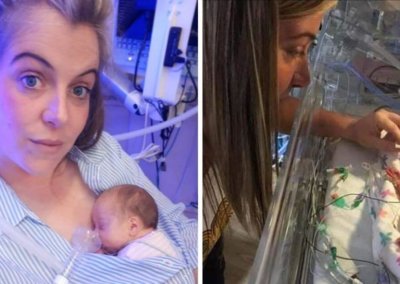
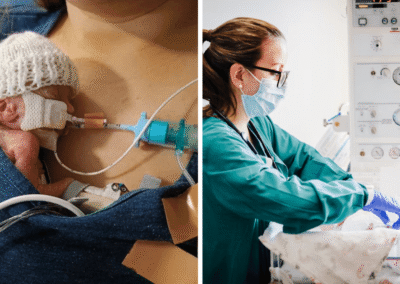
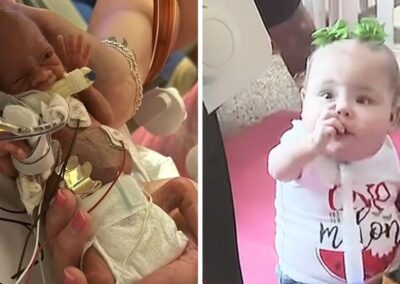
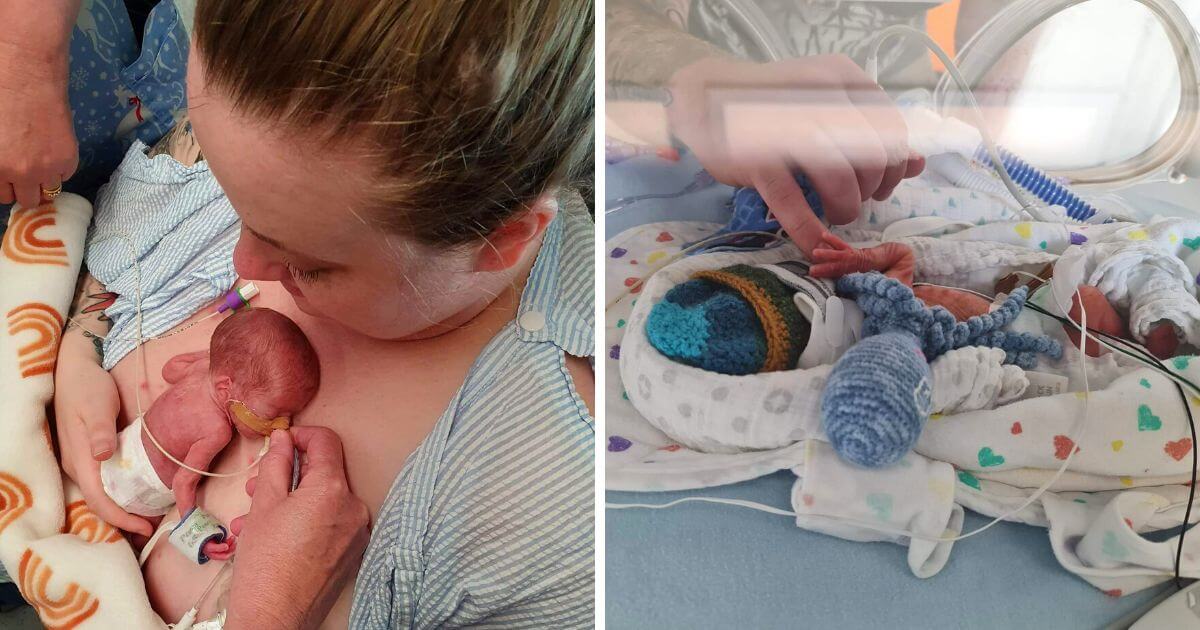
An extremely premature baby born in Tasmania at just 27 weeks and weighing 540g had to battle a string of medical issues and three bouts of sepsis but is now a thriving two year old.

When Hadrian was born in Hobart, in Tasmania, Australia, the odds were stacked against him from the beginning. His mum, Nikola, had to have an emergency caesarean section over three months before her due date.

“I had a spinal anaesthetic so I was awake for the procedure”, she said. “He was so tiny; I briefly saw him then they whizzed him away. I was so worried about the outcome as he was born so early, all I could do was hope that he would be OK”.

Hadrian was so small, his lungs were barely working and the doctor had to provide a dose of surfactant to prevent them from sticking together. He had problems with his blood sugar levels and was just four days old when he first became unwell with sepsis.

He got sepsis three times

Hadrian then had serious problems with his heart and had to be flown to the Royal Children’s Hospital in Melbourne when he was just four weeks old.

Nikola said: “We hadn’t heard any updates on how he was doing, so called the Care flight team. They told us he was really struggling to keep his body temperature warm enough. He was on so many medications – and the next 24 hours were touch and go”.

Hadrian then developed sepsis again and necrotising enterocolitis, a serious condition where tissue in the gut becomes inflamed and starts to rot away. Nikola’s family were unable to visit due to COVID restrictions at the time.

“The heart surgery went well, and afterwards I was so relieved. Hadrian was still super small and weighed only 700 grams. A day later, he was wriggling around so much, they had to give him more sedation, as he was trying to pull all the tubes out”.

Her son then contracted sepsis for a third time and was diagnosed with premature retinopathy and needed laser surgery.

“There’s no denying it’s hard, but it is so rewarding.”

Hadrian never gave up though and 104 days after he was born, his parents were able to take him home.

His mum said: “He weighed just two kilos, and he was on home oxygen and a monitor. I was feeling almost back to my normal self, pumping breast milk every few hours, as he was too little to breastfeed – it was very tiring”.

“He is now almost two now and does have some minor global delays, he’s at risk for cerebral palsy, but it will probably be mild. It impacts his balance and coordination”.

“I know most toddlers are clumsy, but he is exceptionally so – so there are lots of tumbles and falls. He sometimes forgets how to do things too and gets frustrated”.

“Having a micro premmie can feel like a scary journey at the time you are going through it, but at the same time it is so beautiful to watch them progress and blossom. There’s no denying it’s hard, but it is so rewarding”.

Outcomes for premature babies are improving all the time. Earlier this year, John Wyatt, Professor of Ethics and Perinatology at University College London and also Emeritus Professor of Neonatal Paediatrics, Ethics & Perinatology at University College London, presented evidence to parliamentarians  from the UK and across the world “that there has been a steady improvement in the chances of survival of babies born at 22 and 23 weeks gestation since the Abortion Act was last amended [in 1990]”.

Right To Life UK spokesperson Catherine Robinson said: “Premature babies are a persistent challenge to supporters of abortion because the humanity of the baby is on clear display. In the UK, sadly, it remains legal to abort a baby up to birth if that baby has a disability”.


Urgent appeal 
to save liveS

Help stop three major anti-life threats.

Help build on the momentum from the defeat of the assisted suicide Bill and make this victory last.

Dear reader,

Thanks to the hard work and dedication of people like you across the UK, after a two-year battle, MPs voted by 286 to 270 to reject the Edwards assisted suicide Bill.

This followed the defeat of the McArthur assisted suicide Bill in Scotland by 69 to 57 in March this year.

Many commentators thought both Bills would become law.

If that had happened, this would have led to the deaths of many thousands of vulnerable people over the coming decades.

Because supporters like you acted, those Bills were stopped.

Because of you, many vulnerable lives have been saved.

A prominent pollster described the campaign against these major attempts to introduce assisted suicide, which brought together people from all walks of life across the UK, as one of the “most successful 21st Century UK social issue campaigns”. You helped make that possible.

WHY WE MUST NOT STOP HERE

What we have achieved together is extraordinary. But we must not rest on our laurels.

Dignity in Dying, a multi-million-pound pressure group, has made clear that it will keep campaigning to legalise assisted suicide. 

We cannot wait until another Bill is brought forward. We need to keep pressing for better care and strengthen the case against legalisation now.

WHAT COMES NEXT

The next phase of our Support Not Suicide campaign will operate across Parliament, media, online and in grassroots communities in every constituency across the United Kingdom.

Our focus now is to build on that momentum from the defeat of these assisted suicide Bills and make these victories last.

We want to build a United Kingdom where assisted suicide is seen as unnecessary – and where legalising it is seen as unthinkable.

The first part of that work is a sustained push for universal access to high-quality palliative, hospice and social care. No one should feel driven towards assisted suicide because they cannot get the care and support they need. 

We have already asked supporters to contact their MPs about improving care. With your help, we will keep that pressure on in every constituency, brief MPs and Peers on gaps in care, and make the case for better provision in the media.

The second part is building on these wins to ensure more MPs and more of the wider public understand the dangers of legalising assisted suicide. We will put evidence of those risks before MPs and Peers. We will work with mainstream journalists to bring the voices of people directly affected, doctors and other experts into the national conversation, and produce clear videos and articles that supporters can share online and in their communities.

Our network of 250,000 supporters covers every constituency in the UK. Thanks to people like you sharing our content, our posts and videos have been viewed more than 100 million times online in the last year. 

We want to utilise that massive reach for this next phase of the campaign.

WE CAN ONLY DO THIS WITH YOUR HELP

The two-year fight to stop these Bills drew heavily on our limited resources.

To replenish those resources and fund the next phase of the Support Not Suicide campaign, we aim to raise at least £199,250 by midnight this Sunday (4 October 2026).

We are, therefore, appealing to you to please give as generously as you can today.

Every donation, large or small, will make a crucial difference in protecting vulnerable lives. Plus, if you are a UK taxpayer, £1 becomes £1.25 with Gift Aid at no extra cost to you.

Will you donate now to help make these victories last and protect vulnerable lives?

Urgent appeal 
to save liveS

Help stop three major anti-life threats.

Help build on the momentum from the defeat of the assisted suicide Bill and make this victory last.