



A prominent Scottish bioethicist has argued that proposals to introduce DIY abortion in Scotland on a permanent basis undermines the “appropriate and sensitive respect for the disposal of the remains of the embryo/foetus”.
DIY home abortions, whereby a woman seeking a medical abortion up to ten weeks’ gestation is able to complete it at home, were introduced in Scotland at the end of March 2020 in response to the COVID-19 pandemic and lockdowns. While this was introduced as a temporary measure, the Scottish Government has just completed receiving submissions to a public consultation asking whether this change should be made permanent.
Dr Calum MacKellar of the Scottish Council on Human Bioethics argued against the making ‘DIY’ abortion permanent in Scotland.
Dr MacKellar said: “One significant challenge, amongst others, with these partial or complete home abortions, however, is the destiny of the remains of the embryo/foetus”.
He said that under the normal circumstances of an abortion in a hospital, foetal remains are disposed of “with appropriate respect”.
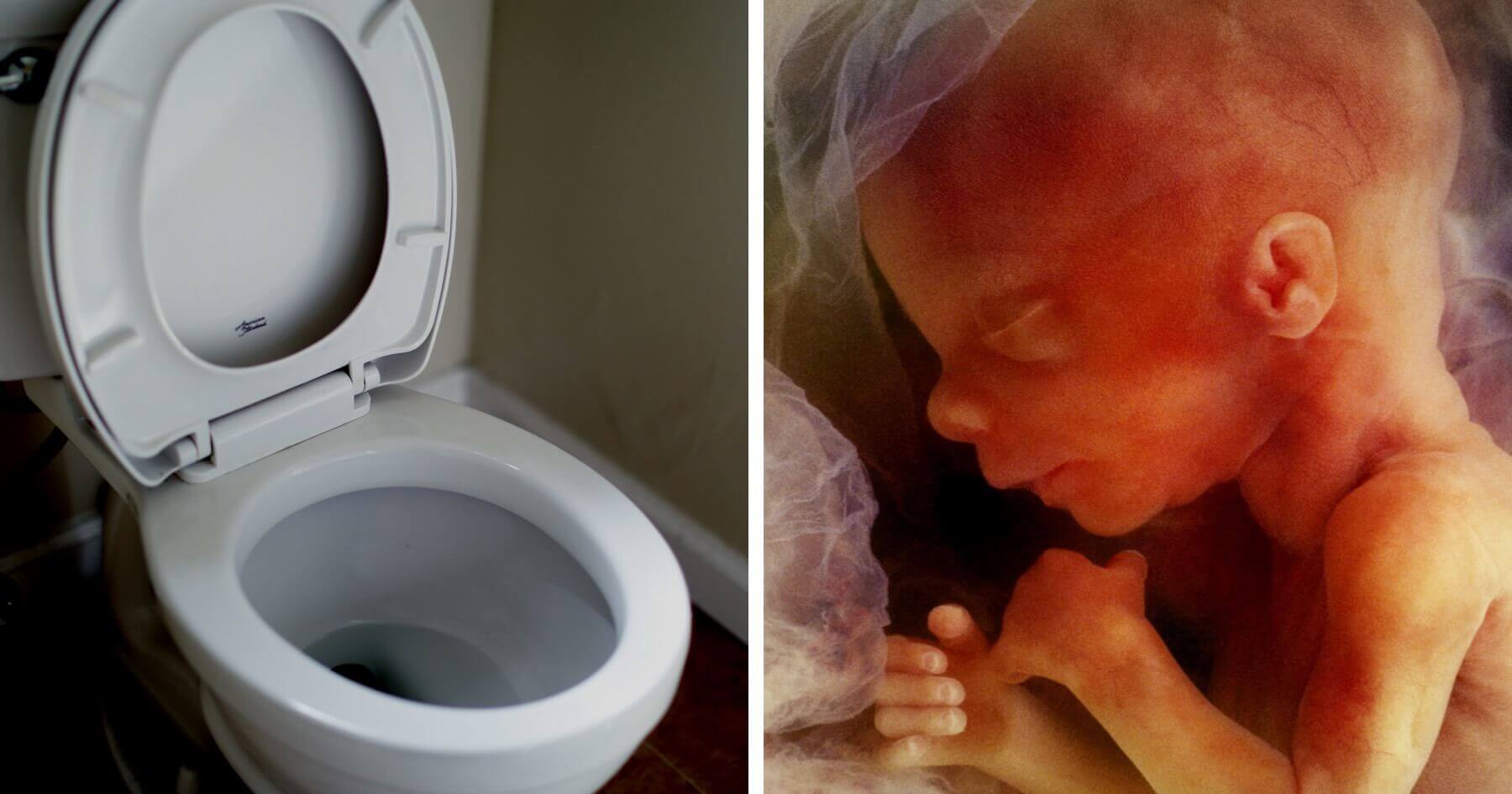
“With home abortions, however, appropriate and sensitive respect for the disposal of the remains of the embryo/foetus does not generally take place since these are usually flushed down the toilet or discarded as waste in another manner. An outcome which may cause considerable distress to some vulnerable women having an abortion as well as the persons supporting them at home”.
“This may happen because of their possible grief, especially when they see the dead embryo/foetus, which is up to 3-6cm in size at about ten weeks of gestation and which ends up in the sewage”.
He went on to argue that: “It may also create very significant trauma to other professionals, such as sewage and plumbing professionals, if they ever encounter these dead human embryos/foetuses in the course of their work”.
MacKellar concluded that: “Scottish society cannot, therefore, continue to let the remains of embryos/foetuses simply be discarded as worthless waste”.
No in-person consultation
Other sections of society have also voiced their objections to making DIY abortion a permanent feature of Scottish law. Late last year, in a comment piece in the Times, John Mason, the SNP MSP for Glasgow Shettleston, raised concerns about the lack of in-person consultation:
“There is no entirely reliable way to verify the stage of pregnancy without an ultrasound or physical examination”.
“The abortion provider [BPAS] has already announced investigations of nine cases of women taking abortion pills beyond the ten-week limit, while police in England are investigating the death of an unborn baby after the mother took home-abortion pills when she was 28 weeks’ pregnant”.
Similarly, Baroness Stroud made the same point when she highlighted that “there are at least 52 cases officially reported to the Department of Health and Social Care of women who were provided pills-by-post beyond 10 weeks’ gestation, including one case where the unborn child was at 28 weeks’ gestation (beyond the legal limit)”.
Coercion and abuse
Mr Mason said: “The dangers of exacerbating coercion and undetected abuse through unsupervised at-home abortion are similarly sidelined by proponents of the scheme”.
Alongside the medical complications of ‘DIY’ home abortion, Baroness Stroud also decried the potential for abuse and coercion, which becomes difficult to detect without in-person consultation.
She noted: “This poses a threat to vulnerable women and girls who are at risk from an abusive partner, sex-trafficking or child-sex abuse, as the home abortion could be used by their abusers as a means to more easily cover up trafficking or abuse scandals”.
“There appear to be very few reasons to make the change permanent”.
Critics of ‘DIY’ home abortions have highlighted the large potential for abuse from the beginning, pointing out that once abortion pills are sent in the post, there is no guarantee about who ultimately takes them.
A series of undercover investigations last year revealed how a number of women were able to obtain pills for their children by pretending to be pregnant themselves. Other women in the investigation were able to obtain abortion pills after the 10-week limit.
Mr Mason concluded: “These serious matters deserve immediate redress. Weakening safeguards and waiving safety concerns for some of the most vulnerable in our society is surely the wrong move. The women of Scotland deserve better”.
Right To Life UK spokesperson, Catherine Robinson, said: “The case against DIY at-home abortion is overwhelming. Not only is it wide-open for abuse because it is impossible to know who ultimately takes these abortion pills but, as Dr MacKellar says, it is likely to be highly distressing for women to encounter the remains of their own child”.
“Of course, even if the remains of a foetus are disposed of ‘properly’ this does not make abortion right. Nevertheless, this once again shows the callousness of the abortion lobby, who appear to be concerned with expanding abortion access at almost all costs regardless of the risks to mother’s mental and physical health”.