



PRESS RELEASE – FOR IMMEDIATE RELEASE
Press release – Abortion complications reporting Bill to have Second Reading in House of Lords today, as pressure mounts for Government to correct major underreporting of abortion complications
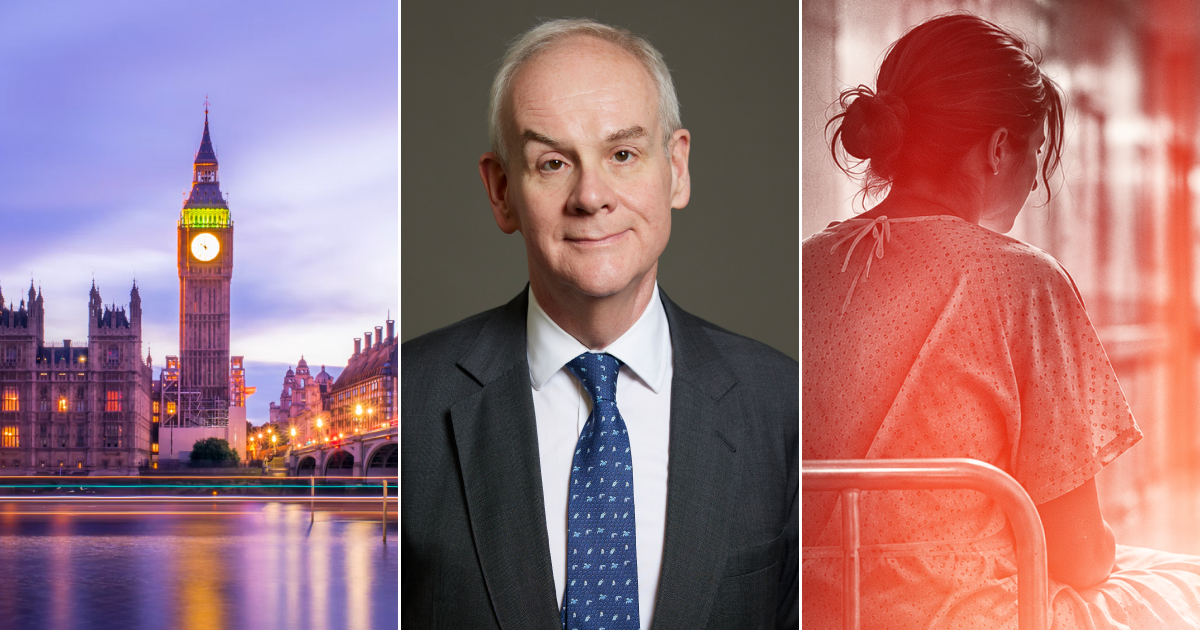
20 November 2026 – Lord Moylan’s abortion complications Bill has its Second Reading in the House of Lords today, as pressure is mounting on the Government to correct a major gap in the reporting of abortion complications.
Nikki da Costa, former director of legislative affairs in 10 Downing Street for two Prime Ministers, has joined the growing number of people calling for change, publishing an op-ed in The Spectator where she backs Lord Moylan’s Bill and outlines the urgent need for change.
The need for change has arisen after a Government review revealed that the actual complication rates from abortion are likely far higher than what the public and women are being told in the annual abortion statistics.
Among the general population of women who have abortions, medical complications are 12 times higher than what the public and women are being told in official abortion statistics. For teens and children under 20 who have abortions, complications are over 17 times higher than what is being reported to the public (further details on these figures are provided further down the press release).
The Government published more comprehensive complication figures as part of the review in 2023, but now they are refusing to publish them again.
This means women and the public are being kept in the dark regarding the real scale of complications that women are facing following an abortion.
The Government has identified that there is a problem, yet refuses to do anything about it
The Government review published in November 2023 revealed that the actual complication rates from abortion are much higher than what the public and women are being told in the annual abortion statistics.
On 10 March 2026, Health Minister Baroness Merron confirmed that the Department had undertaken no further research or analysis comparing hospital records with abortion notifications since the November 2023 report, and had not committed to updating or repeating it.
Ministers have also said they have no plans to require abortion providers to notify the Government if a woman experiences a complication after discharge. On 5 June 2025, Baroness Merron told Parliament: “There are no plans to require the notification of complications that occur after discharge from the abortion service.”
Bill would update abortion complication reporting to reflect the shift to at-home abortions
Government collation and reporting of medical complications associated with abortions have not caught up with the significant changes that have taken place in recent years regarding how and where abortions occur.
The latest official figures, covering 2023, record that 200,745 abortions in England and Wales were medical ‘DIY’ home abortions, accounting for 72% of abortions – up from 34.3% (72,079) in 2020.
The abortion complication rates reported in the annual abortion statistics are based on complications that are recorded by an abortion provider on a notification (HSA4) form.
The Government’s own review explains that a woman may have an entirely remote consultation and no further contact with the provider after being sent the pills.
The provider completing the notification (HSA4) form that records any complications may therefore never know whether she experienced a complication from the abortion.
The Department of Health and Social Care itself warns that complications may be less likely to be recorded where abortion medication is taken at home. Its latest annual publication still relies on the provider abortion notification forms for its complication figures.
Under the current system, a woman can need hospital treatment after an abortion without that complication appearing in the annual abortion statistics
The notification form is designed to record complications known up to discharge from the abortion provider. If a woman subsequently develops a complication and goes to hospital, the provider may never be informed.
Even if the provider learns what happened after submitting the form, it must contact the Department of Health and Social Care to ensure the record is updated. The Government’s review found “no evidence” of this happening in 2022.
For example, a woman takes abortion pills at home, starts bleeding heavily and goes straight to hospital. The hospital records her treatment for the complications, but the abortion clinic may never hear about it.
The Complications from Abortions (Annual Report) Bill proposes collecting the data from both abortion provider records of complications and hospital records of complications.
Including hospital records would help capture complications that are missing from the figures supplied by abortion providers and give women and the public a far more complete picture of the complications associated with abortions.
The Government’s own review showed a complication rate roughly twelve times the provider notification figure when hospital data included complications from incomplete abortions
Across 2017–2021, abortion providers’ notifications recorded an average complication rate of 1.52 per 1,000 abortions in England. Hospital records produced a rate of 4.06 per 1,000, around 2.7 times higher.
When complications from incomplete abortions were included in the hospital data, the figure rose to 18.16 per 1,000, roughly twelve times the notification figure, which excludes these cases.
The figures above are calculated from the annual rates in Table 1 of the Government’s published data.
Complications after incomplete abortions accounted for about 85% of the gap between abortion providers’ figures and the broader hospital figures in the Government’s review of England from 2017 to 2021.
An incomplete abortion occurs when parts of the dead baby, the placenta, or both remain in the woman’s womb.
The parts of the dead baby and/or placenta left in the womb can cause pain, heavy bleeding or infection. Some women need an operation to remove the tissue left in the womb. Government guidance tells abortion providers to leave that operation out of the complications section of their reporting form.
For teens and children under 20, hospital records showed a complication rate over seventeen times the provider notification figure
In 2021, abortion providers’ notifications recorded a complication rate of 0.7 per 1,000 abortions among women under 20 in England. Hospital records, including complications from incomplete abortions, produced a rate of 12.2 per 1,000.
That is around 17.4 times the notification figure. As with the overall comparison, the hospital figure includes complications from incomplete abortions, which the notification figure excludes.
The figures above are calculated from the annual rates in Table 2 of the Government’s published data.
FOI investigation found that around one in seventeen women having a medical abortion subsequently needed hospital treatment
An FOI investigation in 2021 found that more than 1 in 17 women, around 20 a day, who had a medical abortion between April 2020 and September 2021 needed hospital treatment.
These hospitalisations can be missed by the official abortion statistics because abortion providers are only required to report complications known before a woman is discharged from their care.
This year’s change to abortion law strengthens the case for accurate reporting of complications at different stages of pregnancy
The issue is particularly relevant after the removal earlier this year of the legal deterrent against women performing their own abortions outside the provisions of the Abortion Act at any gestation right up to birth via a controversial amendment to the Crime and Policing Act.
The Government’s own assessment expressly acknowledges that a woman would no longer commit a criminal offence by deliberately misrepresenting her gestation to obtain abortion pills by post beyond the ten-week limit.
The November 2023 OHID report found that the complication rate for medical abortions is over 160 times higher for abortions at 20 weeks and beyond when compared to medical abortions that occur at 2 to 9 weeks.
Since the decriminalisation of self-induced abortion up to birth is likely to lead to more women performing their own dangerous at-home abortions late in pregnancy, it is in the public interest for accurate data to be collated and published concerning the risks of abortions at different gestations, particularly under the pills by post scheme.
The current system has no reliable way of ensuring this information is accurately recorded.
What would the Complications from Abortions (Annual Report) Bill do?
The Complications from Abortions (Annual Report) Bill [HL] is a Private Members’ Bill tabled by Lord Moylan, which is currently progressing through the House of Lords.
The Bill was first introduced in the previous session, where it passed its Second Reading and was reported without amendment at Committee Stage.
The proposed legislation would require the Government to publish an annual report on complications from abortions in England that includes data from both the Abortion Notification System and Hospital Episode Statistics.
This would ensure that women and the general public had access to more accurate information on complications following abortions.
The annual report would be required to include the complication rate for abortions as well as the rate by the woman’s age, method of abortion, gestation and complication type (including complications arising from incomplete abortions). These categories reflect reporting in the November 2023 OHID statistics.
The Bill is a moderate proposal, calling for the November 2023 publication to be repeated annually. We know such a report is possible, since the Government has already produced one previously.
A scandal waiting to happen – why does this matter?
Accurate reporting of complications arising from abortions is necessary to ensure reliable Government data, patient safety and meaningful informed consent is possible.
Women cannot meaningfully consent to an abortion without access to accurate data concerning the risks. If the Government will not address this problem, while knowing that current abortion complications are being underreported multiple times over, they are misleading the public and risk being complicit in a new public health scandal where women will be the victims.
QUOTES FOR PUBLICATION
Lord Moylan said:
“This Bill makes no change to the provision of abortion. Rather it is a Bill to protect women’s welfare by improving the collection of statistics on complications arising from abortion. This Bill would ensure that women and clinicians would have access to better data outlining complications that arise after having an abortion.
“The notification forms currently used for the annual statistics are in the great majority of cases unlikely to capture complications that arise after an abortion. With almost three out of four abortions now taking place at home, it is important that clinicians and women have access to accurate data to ensure patient safety and informed consent.
“A Government review in 2023 showed how hospital admission records could help provide a fuller picture, but no commitment has been made to incorporate these in official statistics.
“My Bill would require an annual report on complications from abortions in England, using both abortion notifications and hospital records. It is a straightforward proposal to keep the evidence up to date.”
Catherine Robinson, spokesperson for Right To Life UK, said:
“The current system for recording abortion complications is not fit for purpose and has not caught up to reflect changes in practice. This was made clear by the Department of Health’s own report in 2023, yet successive governments have not done anything to address the deficiencies detailed in that report.
“The Government has a responsibility to ensure official health statistics provide a reliable picture concerning the risks related to abortions, particularly under the controversial pills by post scheme. The public expects nothing less and informed consent is impossible where official data is misleading women.
“This is another government scandal waiting to happen, with likely tragic consequences. Whatever one’s views on abortion, it is unacceptable for the Government knowingly to underreport complications from abortions multiple times over. Lord Moylan’s Bill would be a significant step in addressing these concerns.”
ENDS
- For additional quotes and media interviews, contact 07774 483 658 or email press@righttolife.org.uk
- For further information on Right To Life UK, visit www.righttolife.org.uk
