




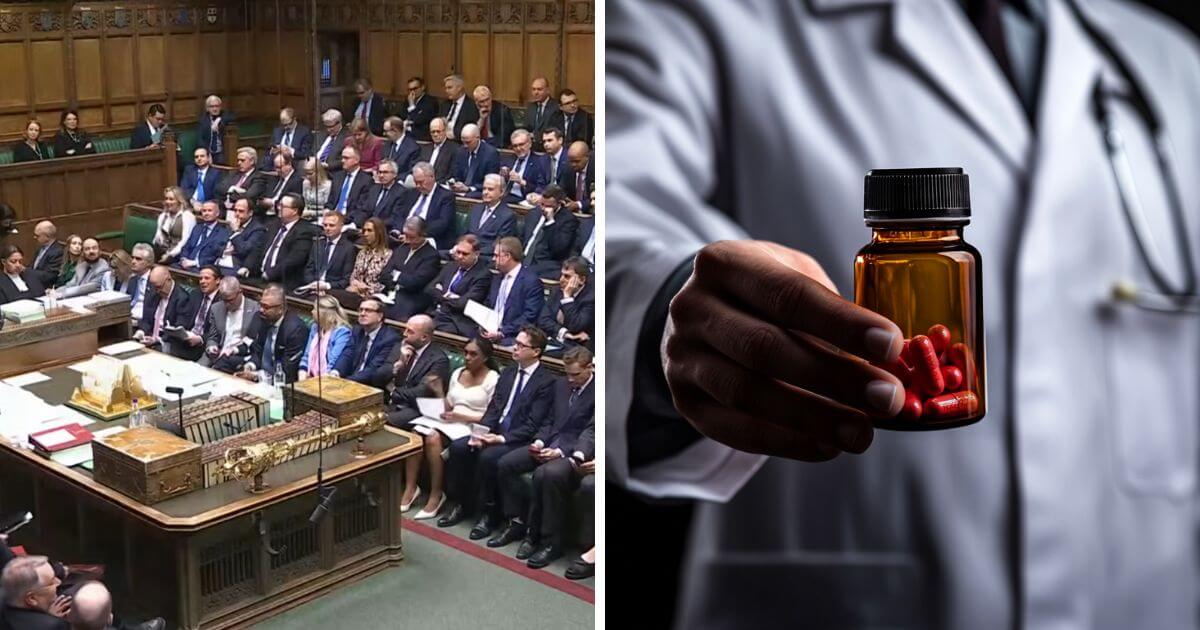
New polling has suggested that more MPs would oppose the assisted suicide Bill than could be relied upon to back it if the Bill were revived in the next parliamentary session.
The polling, which was carried out by Whitestone Insight, found that only 41% of MPs surveyed can definitely be relied upon to vote “Aye” again, while 45% said they would continue to vote no, suggesting that if the legislation were put to a vote today, it would likely be rejected by the House of Commons.
Only 12 MPs need to change from supporting the previous Bill to opposing the new Bill for the new Bill to fail, and the poll suggests that any MP considering bringing back the assisted suicide Bill after the King’s Speech would likely be destined to fail.
In addition, a majority of MPs surveyed, approximately 61%, recognise the authority of the House of Lords to amend, block or reject the legislation if safeguards are deemed inadequate. Only 28% of MPs do not recognise this.
According to the polling, 47% of MPs believe that such a rejection of the assisted suicide Bill by the House of Lords would not trigger a “constitutional crisis”, while only 41% believe that it might.
The polling also revealed that many MPs have serious concerns about the safety of the assisted suicide Bill. Almost half (49%) of MPs polled expressed a fear that the assisted suicide Bill, if legalised, would lead to systemic pressure on elderly people and people with disabilities to opt for assisted suicide, when they otherwise would not have considered it.
Only 43% of MPs surveyed believe that the current safeguards in the assisted suicide Bill are sufficient, while a majority of them, 52%, are not certain that the legislation would prevent coercion or error from occurring. Additionally, 43% of MPs stated that they knew of someone who voted in favour of the assisted suicide Bill with the expectation that the House of Lords would work to “make it safe”.
A majority of MPs polled, 57%, agreed that, if the assisted suicide Bill became law, it would become quicker and easier for patients to access assisted suicide services than high-quality palliative care; only 28% did not believe this.
Polling comes amid near-unprecedented levels of opposition to the Bill in the House of Lords
An analysis by Right To Life UK’s Public Affairs team has shown that nearly 80 Peers have so far tabled or signed amendments highlighting concerns with the Bill, and that 131 Peers have either spoken against the Bill or signed amendments raising such concerns during its passage through the Lords.
131 is an exceptionally high number of Peers opposing a Bill, particularly one where debates are reserved for Fridays when Peers are often not expected to be in Parliament. It is even more remarkable given that the Bill has not yet completed Committee Stage or reached its Report Stage or Third Reading.
The public supports the revelations that this new polling has brought to light
As MPs and Peers are now showing large opposition to the assisted suicide Bill in Parliament, new polling has revealed that the public does not support Kim Leadbeater’s assisted suicide Bill, even among those who support assisted suicide in principle, and it does not support forcing the Bill into law without the consent of the House of Lords.
The polling, undertaken by JL Partners in April 2026, reveals that only 14% of respondents disagree that the Government should only be able to push a Bill through Parliament without full scrutiny from the House of Lords, if it was in their manifesto and the public voted for it.
Additionally, 77% of respondents believe that, if a Bill isn’t watertight and hasn’t been fully scrutinised, it should not pass into legislation.
95% of the 2,048 respondents stated that legalising doctors assisting people who are terminally ill to end their own lives was not in their top three most important issues that Keir Starmer and the Labour government should be addressing right now.
Spokesperson for Right To Life UK, Catherine Robinson, said “This new polling reveals that the House of Lords have done a fantastic job in bringing to light the many issues that the assisted suicide Bill still has at this late stage in Parliament”.
“It seems that at least some MPs who voted in favour of the Bill in the House of Commons with the expectation that the Lords would ‘make it safe’, have found that the Lords were unable to do so”.
“This flawed Bill will certainly fall at the end of this Parliamentary session. The public, and many in both Houses of Parliament, will be glad when it does. It must not come back again”.