



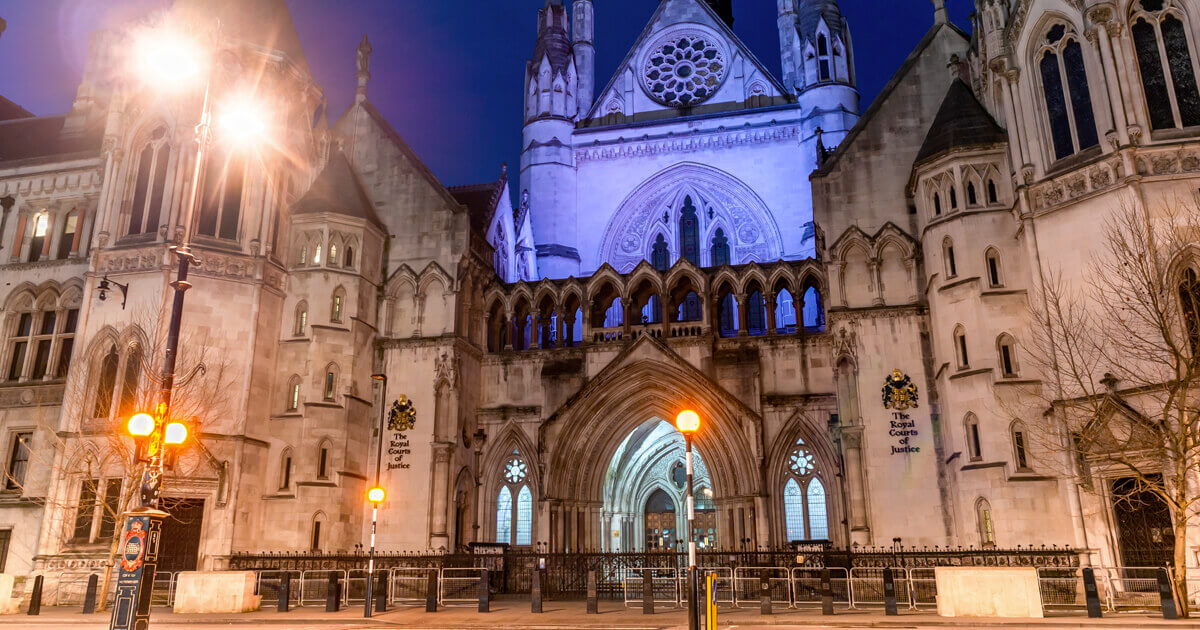
The UK Government’s decision to introduce ‘DIY’ home abortions will be challenged at the High Court tomorrow.
The legal challenge has been brought forward by the Christian Legal Centre who will argue that the decision making process ahead of making the substantial change was unlawful, undemocratic and unsafe for thousands of pregnant women at an already highly vulnerable time.
Despite assurances from the Government that there would be “no change” to abortion regulations and that an in-person consultation are “an essential safeguard” for women, the policy was brought in shortly after lockdown began.
The very substantial change is not only the biggest change to abortion law since it was passed in 1967, but was made without any public consultation, parliamentary scrutiny or debate.
Prior to the change in regulations, abortions could only take place in hospitals or abortion clinics approved by the Secretary of State.
Under the new ‘temporary’ policy, doctors will be able to prescribe mifepristone and misoprostol over the phone or video platforms such as Facetime or Skype, meaning they will be left to pass their unborn child at home without direct medical supervision.
Tomorrow, the role of the abortion industry, senior civil servants and their influence on the ministers in the Department for Health and Social Care will come under scrutiny.
Government’s incredible U-turn
The Government had initially stated its intention to allow ‘DIY’ abortions on 23 March, but backtracked later that day claiming the announcement had been “published in error.”
The government web page that had published the changes instead had the following message for visitors: “The information on this page has been removed because it was published in error. This was published in error. There will be no changes to abortion regulations.”
Just one day later, the Health Secretary Matt Hancock reassured the House of Commons that there would be no change to any abortion laws in response to COVID-19.
Additionally, Health Minister Lord Bethell made it very clear that there were significant safety and safeguarding issues for women and young girls with the proposal.
As the Coronavirus Bill was brought to the House of Lords on Wednesday 25 March Lord Bethell rejected strongly on behalf of the Government the proposed changes to abortion law, stating:
“….we do not agree that women should be able to take both treatments for medical abortion at home. We believe that it is an essential safeguard that a woman attends a clinic, to ensure that she has an opportunity to be seen alone and to ensure that there are no issues.
“Do we really want to support an amendment that could remove the only opportunity many women have, often at a most vulnerable stage, to speak confidentially and one-to-one with a doctor about their concerns on abortion and about what the alternatives might be? The bottom line is that, if there is an abusive relationship and no legal requirement for a doctor’s involvement, it is far more likely that a vulnerable woman could be pressured into have an abortion by an abusive partner.”
He also made it clear that it would be inappropriate to make this change without parliamentary scrutiny:
“It is not right to rush through this type of change in a sensitive area such as abortion without adequate parliamentary scrutiny.”
Despite these clear statements, the Government went against its own warnings and in an incredible double U-turn announced on 30 March it would allow ‘DIY’ home abortions.
Through their legal challenge, the Christian Legal Centre wants the dangerous legislation overturned immediately and full disclosure of the Government’s decision-making process and rationale.
Serious risk of harm and coercion
Their case has been backed by former Government Minister Ann Widdecombe and Dr Gregory Gardner.
In an expert witness statement for the High Court challenge, Dr Gregory Gardner, a longstanding GP and honorary clinical lecturer at the University of Birmingham, highlights the risk of serious injury and harm to women self-administering abortion pills.
“The introduction of home abortions as proposed (notwithstanding the presence of a Covid-19 pandemic) is a policy that is more likely than not to depart from the essential tenets of duty of care through proper clinical assessment, thereby raising the risk of serious injury and harm being done to women self-administering Mifepristone and Misoprostol at home,” Dr Gardner wrote.
In addition to citing risks of infection, haemorrhage, psychological trauma, and risk of future preterm birth, Dr Gardner explains how the Government’s decision could result in more women being coerced into unwanted abortions.
He said: “It will be difficult if not impossible to verify by phone or video whether a woman is undergoing any kind of duress to have an abortion. There does not seem to have been any consideration given to this in the proposed change in policy. There will be women who need delicate counselling to discover coercion or other forms of abuse.”
Former Government minister Ann Widdecombe has also written a statement to the high court in support of the legal challenge.
In her statement, the former Shadow Health Secretary reveals the history of the legislation which has enabled health services in England, Scotland & Wales to roll out ‘DIY’ abortions.
During a parliamentary debate in 1990, Miss Widdecombe raised concerns that an amendment to abortion legislation, allowing the Health Secretary to designate “a class of places” as suitable for abortions would inadvertently pave the way for ‘DIY’ home abortions.
However, the author of the amendment, Robert Key MP, dismissed Miss Widdecombe’s concerns and accused the then Conservative MP of speaking from “the whip issued by the pro-life group” and misleading Parliament.
The Health Secretary at the time, Kenneth Clarke, then assured MPs that the legislation was not intended to legalise home abortions and that abortions would only be “administered only in closely regulated circumstances under the supervision of a registered medical practitioner”.
30 years later, Ann Widdecombe’s then dismissed concerns have become a reality.
When the legal challenge was launched, Ann Widdecombe said: “Parliament was told one thing. Government is doing another and that says it all.”
Coronavirus exploited
Ahead of the tomorrow’s Judicial Review, Andrea Williams, chief executive of the Christian Concern, said: “UK Parliament was explicitly told on March 24 by the government that there were no plans to change the rules on access to abortion in response to Covid-19 as the risks were too high to the women involved. Only a week later the government seems to have capitulated to the pressure of the abortion lobby by doing a U-turn.
“The government changed the law on a matter of life and death without reference to parliament. The government did this after expressly stating on the floor of the House of Commons and House of Lords that this would not happen.
“The UK government is going to extraordinary lengths to protect lives due to the threat of Covid-19. It appears to fail to see the irony in opening up access to abortion and counting the lives that will be lost as a result of such action.
“If this practice goes unchallenged there will be no going back and that is tragic for women and their children.
“The coronavirus crisis is being exploited, not just in the UK, but globally, to make changes to abortion law which would not be possible under properly functioning democracies.
“This is nothing less than a fight to preserve our hard-won democratic freedoms which do not allow the government to make changes to the law on a whim with no accountability.”