



The committee to scrutinise the assisted suicide Bill that is currently going through Parliament will have a majority of supportive MPs, including two Government ministers who voted in support of assisted suicide at Second Reading, and no medically qualified MPs opposed to the Bill, in a move that campaigners have described as a “stitch-up”.
Next week, following the passing of Kim Leadbeater’s assisted suicide Bill at Second Reading last November, a select group of MPs will begin their public scrutiny of the Terminally Ill Adults (End of Life) Bill. However, a number of commentators and campaigners have slammed this committee, hand-picked by the Bill’s sponsor, as being deeply unbalanced in favour of those supportive of the assisted suicide Bill.
As has been pointed out in the national press, in terms of the ratio of supporters to opponents, the committee does not accurately reflect the split in the House of Commons. The ratio of 330 votes in favour to 275 against should have resulted in a 13-10 division in committee. Instead, there are 14 MPs in favour, including two ministers, and nine against.
The Independent has reported that a list of nine MPs opposed to assisted suicide was proposed by MP Danny Kruger, one of the most prominent voices against the proposed legislation, to scrutinise the Bill line by line. Only two MPs on that list were selected, however.
One campaigner told The Independent “I am afraid this is a complete stitch-up”.
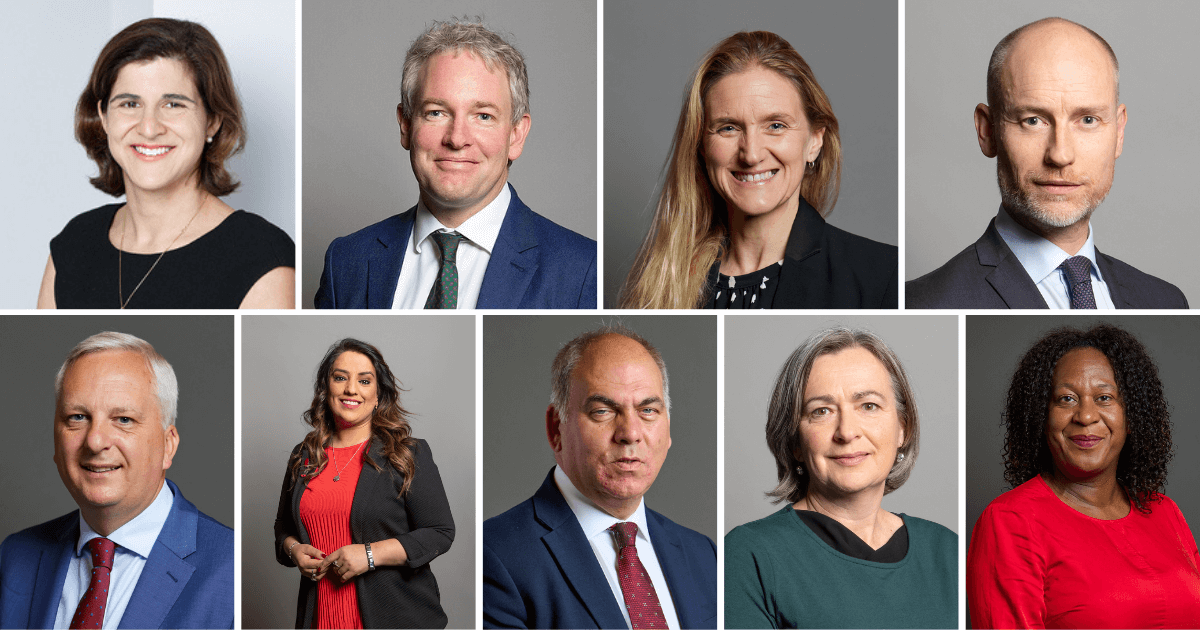
MPs present on the assisted suicide Bill scrutiny committee
Of the nine MPs on the Committee who voted against Leadbeater’s assisted suicide Bill, Kruger is the only one who has been active in his opposition to the Bill and who was a major opposition speaker at Second Reading. None of the other eight MPs has been active on this issue nor even spoke during Second Reading.
This is especially significant because 21 MPs spoke against the proposed legislation during the debate, of whom only Kruger was chosen for the Committee.
The particular selection or non-selection of certain MPs has also been a subject of controversy. Palliative Care minister and Bill supporter Stephen Kinnock was appointed to the Committee despite the fact that the palliative care profession continues to oppose a change in the law.
The only MP with a disability appointed to the Committee, Marie Tidball, currently supports the Bill even though no major disability advocate groups in the UK – including Disability Rights UK, Scope and Not Dead Yet – support a change in the law to introduce assisted suicide.
Every MP on the Committee with a legal background – Tidball, Bambos Charalambous, Jake Richards, Sarah Sackman and Dr Neil Shastri-Hurst – is supportive of the assisted suicide Bill.
Despite the Welsh Assembly’s decision to reject assisted suicide by 26 votes to 19 last October, all the Welsh MPs on the Committee are supportive of the assisted suicide legislation.
Commenting on the presence of the two Government ministers on the Committee, both of whom support the proposed legislation, one commentator at the Telegraph argued this could “be potentially intimidating to Labour committee members” and that “it sends a not-so-subtle message to all party backbenchers about No 10’s ‘neutrality’ before the next vote”.
Former MP Tom Hunt has drawn attention to the limited Parliamentary experience of a number of the MPs considered opponents of the assisted suicide Bill.
In particular, he has identified three especially “soft” opponents of the Bill, MPs Jack Abbott, Sojan Joseph and Sean Woodcock, who sit on the Committee.
Jack Abbott stated in an email that he believes “in the principle of assisted dying, and if these risks were properly assessed and minimised, I would likely make a different choice, either at a later stage of this Bill, or if other legislation is proposed in the future”. Similarly Sojan Joseph said he “would be open to rethinking [his] stance if stronger safeguards were in place”. Sean Woodcock went furthest saying that he “absolutely believe[s] in bodily autonomy” and adding that “I will push to improve the Bill on the areas that I was concerned about, and I hope that this makes it acceptable for me to vote ‘Aye’ at Third Reading”.
MPs absent from the assisted suicide Bill scrutiny committee
While only one member of the Committee (Danny Kruger) who voted against the Bill actually spoke during the debate at Second Reading out of a possible 21 MPs, eight MPs supportive of a change in the law on assisted suicide spoke during the debate, out of a possible 25 MPs.
All of the medically qualified MPs on the Committee support the Leadbeater Bill. Dr Ben Spencer MP, a medical doctor with a PhD in decision-making capacity, voted against the assisted suicide Bill and publicly asked to be included on the Committee. He was rejected.
Labour MPs Florence Eshalomi, Dame Meg Hillier, and Jess Asato all spoke in opposition to the Bill at Second Reading in November, but none of them is on the Committee.
Head of the All-Party Parliamentary Groups for “Ageing and Older People” and “Dying Well”, York Central MP, Rachael Maskell, was part of the Health and Social Care Select Committee’s recent major inquiry on assisted suicide, yet was not chosen to be part of the Committee. She told the Independent “I am surprised that no one who was on the assisted dying/assisted suicide health select committee inquiry is on the committee, and myself and Dr Ben Spencer for our relevant clinical experience. All bills need strong scrutiny if they are to make good law, but there are significant issues which need challenging and I trust that this will occur. I did ask Kim Leadbeater to be on the committee.”
The MPs on the Committee who voted in favour of the Bill are Kim Leadbeater, Sarah Sackman, Stephen Kinnock, Bambos Charalambous, Marie Tidball, Simon Opher, Jake Richards, Rachel Hopkins, Lewis Atkinson, Kit Malthouse, Neil Shastri-Hurst, Tom Gordon, Sarah Green and Liz Saville-Roberts.
The MPs on the Committee who voted no to the Bill are Naz Shah, Juliet Campbell, Daniel Francis, Sojan Joseph, Jack Abbott, Sean Woodcock, Danny Kruger, Rebecca Paul and Sarah Olney.
Spokesperson for Right To Life UK, Catherine Robinson, said “The selection of MPs to scrutinise this Bill is not even subtle in its bias. If Kim Leadbeater were serious about tightening up her Bill to minimise the risk that vulnerable people near the end of their lives will opt for assisted suicide due to pressure, either from themselves or others, she would have chosen the most robust critics of her Bill possible. The fact that she seems to have intentionally avoided so many prominent voices in favour of clearly less qualified MPs suggests that she fears having her Bill scrutinised and is not serious about preventing the potential risks her Bill would pose to the most vulnerable”.