



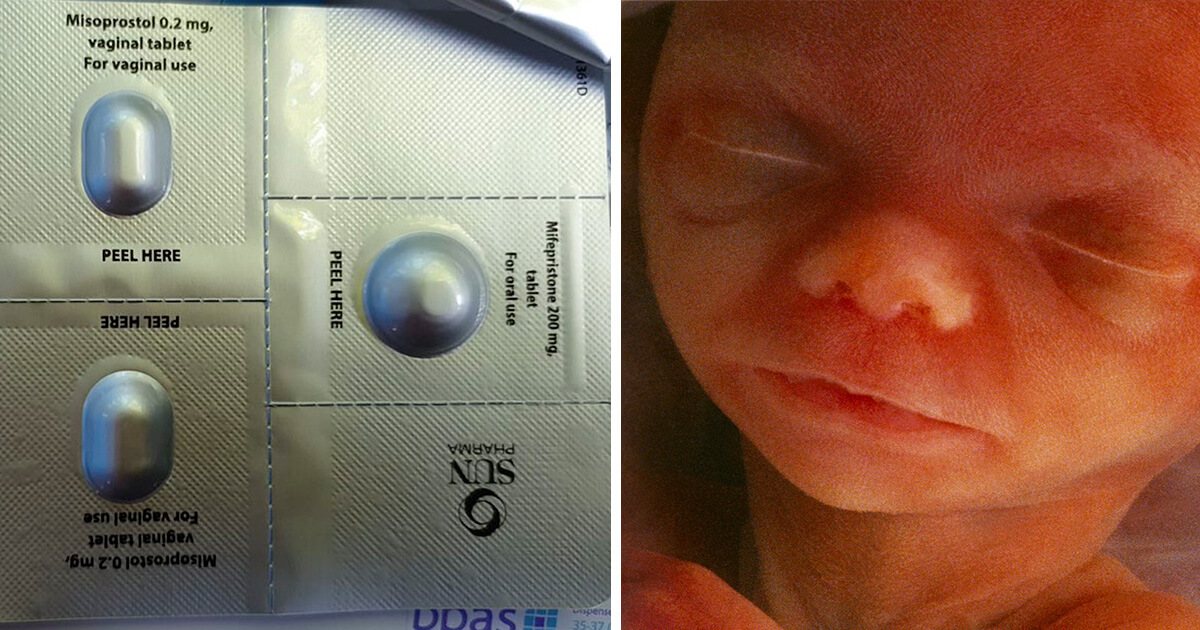
Temporary measures allowing ‘DIY’ home abortions are to be reviewed as part of a public consultation that will be run by the UK Government, following mounting safety concerns – including a murder investigation and the death of two women.
In the biggest change to abortion law since 1967, the UK Government announced on 30 March it would temporarily allow ‘DIY’ home abortions.
The very substantial change, which was made without any public consultation, parliamentary scrutiny or debate, was meant to last for the next two years or until the COVID-19 pandemic is over.
However, Lord Bethell has told the Mirror there will be a public consultation “on permanent home use of both pills for early medical abortion”.
The disclosure has since been confirmed by Health Minister Helen Whately who, in response to a parliamentary question from pro-life MP Carla Lockhart, said: “The Government has committed to undertake a public consultation on making permanent the COVID-19 measure allowing for home use of both pills for early medical abortion up to 10 weeks gestation for all eligible women. The current COVID-19 measure will be kept in place until the public consultation concludes and a decision has been made.”
The Sunday Mirror has revealed that “up to 90,000 women” have used ‘DIY’ home abortion services since policy was introduced.
Significant problems
Since ‘DIY’ home abortions were introduced, a number of significant problems have arisen.
According to a leaked “urgent email” sent by a regional chief midwife at NHS England and NHS Improvement on the “escalating risks” of ‘DIY’ home abortions, two women have died after taking ‘DIY’ home abortion pills.
The email leak also revealed police have opened a murder investigation into the death of a baby who they believe was born alive despite her mother taking ‘DIY’ home abortion pills.
A nationwide undercover investigation found evidence of abortion providers putting women at significant risk by not carrying out basic checks before sending them ‘DIY’ home abortion pills.
The study also discovered ‘DIY’ home abortion pills can easily be obtained and administered to others, potentially in a coercive manner.
In May, it was revealed UK police were investigating the death of an unborn baby after its mother took ‘DIY’ home abortion pills while 28 weeks pregnant.
In addition, abortion provider BPAS announced that it was investigating a further eight cases of women taking ‘DIY’ home abortion pills beyond the 10-week limit, raising questions over what checks are being conducted to ensure the law isn’t being broken and dangerous later-term abortions aren’t happening.
A number of women have also come forward to share the serious problems they’ve experienced after taking ‘DIY’ home abortion pills.
One woman said she went through “hell” and thought she was going to die after taking the dangerous pills.
Another woman said the pain and physical process was “horrible” and “a lot worse than expected”.
Full inquiry into ‘DIY’ home abortions announced
Last month, in a victory for pro-life campaigners, a radical amendment to the Domestic Abuse Bill, that would have allowed ‘DIY’ home abortions to take place on a permanent basis for domestic abuse victims, was withdrawn.
During the debate, pro-life MP Fiona Bruce MP put forward an amendment calling on the Government to conduct an “an inquiry into the safety, number, and impact of abortions carried out under the temporary coronavirus crisis provisions where the place of abortion was the woman’s home”.
The Government subsequently agreed to a full inquiry. But, Minister for Women, Victoria Atkins MP, promised that the current temporary policy of allowing ‘DIY’ home abortions would continue “until [a] public consultation concludes and a decision has been made”.
Fiona Bruce told CNA: “It is to be hoped, and we need to ensure, that this review — consultation — will properly and fairly highlight safety concerns around the taking of ‘at-home abortion pills’ which have been highlighted in recent press reports.”
‘Inherently dangerous’
A spokesperson for Right To Life UK, Catherine Robinson said: “Ever since the UK Government permitted ‘DIY’ home abortions, stories of illegal late-term abortions and safety abuses have come to light.
“We, along with other pro-life campaigners, warned it was only a matter of time before a woman died as a result of a ‘DIY’ home abortion. Tragically, that is now the case.
“These cases and the thirteen ongoing investigations are likely only the tip of the iceberg, given the date of the leaked email.
“Abortion providers, such as BPAS and Marie Stopes International, who want to keep ‘DIY’ home abortions on a permanent basis, are unlikely to want to reveal how many complications or serious incidents have arisen as a result of their ‘services’.
“There are also likely many more incidents that abortion providers don’t know about as the majority of women are likely to not come back and tell an abortion provider that they have broken the law using their service or weren’t even aware how far along they were, given they have not had an ultrasound.
“These ‘DIY’ home abortion schemes, which are inherently dangerous and show no concern for babies or vulnerable pregnant women, should be suspended immediately and not introduced on a permanent basis.”
Right To Life UK has launched an online tool allowing UK residents to contact their local MPs and call for an immediate end to ‘DIY’ home abortions following the deaths of two women.
What is a public consultation?
A public consultation is a process used by the Government, and other public bodies, which invites the public to provide their views and feedback on a particular proposal.
In the majority of consultations, responses can be submitted by both individuals and organisations.
Consultations last for a proportionate amount of time and consist of a limited number of clear, concise questions.
A consultation should help scrutinise a proposal and give an indicator of its public approval.