



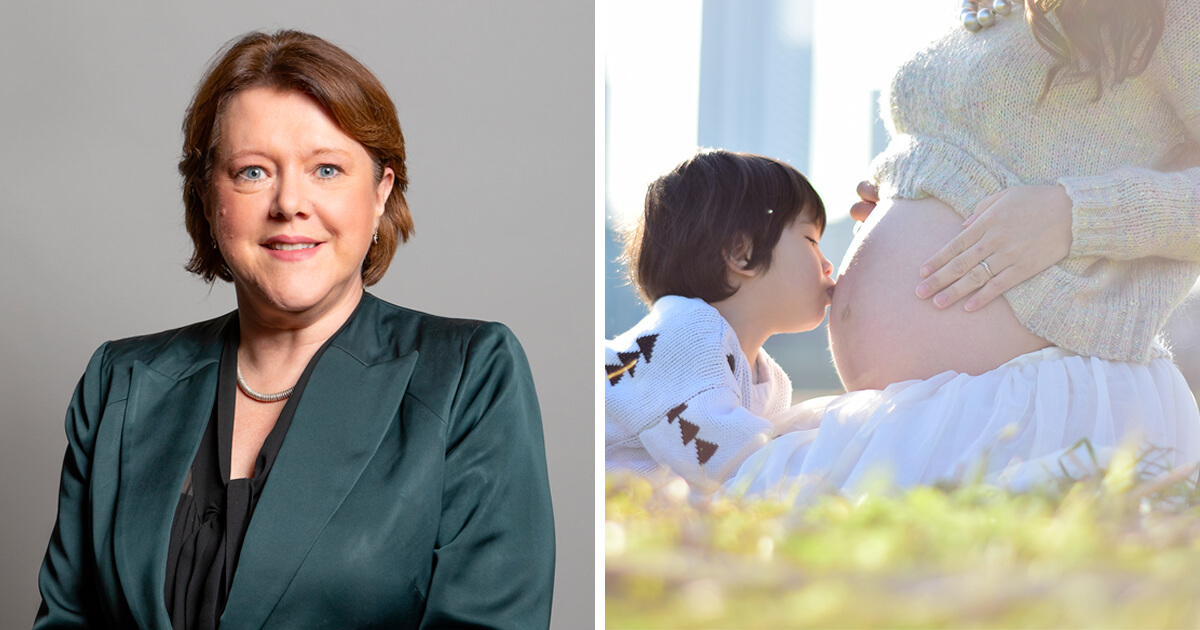
Women could be protected from redundancy during pregnancy and in the months following a birth, miscarriage or stillbirth under new legislation proposed by the former chair of the House of Commons Women and Equalities committee.
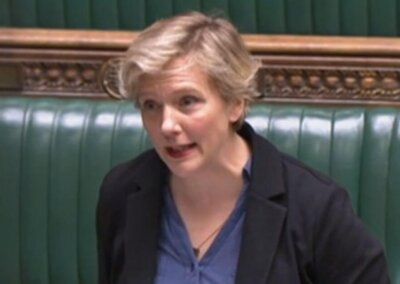
Yesterday, on Wednesday 8 July, Maria Miller MP presented the Pregnancy and Maternity (Redundancy Protection) Bill in the House of Commons.
Introducing the Ten Minute Rule Bill, the former Conservative Government Minister said: “The Government should be applauded for creating an environment where we have record numbers of women in work, but we need to update our laws to reflect that change, to address the challenges that women routinely face and to ensure that we level up the workplace for all women.”
Maria Miller’s proposed legislation, which has cross-party support, seeks to prohibit redundancy during pregnancy and maternity leave and for six months after the end of the pregnancy or leave apart from in specified circumstances.
The former Culture Secretary attempted to introduce legislation protecting pregnant women and new mothers last year, but it didn’t progress past the First Reading.
In a comment piece for the Telegraph, outlining why she was reintroducing the Bill, Maria Miller said: “The pandemic has shown too many employers fail to provide the basic protection pregnant women and new mums are entitled to by law. Now more than ever we need protections for pregnant women and new mums with real teeth that will also change employers’ ingrained attitudes.”
“We should hang our heads in shame at the way pregnant women and new mums are treated at work,” she added.
Sacked and silenced
A study, conducted by the Department for Business, Energy and Industrial Strategy in 2019, found that one in nine women have been fired or made redundant, or were treated so badly they felt forced out of their job, after going back to work from maternity leave.
The report estimated over 50,000 women each year may lose their role at work because of pregnancy or maternity.
It also found that over 75% of pregnant women and new mothers in the workforce experience some form of discrimination or negative treatment during pregnancy, maternity leave and return to work from leave. This is up from 45% of women in 2005.
Additionally, only around a quarter (28%) of those women raised the issue with their employer, only 3% went through their employer’s internal grievance procedure, and less than 1% pursued a claim to the employment tribunal.
The less than 1% of women who do go ahead to an employment tribunal are often ‘sacked and silenced’.
Pregnant women singled out for redundancy and furlough
Since the COVID-19 crisis began, a quarter of pregnant women or new mothers have experienced unfair treatment at work, including being singled out for redundancy or furlough, according to a study of 3,400 women by the TUC.
Additionally, according to PWC research published in May, 78% of those who have already lost their jobs as a result of the coronavirus pandemic are women.
Collateral damage
Rosalind Bragg, director of Maternity Action, a national pregnancy charity, told The Independent their helplines had been inundated with calls from despairing pregnant women.
She said: “During the lockdown, we had a lot of calls of women concerned about unsafe working conditions. But now on our advice lines, we have any number of women who are fearful of being laid off or who have been laid off. Many businesses are contracting and historically pregnant women have been among the first to be laid off. This is unlawful. But unfortunately, it is all too common.”
Joeli Brearley, founder of Pregnant Then Screwed, added that pregnant women and new mothers are “the first to be pushed out of their job” when a business is making cuts.
She said: “Pregnant women are viewed as distracted and that they can’t be committed to their job if they are about to take some time out of their career to care for a new baby.”
“When women return from maternity leave, they are also extremely vulnerable as the business has been operating without them for the last nine months so they’re not at the forefront of an employer’s mind. Without enhanced protection these vulnerable women will be collateral damage as our economy contracts and the country descends into recession. This will increase child poverty and set maternal employment rates back decades. Protecting their employment is good for the economy and it is good for families.’’
A spokesperson for Right To Life UK, Catherine Robinson said:
“Negative workplace attitudes towards pregnancy and motherhood could cause women to feel pressure to have an abortion. No woman should have to face such pressure.
“Cases like these are, sadly, becoming commonplace and offer further proof that the culture needs to change to support expectant and new mothers in the workplace and beyond.
“Maria Miller’s Ten Minute Rule Motion presented this week demonstrates willingness and concern in Westminster to change the negative bias towards pregnant women in the labour market.
“Whilst backbench bills of this kind are unlikely to be made law directly, this sends an important signal to the Government that the UK does not currently offer adequate legal protection for pregnant women in the workplace. It is therefore greatly encouraging that these steps are being taken to provide greater economic security for pregnant women, particularly at this critical time where many mothers are facing redundancy.”