




An investigation is likely to be carried out at the National Maternity Hospital in Dublin after an abortion was carried on a healthy child mistakenly diagnosed as having a “fatal foetal abnormality”.
Reports say that after pre-natal screening, the parents were told that their baby had Trisomy 18, otherwise known as Edwards Syndrome, a serious genetic condition which means the child is unlikely to live beyond the first few months of life outside of the womb. (Although in rare cases, people with Edwards Syndrome have been known to survive to adulthood.)
The family’s solicitor, Caoimhe Haughey said:
“[The parents] did not go into this clinic or into this hospital with a view to having a termination. They went into this hospital to find out how well their pregnancy was going… But this led them down a path when suddenly they’re talking about termination. They never brought up the word termination.
The apparently rushed nature of the consultation suggests that the parents were put under pressure to have the abortion. Seemingly, this is quite common when there is prenatal diagnosis of genetic abnormalities, particularly Downs syndrome.
A later test however, revealed that their child was perfectly healthy and did not have Edwards Syndrome. The couple have been described by their lawyer as “utterly, utterly mentally and physically devastated”, and it is understood that the Royal College of Obstetricians and Gynaecologists (ROCG) have been approached regarding the possibility of conducting a review.
“Being a doctor and being aware of the limitations of science, I am aware that these cases can happen but that doesn’t take away at all from the individual tragedy that has happened here.” said, Irish Taoiseach (Prime Minister) Leo Varadkar. He was apparently unaware that this tragedy was avoidable and happened as a direct result of a law he fully endorsed.
This case is obviously extremely sad, and was made possible by the introduction of abortion into the country following a referendum on the 8th Amendment in 2018, where the Irish people voted to remove legal protections for the unborn from the Irish Constitution.
It is a great tragedy that a nation decided to remove legal protection for unborn babies, and it is worth noting that this case would never have happened whilst abortion remained illegal in Ireland. When abortion becomes legally and morally acceptable, children conceived in less than ideal circumstances and ‘unwanted’ children are in great danger, but, as is clear in this case, even ‘wanted’ children are at risk
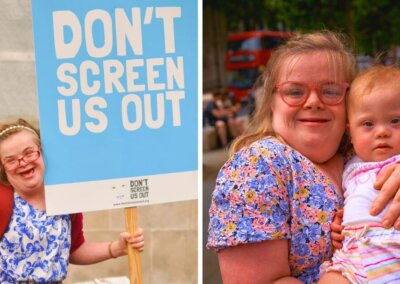
Additionally, the prejudice against people with disabilities is also evident in this case. The discussion of this case sees the tragedy lying in the misdiagnosis and then abortion of a healthy child, apparently assuming that, if it were the case that the child really did have Edwards Syndrome, then there would have been no tragedy.
Put simply, when you visit a medical professional, your expectation is that your healthcare provider will be able to properly diagnose any conditions, conduct further tests, or refer you to another medical expert to determine what is wrong. Unfortunately, as this guide to the law surrounding misdiagnosis cases here explains, there are times when an incorrect diagnosis can occur, and this, in turn, can lead to improper treatment, serious complications, and an escalation of any existing health issues.
That is not all though. A similar prejudice against people with disabilities is reflected in the abortion law in England and Wales which allows abortion up to 24 weeks in cases where the child is healthy, but permits abortion up until birth if the child is disabled. This is clear and explicit discrimination, written into law, against people with disabilities, and reveals much about our cultural attitude toward disabled persons.
In truth, Ireland has made the same grave mistake that Britain made in 1967, where children in the womb are constantly in danger of being viewed as products which, if they do not meet certain requirements (i.e. they are disabled), they are to be discarded. As this case shows, even if the product is up to the required standard, misdiagnosis means that he/she is still in grave peril.
NB The language of “production” is already routinely used in the medical community, where unborn children are frequently referred to as “products of conception”.