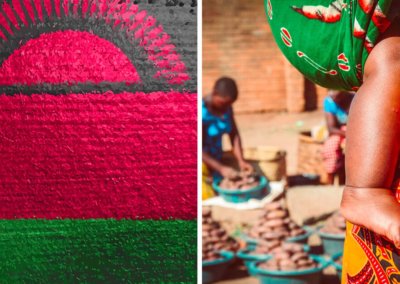




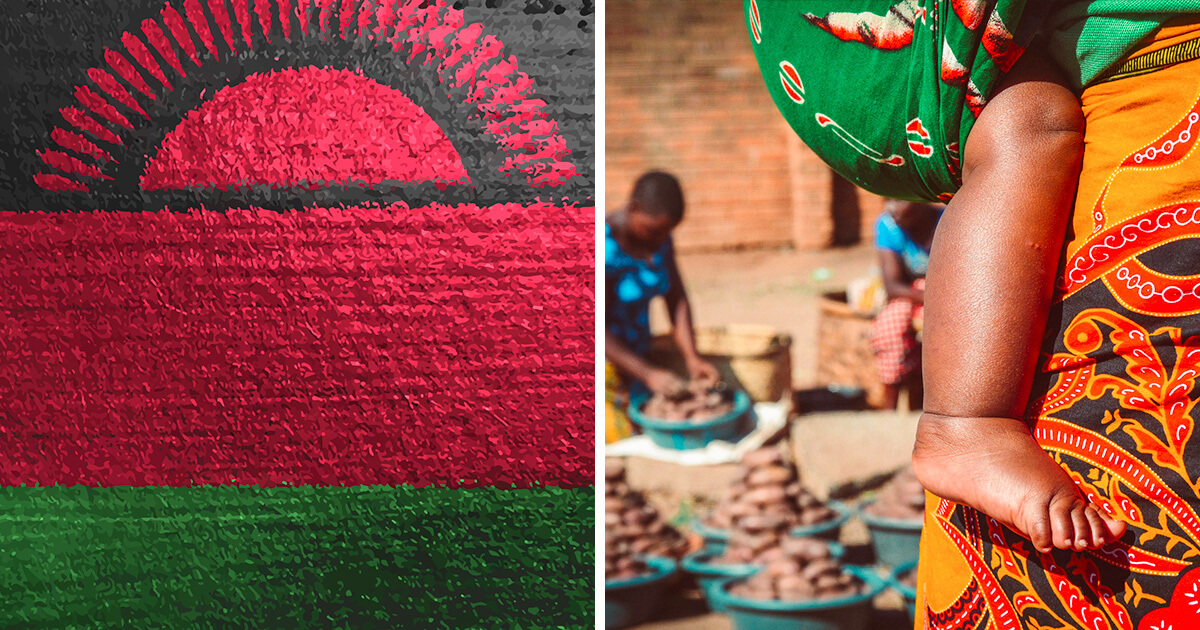
Plans to introduce an extreme abortion Bill in Malawi, which would have allowed abortion right up to birth, have been put on hold.
The move follows strong opposition from MPs, the general population and cross-community groups.
Chairperson of the Parliamentary Committee on Health, Matthews Ngwale, was expected to table his extreme abortion legislation during the National Assembly’s current sitting, which ended last week on 23 October.
However, according to Malawi Nation, the Democratic Progressive Party MP failed to put forward his legislative proposal after the Party’s President, Peter Mutharika, told him it was a very unpopular Bill that they did not want to be associated with.
Ngwale denies this and claims he shelved the plan because legislators were likely to “shoot it down”.
The Chiradzulu West MP, who only recently joined the DPP, apparently responded by telling Malawi Nation that “no one would tell him what to do”, while outlining his intention to introduce the Bill in February.
De facto abortion on-demand, up to birth
The Termination of Pregnancy Bill outlines that abortion would be available without a time limit on grounds that “the termination of pregnancy is necessary to prevent injury to the physical or mental health of a pregnant woman”.
While this language appears to provide abortion on only narrow grounds, in practice it will likely allow for de facto abortion on demand to be allowed in Malawi through a broad interpretation of the term “health”.
Malawi’s Christian Medical and Dental Fellowship expressed ‘grave concern’ after a similarly worded bill was introduced in 2016, stating it “has led other countries to effectively practice abortion on demand”.
The group noted that 98% of the UK’s abortions take place under equally permissive language.
However, unlike the UK’s 24-week limit, Malawi’s Termination of Pregnancy Bill has no time limit attached to the clause allowing abortion on mental health grounds and would effectively allow de facto abortion on-demand, up-to-birth.
The proposals will also allow children to procure an abortion without parental consent and could result in doctors who don’t want to be involved in an abortion procedure, or provide a referral, receiving five-year prison sentences.
Cross-community opposition to international abortion providers
In a joint statement issued last month, the leaders of Malawi’s three main Christian groups and the Muslim Association of Malawi have come together to urge lawmakers to reject the “inhumane and wicked” proposals.
“The current law protects both the child and mother,” whereas “the proposed amendment does not protect the life of the unborn child,” their statement adds.
The religious bodies say the Bill is a result of increased pressure from Non-Governmental Organisations to introduce an extreme abortion law.
International organisation Ipas is just one of the organisations hoping to push abortion on Malawi and across Africa.
The well-financed organisation, which has been active in Malawi since 2005, received $87,302,217 over 12 months, according to its most recent financial report, and claims to spend 42% of its income in Africa.
How international organisations are pushing for abortion law change
The international abortion group and other organisations are attempting to use a legislation change model which, in practice, introduces de facto abortion-on-demand, right up to birth.
This model firstly involves international organisations lobbying Governments to introduce new legislation, as they are currently doing in Ghana, Kenya, Malawi, Namibia, and likely other countries across Africa. They then place themselves as key advisers on the roll-out of the new abortion service, including advising on associated standards and protocols across the country.
In this position as a key adviser, the organisation produces comprehensive guidance for the respective Government and healthcare providers. This guidance outlines how they can interpret language in the new legislation to allow for abortion on demand.
For example, this model can be seen in operation in Ghana, where the legislation relating to abortion includes what appears to be restrictive grounds for abortion “where the continuance of the pregnancy would involve risk to the life of the pregnant woman or injury to her physical or mental health”.
While the language sounds restrictive, Ipas assisted guidance instructs healthcare professionals to take a very broad interpretation of the wording. This has, in practice, allowed abortion to take place de factor on-demand.
The involvement of Ipas in writing Ghana’s abortion guidance has not been hidden or obscured. A foreword to the current guidance states: “This document has been put together by a team of national experts with technical assistance from Ipas and WHO, Geneva.”
Targeting youth
In addition to lobbying parliamentarians, Ipas are now attempting to target young people through workshops and education programmes via the Ipas-established Coalition for Prevention of Unsafe Abortion (COPUA).
Netherlands-based development aid organization, Hivos, which helps fund COPUA through its Regional SRHR Fund, revealed that they have “amplified” the voice of young people pushing for abortion legislation.
In a news update on their website, the NGO, which works across Africa, Latin America and Asia, further disclosed that having ‘educated’ young people in Malawi, Ipas have now “created platforms at community, districts and national levels for the youth to engage in the policy discourse on the Termination of Pregnancy Bill.”
Crushing defeat expected
Despite all of the activism, lobbying and pressure from international abortion organisations, the extreme abortion proposals face a crushing defeat if they are brought forward to Malawi’s National Assembly.
A survey of 141 of Malawi’s 188 MPs, conducted by national newspaper The Nation, found that 80% of lawmakers surveyed (113) will reject The Termination of Pregnancy Bill because “it is legalising killing”.
18% of MPs (26) said they were undecided and needed to consult their local constituents before making a decision. Just one male and one female MP revealed they would approve the extreme Bill.
The religious bodies indicate the proposals may not even reach that point, revealing that the previous abortion Bill was discontinued on 6 December 2016 following nationwide protests in all districts Malawi.
Call to respect all human life
The religious bodies fighting the Bill have called on all Malawians to join them in standing up for the life of all people, including the unborn.
They declare that “human life, irrespective of any religious focus, has a value in itself and for itself and is the foundation on which any other human value can develop.”
“The right to life remains complete in an old person, even one greatly weakened; it is not lost by one who is incurably sick. The right to life is no less to be respected in the small infant just born than in the mature person. In reality, respect for human life is called for from the time that the process of generation begins,” they add.
Radical abortion legislation not wanted in Malawi
While there has not been any research on the public opinion around abortion in Malawi, local campaigners revealed to Right To Life UK that the vast majority of Malawian citizens are pro-life.
This mirrors a 2020 Ipsos Synovate poll from Kenya, where there is also currently international pressure to change abortion legislation, which showed just 6% of people think abortion should be permitted.
Therefore, the extreme changes being pushed on abortion legislation in Ghana, Kenya, Malawi, Namibia, and other African countries, by international organisations are likely not to be in line with the views of individuals living in the country.
However, it is highly probable Ipas and other abortion proponents will continue pushing for a change in law undeterred.
‘Ideological colonialism’
Pro-life campaigner, Ella Duru told Right To Life UK: “This is a brazen attempt by Western abortion organisations to impose de facto abortion on demand, up to birth on Malawi.
“Women in Malawi don’t need abortion to be empowered. Instead, lawmakers should look at proposals which support women such as improved healthcare, good schools and additional skills training.
“To have these well-funded overseas organisations spending lots of money to try and force more extreme abortion laws on Malawi and other African countries, particularly when it is unwanted, is a form of ideological colonialism.
“Cash rich donors from the West continue to exploit their privilege and position to offer abortion which is contrary to the pro-life values held by a large majority of African people.
“Given that these proposals would likely deny unborn babies the right to life right up to the point of birth, these proposals must be defeated by lawmakers if they reach the National Assembly.”
‘Sad sign of the times’
Rev. Dr Zacc Kawalala Chairperson of Ethics, Peace and Justice Commission (EPJC) of Evangelical Association of Malawi told Right To Life UK: “The Bill being put forward, with the help of international abortion organisations would deny unborn babies the right to life. This is the most important right of all so the Bill must be defeated.
“It is a sad sign of the times that ‘development’ now consists of pushing abortion laws on countries that want to protect life at its most vulnerable stage.
“Women don’t need abortion to be empowered. Instead, lawmakers should look at proposals which do support and empower the people of Malawi such as improved healthcare, good schools and additional skills training.”