




Colombia’s top court has this week ruled against introducing abortion on demand to the country.
Colombia’s Constitutional Court was considering changes to the country’s law following a legal challenge brought before the court last year hoping to ban all abortions on the grounds that all abortions carry health risks “for both the woman and her unborn child”.
However, the case prompted one of the nine magistrates examining the case to issue a formal proposal that the court also considers legalising all abortions in the first 16 weeks of pregnancy.
Magistrates found no reason to reconsider a 2006 ruling made by the court, which permits abortion in the country in cases of rape or incest, fatal foetal abnormalities or if there is a danger to the physical or mental health of the mother.
“The plaintiff hasn’t submitted sufficient arguments to call into question a constitutional judgment,” they said in a statement read aloud in the court.
According to Al Jazeera, the decision was in line with public opinion in the country with polls indicating that almost 70% of Colombians were against the legalisation of abortion during the first four months of pregnancy.
Hundreds of pro-life campaigners gathered outside the court on Monday to celebrate the ruling.
One woman, who aborted her baby when she was 19 and now volunteers with a pro-life group, told Crux: “Abortion is a tragic experience. And it’s something that we don’t want any woman to go through. What we need is support, to get education, to get jobs so that we can sustain our children.”
After the ruling, President Iván Duque praised magistrates for making “an important decision.”
“I’ve always said I’m pro-life,” he said. “I think that life starts at conception.”
Abortion activists had hoped the court would rule in their favour after Judge Alejandro Linares Cantillo took up their case. They claim legislators have neglected the issue despite the introduction of 33 parliamentary bills on abortion regulation in Colombia’s Congress over the past four decades.
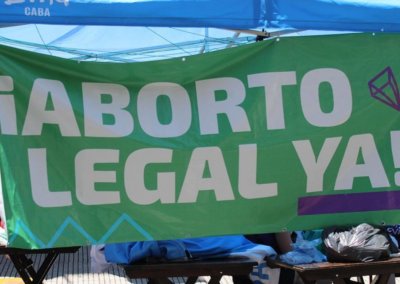
They are hopeful that a bill to legalise abortion in Argentina, announced this week, will pressure Colombia and other countries in Latin America to do the same. In 2018, a bill to legalise abortion within the first 14 weeks of pregnancy was narrowly approved by Congress, but was later rejected by the country’s Senate.